The Miracle of 11A: How a Mud Embankment and Fate Saved the Lone Survivor of AI 171
Seat ejection, mud embankment may have saved lone survivor of AI 171 crash
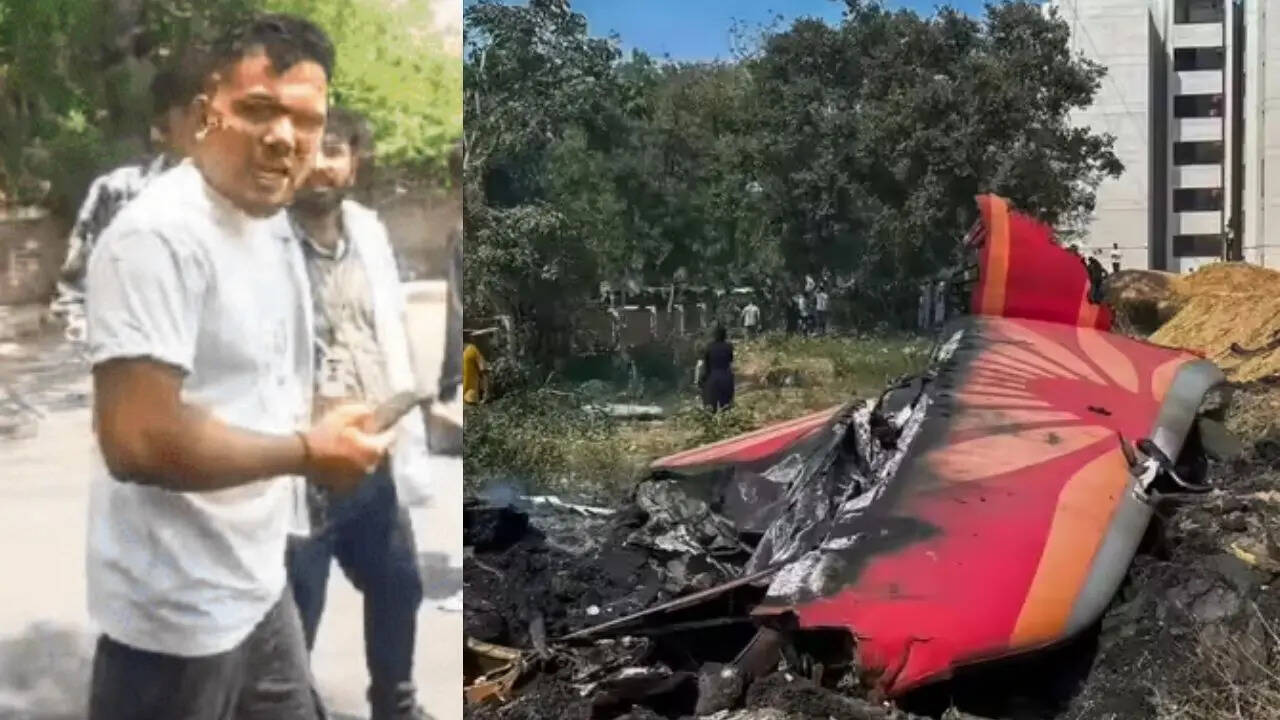
Vishwash Kumar Ramesh remains the only person to walk away from the Ahmedabad tragedy, a survival story defined by an exit row seat and a stroke of impossible luck.
The silence at the BJ Medical College hostel grounds is haunting, a stark contrast to the roar that tore through the Ahmedabad sky on June 12, 2025. Air India Flight 171, a Boeing 787 Dreamliner bound for London, vanished from the air just thirty-two seconds after takeoff. Of the 242 people on board, only one name remains on the survivors' list: Vishwash Kumar Ramesh. For weeks, the nation has asked how a man seated in 11A—a position usually dismissed by frequent flyers—managed to escape a catastrophe that claimed 241 lives and left a path of destruction on the ground.
The Chain of Survival
Gujarat police investigators, piecing together the wreckage, have uncovered a harrowing sequence of events that border on the miraculous. Ramesh, a 40-year-old British-Indian businessman, was sitting beside an emergency exit. When the aircraft began its catastrophic descent and split apart upon impact, the section of the fuselage housing seat 11A suffered a structural failure that actually worked in his favor.
The force of the impact threw the seat section clear of the main wreckage. Carried by momentum, Ramesh was ejected nearly 50 feet away, landing directly into a 10-foot mud embankment—a byproduct of local landscaping work near the airport. This makeshift wall of earth acted as a crucial thermal shield, insulating him from the immediate, raging fireball that consumed the rest of the plane. While his brother, seated across the aisle in 11J, perished instantly, Ramesh’s proximity to the exit row allowed him to crawl from the shattered remnants of the cabin.
A Haunting Recovery
In the sterile quiet of the Ahmedabad Civil Hospital, the lone survivor is a man trapped between relief and profound grief. Witnesses who arrived at the scene recall seeing him stumbling barefoot, covered in blood, shouting, "Plane fatyo che!" (The plane has exploded!). He remembers only the pilot’s desperate "Mayday" call and a sudden, blinding rush of heat. Today, he sits in ward B7, under heavy security, still asking the question that has no easy answer: "Where is my brother?"
Why It Matters: The Physics of Chance
Aviation safety experts often point to the "five-row rule"—the theory that sitting within five rows of an emergency exit statistically improves survival odds. While this incident proves the merit of being near an exit, it also underscores a grim reality: in a crash of this magnitude, survival is rarely the result of procedure alone. It is a collision of physics, structural fragmentation, and the sheer luck of where the earth meets the metal.
The tragedy in Ahmedabad is the deadliest single-aircraft crash in India since 1996. It serves as a devastating reminder that while modern aviation is designed for resilience, there are moments where structural integrity and terrain geography dictate life and death in ways no pilot or passenger can control. The "miracle" of seat 11A is not just a story of a survivor; it is a clinical study in how a fraction of a second and a pile of mud can alter the course of a disaster.
Kabir Sharma writes on culture, technology and everyday life for PoliticalPedia.