The Miracle of Seat 11A: How Mud and Physics Defied an Ahmedabad Tragedy
Seat ejection, mud embankment may have saved lone survivor of AI 171 crash
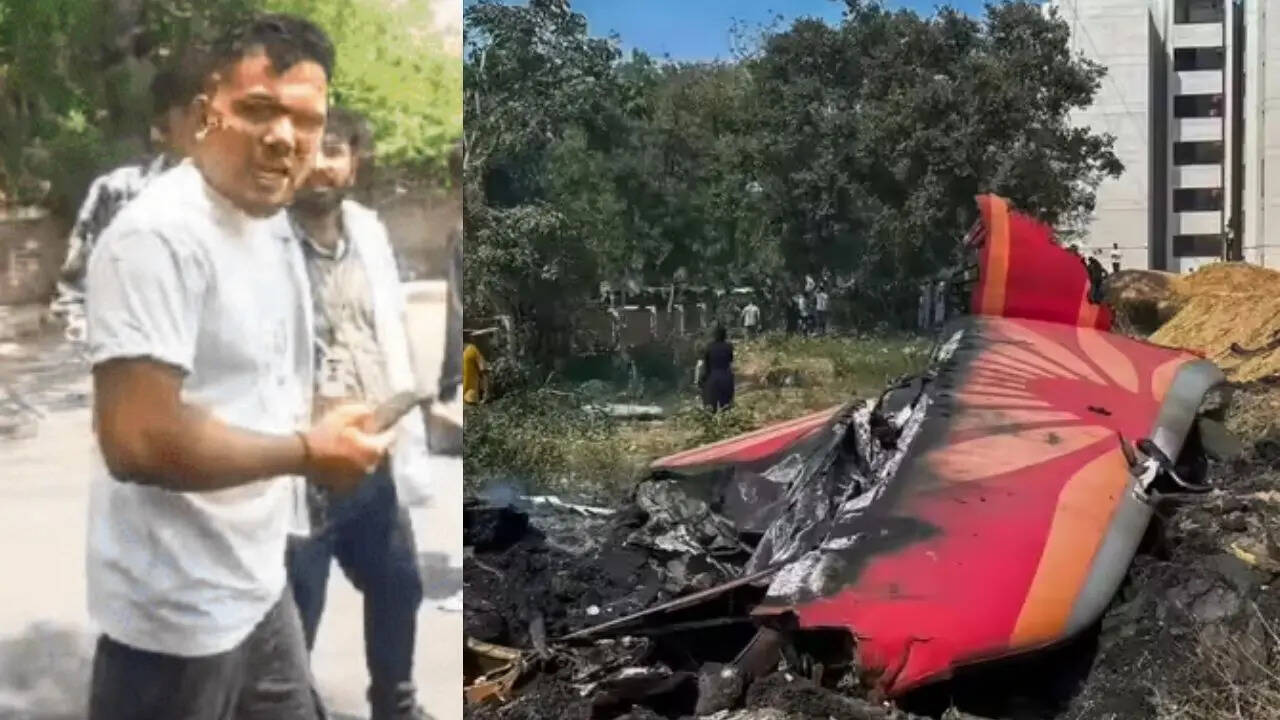
A freak combination of structural failure and landscape luck explains how one man walked away from the wreckage of Air India Flight 171.
The blue skies over Ahmedabad on that Thursday afternoon in June 2025 offered no warning of the carnage to follow. When Air India Flight 171 took off for London Gatwick at 1:38 pm, visibility was perfect. Just thirty-two seconds later, the Boeing 787 Dreamliner ceased to be a flight and became a debris field, slamming into the earth less than two kilometers from the airport. Out of the 242 souls on board, only one name remained on the manifest of the living: Viswashkumar Ramesh.
For nearly a year, the survival of the British-Indian national has been treated as a dark anomaly—a statistical impossibility that defied all logic. Now, an internal assessment by the Gujarat police has finally provided a clinical, albeit chilling, explanation for how Ramesh survived the crash. It wasn't divine intervention, but a rare alignment of engineering failure and geological fortune.
The Physics of a Near-Impossible Escape
Investigators have mapped out a harrowing trajectory for seat 11A. Positioned beside an emergency exit, the section of the fuselage housing Ramesh’s seat tore away from the main body of the aircraft shortly after the plane began its fatal descent. As the plane lost altitude and hurtled toward the BJ Medical College hostel-mess complex, the centrifugal force of the breakup effectively launched the seat from the mid-air wreckage.
Ramesh, still strapped into his chair, was flung roughly 50 feet away from the primary impact zone. While the rest of the fuselage was consumed by a catastrophic fireball upon striking the ground, Ramesh’s seat landed behind a 10-foot mud embankment. This mound of earth, the byproduct of routine construction and landscaping work at the site, acted as a high-density shield, insulating him from the blast wave and the lethal heat that claimed every other life on the flight.
Why it matters
The survival of the lone survivor invites a somber reflection on the randomness of aviation safety. While modern aviation prides itself on redundant systems and advanced navigation, the AI 171 tragedy highlights that in the final, chaotic milliseconds of a structural failure, geography can become as critical as the aircraft’s own safety gear.
This incident serves as a brutal reminder that crash survival is often less about seat positioning and more about the specific, unpredictable mechanics of how a fuselage disintegrates. As regulators and manufacturers continue to study the Dreamliner’s final moments, the case of Ramesh will likely become a benchmark for understanding how debris fields behave in urban-fringe accidents, potentially influencing how we view "safe" zones near high-traffic airport flight paths.
Kabir Sharma writes on culture, technology and everyday life for PoliticalPedia.