The Merger Mirage: Why the TMC-Congress Corridor is Buzzing with Uncertainty
TMC Crisis Live: Mamata Banerjee returns to Kolkata after two-day Delhi visit as speculation over TMC-Congress merger intensifies
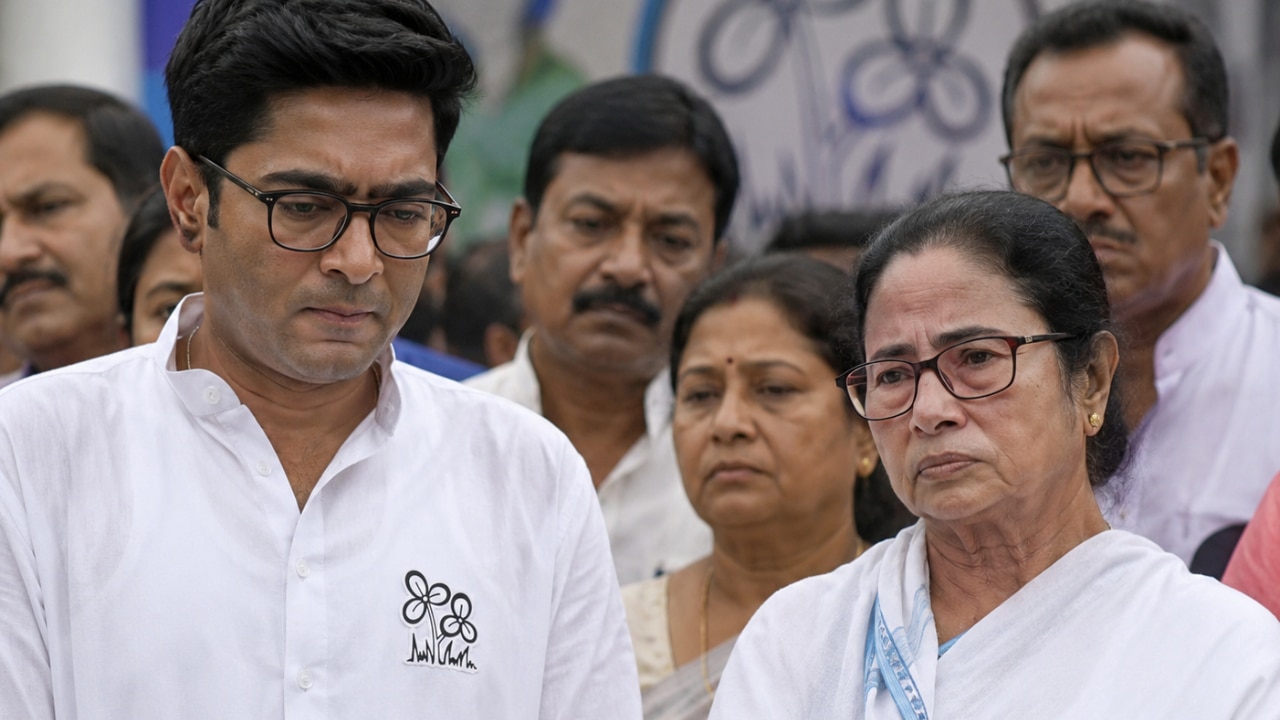
As Mamata Banerjee returns to Kolkata following high-stakes Delhi huddles, the political grapevine is working overtime to decode the future of the Trinamool Congress.
The air at the Netaji Subhas Chandra Bose International Airport was thick with more than just the humidity of a Kolkata summer on Wednesday. As Mamata Banerjee stepped off her flight from the national capital, she was met by a phalanx of cameras and questions that cut straight to the bone: Is the Trinamool Congress (TMC) planning to fold back into the Congress? The former Chief Minister, usually sharp with a retort, offered a stoic silence, slipping into her waiting vehicle and leaving the speculation to burn hotter than the tarmac.
This visit to Delhi, a two-day affair, was meant to be a strategy session following the party’s bruising loss in the West Bengal assembly polls. Yet, the optics have painted a different picture. While Mamata held court with Sonia Gandhi, her nephew Abhishek Banerjee was engaged in a separate, parallel dialogue with Rahul Gandhi. These optics, combined with a wave of internal defections that have left the TMC reeling, have turned the capital into a pressure cooker of rumors regarding a potential reunification.
The Pushback
The party ranks are clearly feeling the heat. Ritabrata Banerjee, the Leader of the Opposition, has been quick to douse the flames, categorically dismissing the merger talk as a flight of fancy. With a confident nod to the 64 MLAs still standing with the party in the Assembly, the leadership is projecting an image of defiance rather than decline. "TMC is not merging," a senior MP echoed, brushing off the chatter as entirely baseless.
Even within the Congress, the waters are murky. Adhir Ranjan Chowdhury, a veteran voice in Bengal politics, claims he is completely in the dark. His stance is telling—if a merger of such magnitude were truly on the table, it would require alignment from the grassroots to the top brass. For now, he maintains that no formal decision has been reached, leaving the rank-and-file to navigate a landscape of conflicting reports and uncomfortable conversations.
The Bigger Picture: Why It Matters
This isn't just about two parties shaking hands; it is about the survival of the opposition in the face of a resurgent BJP. The TMC is currently navigating its most significant internal crisis since its inception. When a party loses its footing in a stronghold, the instinct for self-preservation often leads to radical restructuring. Whether this "merger" is a genuine political move or simply a psychological attempt to consolidate anti-BJP forces remains the central question.
For the voter, these whispers highlight a volatile shift in the political hierarchy. If the TMC eventually opts to orbit closer to the Congress, it could signal a tactical retreat to protect its base. However, if the leadership continues to deny these reports, the party risks appearing rudderless as it tries to stanch the bleeding of its own legislators. Until either camp puts pen to paper, the merger remains a mirage—a product of the desperate need for a new survival strategy in an increasingly tough political climate.
Kabir Sharma writes on culture, technology and everyday life for PoliticalPedia.