Kolkata Docks Ready for Triple Inductions: Navy to Commission INS Dunagiri, Sanshodhak, and Agray
INS Dunagiri, Sanshodhak, Agray: Navy to commission 3 indigenous warships and survey vessel
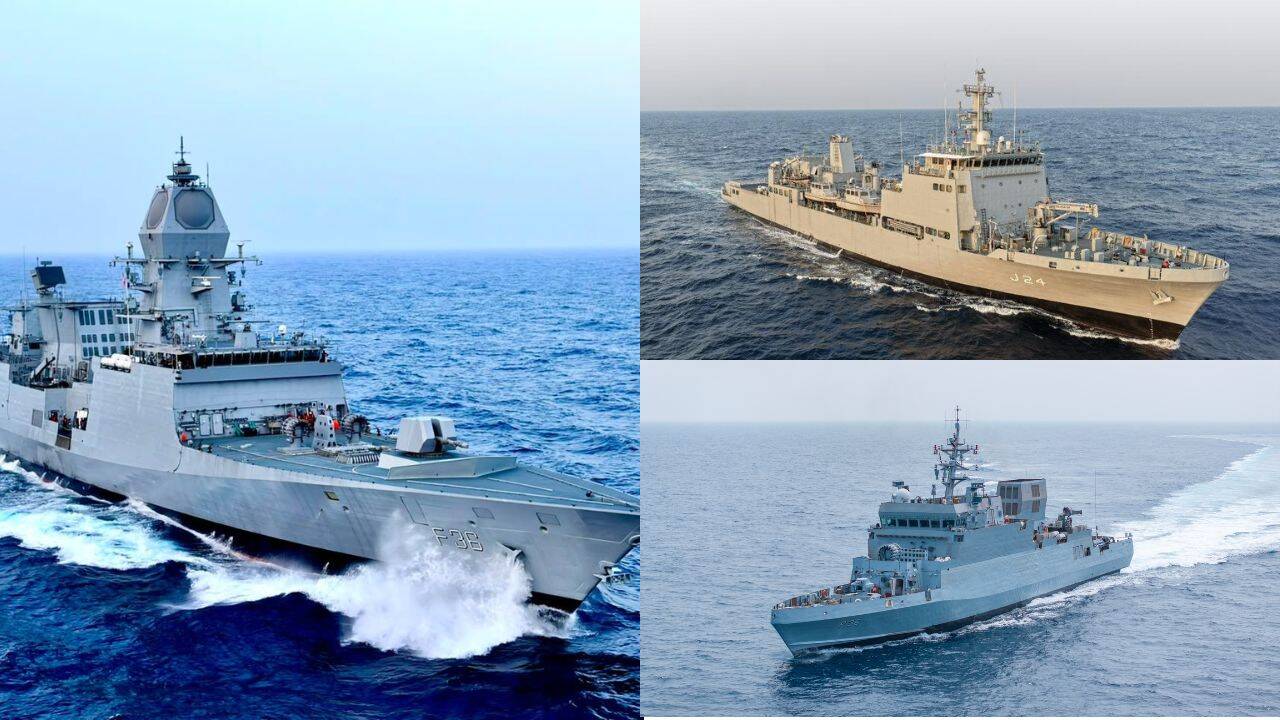
Prime Minister Narendra Modi will preside over the commissioning of three indigenously built naval platforms on June 21, marking a significant leap in India's maritime self-reliance.
The Syama Prasad Mookerjee Port in Kolkata is bracing for a high-profile ceremony this June 21, as the Indian Navy prepares to welcome three major indigenous assets into its active fleet. The induction of INS Dunagiri, INS Sanshodhak, and INS Agray represents more than just a logistical milestone for Garden Reach Shipbuilders & Engineers (GRSE); it is a calculated expansion of India's combat and surveillance footprint in the Indian Ocean Region.
Designed by the Navy’s Warship Design Bureau, these vessels highlight the shift toward domestic manufacturing. Leading the pack is INS Dunagiri, the fifth stealth frigate under the Project 17A series. A formidable addition to the surface fleet, the frigate is packed with BrahMos surface-to-surface missiles and a medium-range surface-to-air missile system, signaling the Navy’s intent to maintain a credible deterrent against evolving regional threats.
Complementing this firepower is the specialized utility of the other two platforms. INS Sanshodhak, the fourth Survey Vessel (Large), is engineered for both deep-water and coastal hydrographic missions. Equipped with autonomous underwater vehicles and sophisticated remote-operated hardware, it will play a vital role in collecting the geophysical data essential for both naval planning and civilian maritime operations. Meanwhile, INS Agray—the fourth of the Arnala-class anti-submarine warfare shallow water craft—is specifically tailored to secure India’s coastal waters against underwater incursions.
Why it matters: The bigger picture
This triple-commissioning event is part of a deliberate, long-term push to modernize India's maritime capabilities amid a more crowded Indian Ocean. As China continues to expand its naval presence in the region, the Indian Navy’s focus has sharpened on creating a "blue-water" force that can operate independently and effectively across vast maritime distances.
By prioritizing platforms that blend high-end stealth combat with essential surveillance and anti-submarine warfare, the government is signaling a shift toward a more modular and versatile naval architecture. The reliance on indigenous design and construction is no longer just a policy goal; it is a strategic necessity to ensure that the fleet is not dependent on foreign supply chains during potential periods of regional friction.
For the Navy, the induction of these three distinct vessels means an immediate uptick in maritime domain awareness and a reinforced defensive shield. Whether it is the advanced sensors on the Dunagiri or the specialized mapping capabilities of the Sanshodhak, the Navy is steadily filling the capability gaps that have historically slowed its growth. As the prime minister prepares to commission these ships, the message to stakeholders is clear: India is moving rapidly to turn its domestic shipyards into the backbone of its regional security strategy.
Arjun Mehta reports on government, policy and Parliament for PoliticalPedia, in English and Hindi.