The 'Lespwar' Gift: How India is Quietly Cementing Its Role as a Maritime Guardian
'Hope' for Seychelles: How India remains the dominant security provider in Indian Ocean
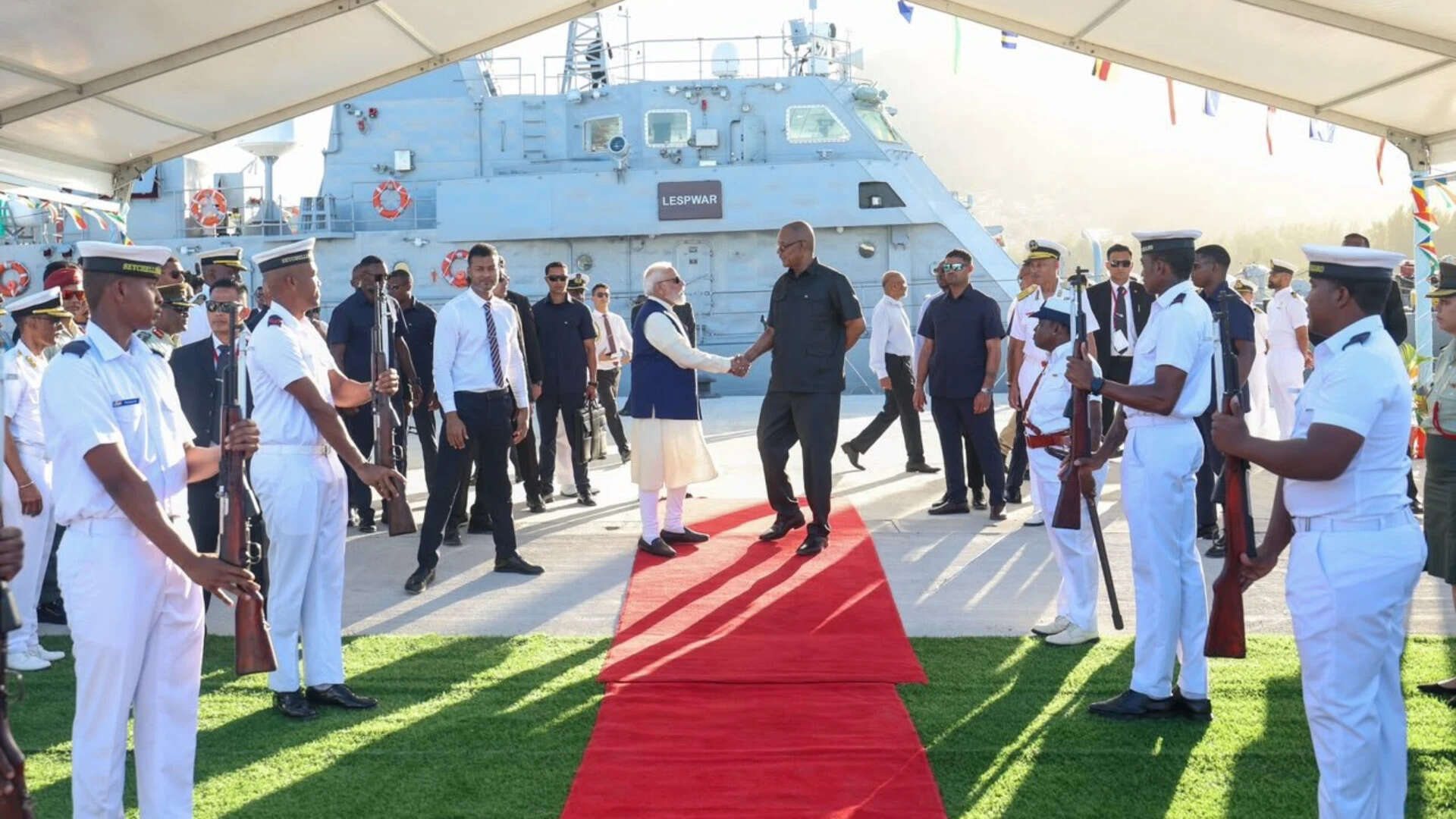
New Delhi’s latest defence diplomacy push in Seychelles signals a strategic shift in securing the Indian Ocean’s vital trade corridors.
The sight of a fast patrol vessel cutting through the turquoise waters of the Seychelles is becoming a familiar rhythm for the Indian Ocean region. During his recent visit, Prime Minister Narendra Modi handed over the Lespwar—Creole for “hope”—to the Seychelles Coast Guard. This wasn't just a ceremonial handover of a ship; it was a calibrated move to solidify India’s position as the primary security provider in an increasingly contested maritime space. Beyond the vessel, the package included ambulances, utility vehicles, and laser-radial boats, effectively plugging gaps in local maritime infrastructure.
Building a Security Architecture
The hardware is only part of the story. The return of four Indian military advisers to the islands marks the revival of a programme that had previously been shelved. By embedding expertise directly into the Seychelles security architecture, New Delhi is shifting from a passive supplier of goods to an active partner in regional stability. This is the operational backbone of the MAHASAGAR initiative, a framework designed to ensure that mutual growth and security go hand-in-hand across the region.
This strategy is not an isolated experiment. For years, the Indian defence establishment has been steadily tightening its network of maritime alliances. From gifting a Kilo-class submarine to Myanmar and a corvette to Vietnam, to supplying fast interceptor boats to Mozambique, the pattern is clear: India is prioritising the capacity-building of its neighbours. Whether it is Mauritius receiving regular batches of patrol boats or the Maldives getting landing craft, the goal is to create a chain of interoperable, well-equipped partners capable of patrolling their own backyards.
Why it matters
The bigger picture here is about influence in a theatre where competition is intensifying. The Indian Ocean is no longer just a transit point for global trade; it is a geopolitical chessboard. By positioning itself as a reliable, long-term provider of security, India is betting that local partners will prefer a collaborator who invests in their sovereignty over transactional, debt-heavy alternatives.
When you look at how India engages with states like Seychelles, you see a departure from the grandstanding often associated with international diplomacy. Instead, there is a focus on "hardware diplomacy"—giving states the tools to respond to regional threats themselves. If New Delhi can maintain this momentum, it effectively secures its own long-term interests by fostering a ring of capable, friendly maritime states. It is a slow, methodical play, but it is one that makes India an indispensable partner in keeping these critical waters open and stable.
Kabir Sharma writes on culture, technology and everyday life for PoliticalPedia.