The Kuldeep conundrum: Why India’s 2027 World Cup blueprint rests on a spinning ball
India's 2027 World Cup plans may hinge on Kuldeep rediscovering his rhythm
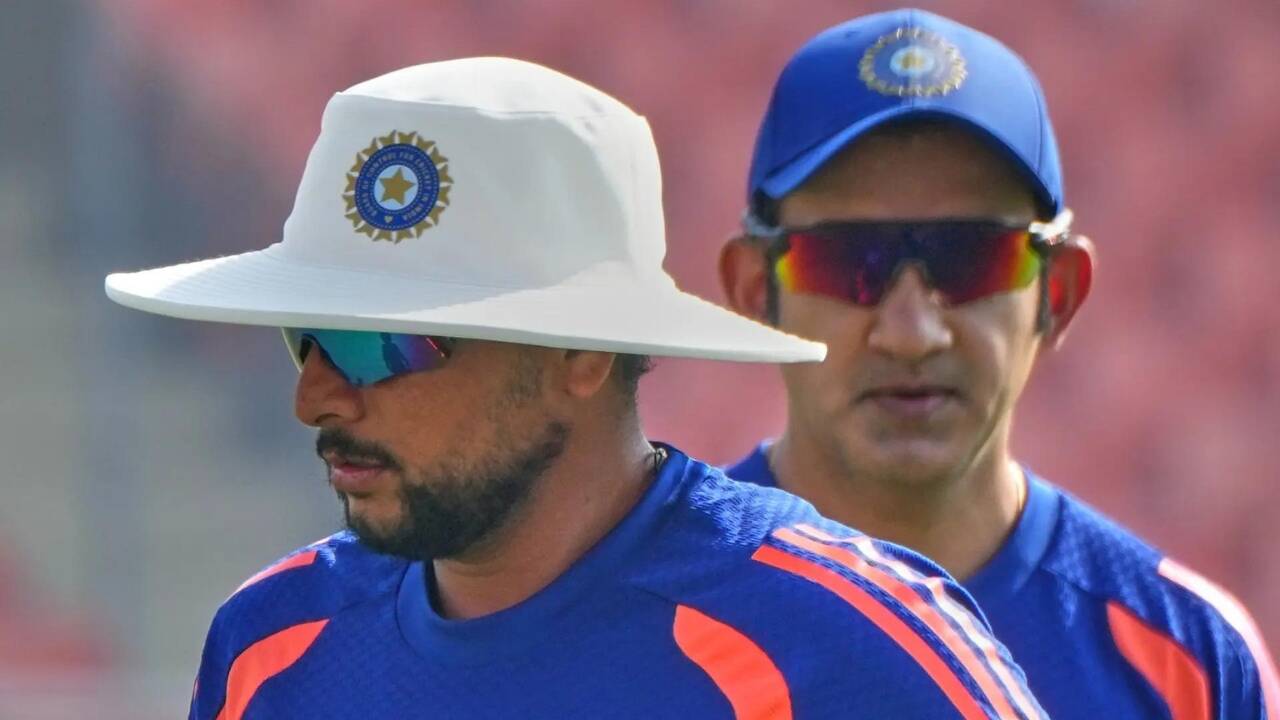
As the senior-most spinner looks to regain his lethal rhythm, the team management is betting big on the chinaman bowler to anchor India’s middle-overs strategy.
There is a specific, familiar tension at the nets when Kuldeep Yadav walks in to bowl. The hop, the skip, and that signature jump to the crease are all there, but the precision that once made him a nightmare for world-class batters has been flickering. With 194 wickets in 121 matches, Kuldeep is arguably India’s most potent weapon in the middle overs, yet he finds himself fighting for a permanent spot in a squad that is already looking ahead to the 2027 World Cup.
The numbers suggest he is on the cusp of a milestone—just six wickets away from 200 ODI scalps—but recent team selections tell a different story. In the ongoing series, he has been sparingly used, with the likes of Manav Suthar and Washington Sundar getting the nod, and Harsh Dubey jumping ahead of him in the pecking order in Dharamsala. It is a curious phase for a bowler who thrives on confidence and rhythm, and whose ability to take wickets against the run of play remains unmatched by anyone else in the current setup, including Jasprit Bumrah.
The technical fine-tuning
During recent training sessions in Chennai, the focus has been forensic. Spin bowling coach Sairaj Bahutale has been a constant presence, shadowing Kuldeep after nearly every delivery. They have been dissecting everything from the load-up to the revolutions imparted on the ball. The team management knows that while other bowlers can contain, Kuldeep provides the breakthroughs that change the course of a match.
Assistant coach Ryan ten Doeschate has moved to quell any talk of a decline, publicly backing the 31-year-old. The rationale is simple: Kuldeep has lacked a consistent run of games, and the management remains convinced he is their trump card. For a team aiming to dominate the 2027 World Cup, the middle-overs phase is where the tournament will likely be won or lost, and that is where Kuldeep’s unique chinaman style becomes non-negotiable.
The bigger picture
Why does this matter? Because India’s current squad transition is about more than just rotating pacers or shuffling the batting order. It is about identifying the core pillars for the next major global cycle. While younger talent is being tested, the reliance on a veteran like Kuldeep shows that the management is wary of a "middle-overs vacuum."
If India cannot find a reliable wicket-taker to break partnerships between overs 15 and 40, their bowling attack risks becoming predictable. The team is currently balancing the need to groom fresh faces with the cold reality that high-stakes tournaments are rarely won by experimentation alone. Whether Kuldeep finds his groove in the upcoming Chennai ODI or continues to be a peripheral figure, his path back to being the team’s undisputed anchor will define the tactical ceiling of India’s bowling unit for the next three years.
Rohan Gupta covers the economy, markets and companies for PoliticalPedia.