The Kizilelma Shift: Why Turkey’s Unmanned Fighter Is Changing the South Asian Security Calculus
Türkiye’s next-gen unmanned fighter demonstrates precision strike capability
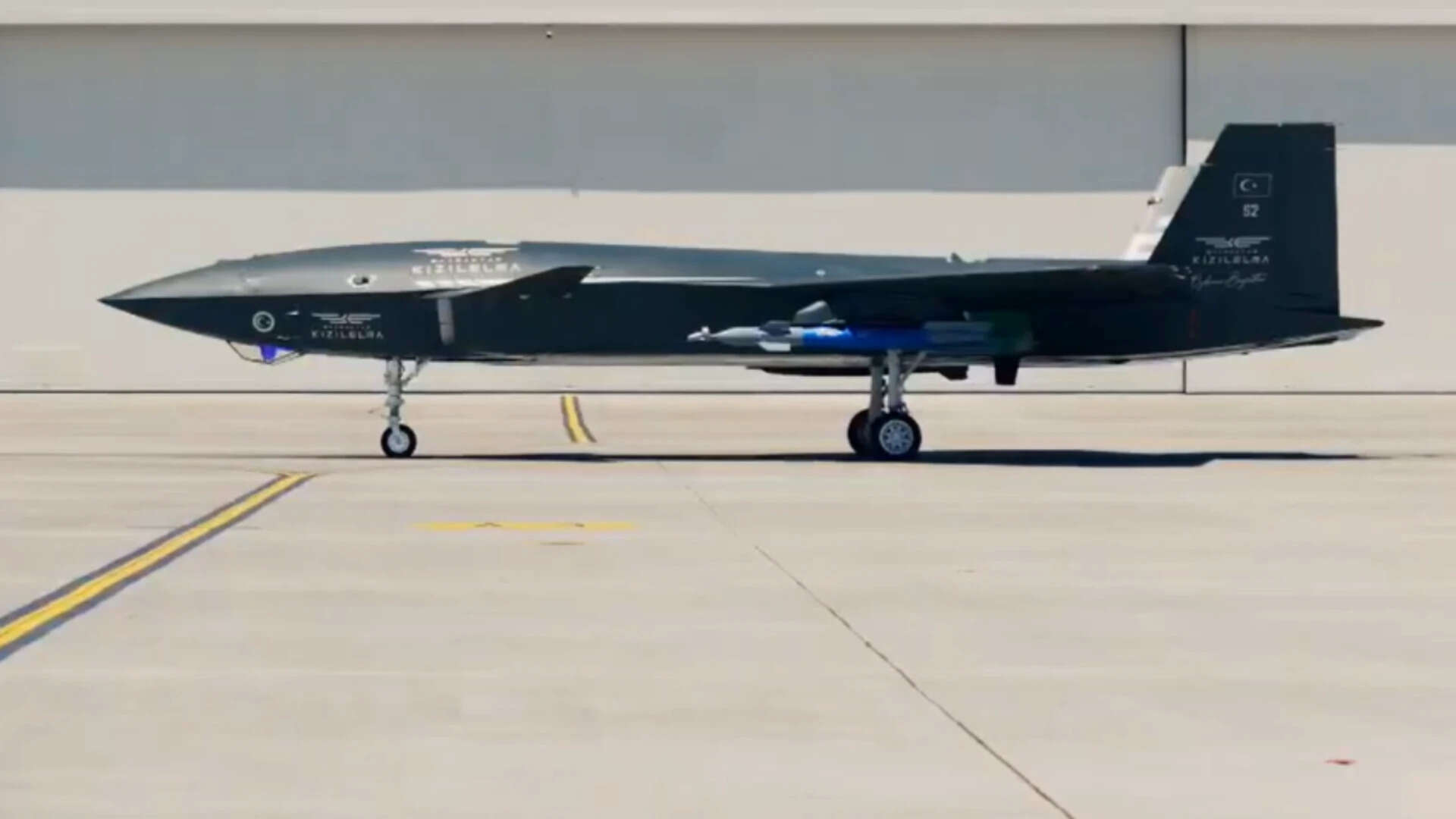
As Ankara masters autonomous air combat, the regional power balance in Asia faces a fresh, tech-driven disruption.
The sleek, jet-powered silhouette of the Bayraktar Kizilelma cutting through the skies signals more than just an engineering milestone for Türkiye. By successfully deploying LGK-82 and TEBER-82 precision-guided munitions through Aselsan’s advanced Electro-Optical Targeting System, the unmanned fighter has moved from a prototype dream to a functional combat reality. For a global defence landscape that has watched Turkish drones reshape conflicts from Nagorno-Karabakh to Ukraine, the Kizilelma represents the final frontier: the marriage of stealth, autonomous mission capability, and the sheer striking power once reserved for manned, billion-dollar jets.
From TB2 to the Next-Gen Frontier
Turkey’s journey into unmanned combat began with the now-legendary Bayraktar TB2. Its ability to neutralise armour and air defence systems at a fraction of the cost of traditional aviation made it the gold standard for asymmetric warfare. Yet, the Kizilelma marks a clear pivot toward high-end, contested-airspace operations. With a six-tonne take-off weight and the ability to carry a diverse, lethal payload, it bridges the gap between smaller reconnaissance platforms and heavy-duty fighters. Its compatibility with carrier operations suggests that Ankara is looking to project airpower well beyond its own borders, effectively bypassing the logistical and pilot-training constraints that limit traditional air forces.
The Regional Arms Race
For New Delhi, these developments are impossible to ignore. The growing defence proximity between Ankara and Islamabad—evidenced by the use of Turkish platforms like the Akinci and Anka in past border skirmishes and the ongoing efforts to establish local production lines—is a critical security variable. As Pakistan’s air force eyes the Kizilelma to modernise its fleet, India is accelerating its own response. The Combat Air Teaming System (CATS), led by Hindustan Aeronautics Limited, is our answer to this emerging threat. The CATS Warrior, designed as a "loyal wingman" to fly alongside manned fighters, mirrors the global shift toward AI-driven, GPS-independent combat, ensuring that India’s airpower remains competitive in an increasingly automated sky.
The Bigger Picture: Why It Matters
This is not merely about a new piece of hardware; it is about the democratisation of air superiority. Turkey’s success proves that countries no longer need a massive legacy industrial base to field a potent, next-generation combat air force. By integrating bunker-busting munitions and beyond-visual-range missile capabilities, Ankara is forcing a rethink of air defence doctrines across Asia. The "Kizilelma effect" is compelling regional powers to accelerate their R&D timelines, turning the skies into a high-stakes arena for autonomous systems. As Turkey moves to test long-range ballistic missiles by 2026, the reliance on traditional manned fighters is being challenged by a cheaper, more flexible, and harder-to-detect unmanned alternative.
A Shifting Balance
The integration of these systems into the Turkish Air Force suggests a strategy of airpower without dependence. Whether through the Gökdoğan missiles or the massive bunker-buster arsenal being developed by Aselsan, the intent is clear: to create a self-sustaining ecosystem of precision strike capabilities. While India continues to leverage international partnerships and domestic ingenuity to counter this, the tactical reality on the ground—and in the air—is moving at breakneck speed. The future of regional security will not be defined by the size of a pilot’s cockpit, but by the sophistication of the algorithms guiding the aircraft.
Ananya Iyer covers global affairs with an Indian lens for PoliticalPedia.