The High-Stakes Battle for India’s AMCA Engine: Safran vs Rolls-Royce
Safran vs Rolls-Royce: The AMCA engine race that could shape India's aerospace autonomy
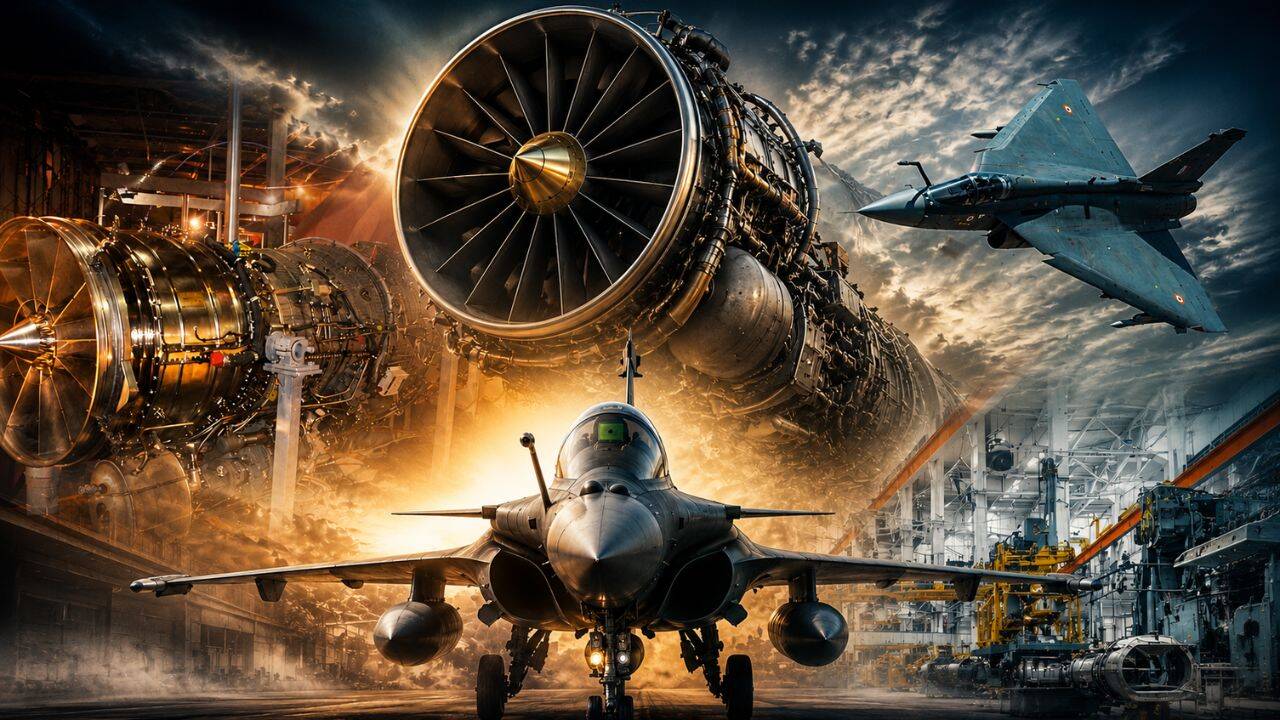
As India eyes a July 2025 decision for its next-generation fighter, a fierce industrial tug-of-war between two global aerospace giants is heating up the race for the AMCA’s propulsion system.
The roar of a fighter jet is more than just raw power; it is a signal of strategic maturity. For years, the Indian defence establishment has grappled with a persistent reality: while India can launch over a hundred satellites in a single mission, the ability to manufacture a world-class, high-thrust jet engine remains the final frontier of true aerospace autonomy. As the Advanced Medium Combat Aircraft (AMCA) program inches closer to reality, the choice of its 120-kN engine has transformed into a high-stakes geopolitical and industrial race.
The Contenders and the Pitch
On one side sits France’s Safran, a long-term partner whose M88 engines already power the Indian Air Force’s Rafale fleet. Safran’s pitch is built on institutional familiarity and trust. Having recognized the growing competitive pressure, the French giant significantly sweetened its offer in late 2025, moving beyond its initial parameters to include more favorable terms. Their strategy focuses on continuity, leveraging the goodwill earned through years of operational service in India.
Across the table, Rolls-Royce is making a aggressive, renewed push. The British manufacturer is dangling a comprehensive proposal that promises full intellectual property (IP) rights for India and a scalable engine architecture capable of spanning 120-kN to 140-kN. By highlighting its expertise in the F-35B LiftSystem and its work on the Dassault Falcon 10X, Rolls-Royce is positioning itself as the partner best suited to power not just the AMCA, but future naval and civil platforms as well.
The Cost of Autonomy
The financial commitment is staggering. Reports suggest that both Safran and Rolls-Royce have submitted cost estimates that could collectively exceed $5 billion. Crucially, the Indian government is pushing for a deal that ensures full technology transfer and local manufacturing. If an agreement is inked by 2026, Rolls-Royce claims it could have core testing operational by 2030. Meanwhile, Safran is simultaneously targeting 40-60% localization for its M88 engines, aimed at meeting the stringent indigenous content mandates for the broader 114-jet MRFA program.
Why it Matters: The Strategic Calculus
This is not merely a procurement exercise; it is an inflection point for Indian aerospace. The decision, expected by July 2025, will dictate the pace of India’s technological self-reliance. By demanding full IP and co-development, the government is signalling that the era of "buyer-seller" relationships is over. The winner of this race will be the company that best facilitates India's transition from an importer of high-end propulsion technology to a manufacturer of it. Whether it is the variable cycle tech proposed by both or the promise of deep-tech integration, the AMCA engine will define the next three decades of India’s air superiority.
Rohan Gupta covers the economy, markets and companies for PoliticalPedia.