The Great Transition: How Everyday Convenience Replaced Elite Privilege in India
From Elite Privilege To Everyday Convenience: India From Nehru To Modi
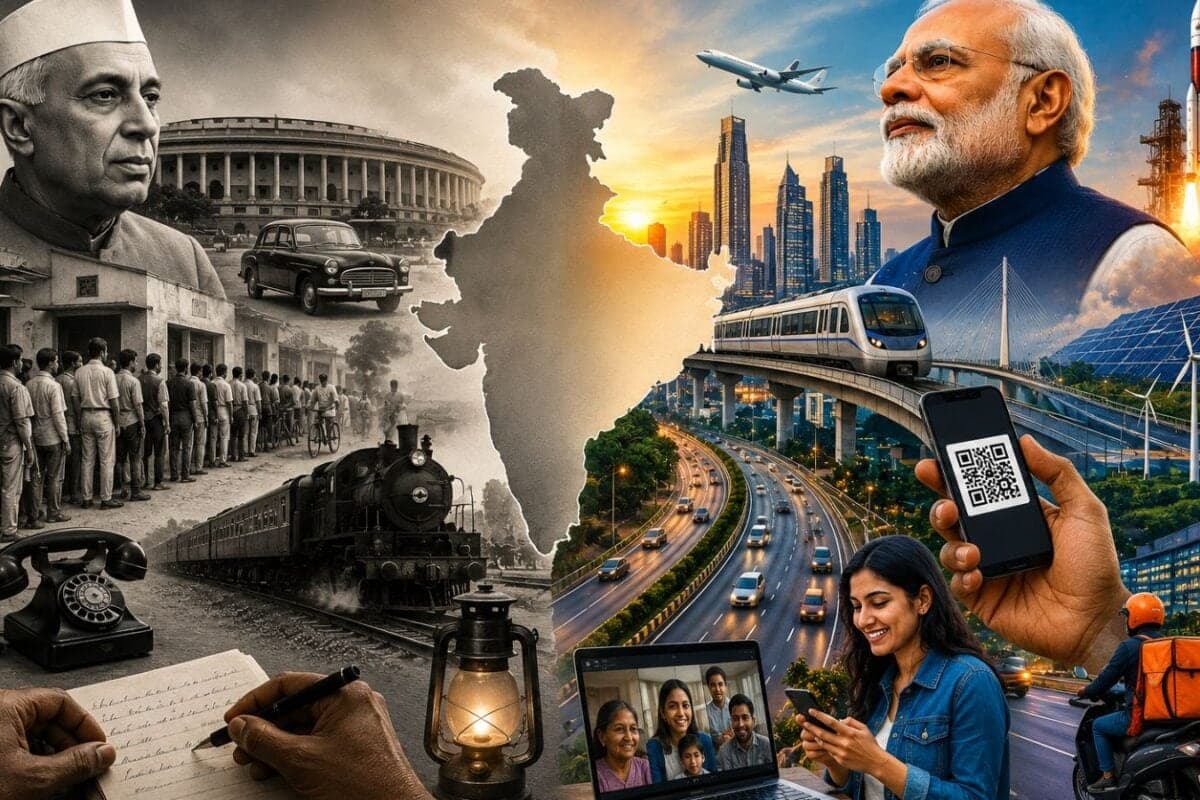
As Prime Minister Narendra Modi nears the record for the longest-serving democratically elected leader, a look back reveals how India has shifted from a nation of scarcity to one of mass accessibility.
The arc of India’s journey from the mid-20th century to the present day is perhaps best measured not in policy papers, but in the access afforded to the average citizen. When Jawaharlal Nehru steered the country in the years following independence, the socio-economic landscape was defined by sharp divides. Commodities and services that are now considered markers of everyday convenience were, at the time, firmly categorised as elite privilege. As Prime Minister Modi prepares to surpass Nehru’s tenure, the evolution of this landscape highlights a profound structural shift in how Indians live, work, and move.
From Rare Skies to Democratised Transit
For much of the post-independence era, the aspiration of air travel was a distant dream for all but the state dignitaries and the ultra-wealthy. Infrastructure was defined by bottlenecks; the railway network, though the backbone of the nation, relied on slow-moving technology that left millions waiting in bureaucratic queues for even basic connectivity. The transition from the Nehru era to the present has been marked by the systematic dismantling of these barriers. Today, regional airports and budget carriers have turned the skies into a common transit route for a burgeoning neo-middle class, effectively ending the era where aviation was an exclusive domain.
Road and Rail: The Speed of Change
The transformation is perhaps most visible on the ground. The crumbling highways of the mid-20th century have given way to a sophisticated network of high-speed expressways designed to shrink the vast geographical distances that once hampered domestic trade and personal mobility. This push for infrastructure is mirrored in the rail sector, where the introduction of semi-high-speed services like the Vande Bharat expresses represents a departure from the rigid, aging systems of the past. By prioritising mass-market speed and comfort, the current administration has shifted the focus toward a modernised transport ecosystem that serves the many, rather than the few.
Communication and the Digital Leap
Communication, too, has undergone a radical democratisation that would have been unimaginable to planners in the mid-20th century. During the tenure of India’s first prime minister, securing a landline telephone was a test of patience, often involving years on waiting lists. The modern era has rendered such administrative hurdles obsolete, replacing the slow pace of telegrams and rotary phones with a smartphone revolution. This transition from scarcity to ubiquitous connectivity serves as a microcosm for the broader change: a move toward a digital ecosystem where information and services are accessible at the touch of a screen.
The Legacy of Jan Bhagidari
As the country observes this milestone in leadership, analysts point to "Jan Bhagidari"—or participatory governance—as a defining trait of the current era. While the Nehruvian years were focused on foundational state-building, the current trajectory is focused on scale and individual enablement. The shift reflects a nation that has moved beyond the constraints of its early decades, aiming to integrate its 1.4 billion people into a globally competitive economy. Whether this trajectory holds will be the subject of future discourse, but for now, the movement from a closed system of elite privilege to a landscape of broad-based convenience remains the most telling feature of India’s generational transformation.
The PoliticalPedia Editorial Desk brings verified, sourced political news and analysis from across India.