The Fading Echo of Beti Bachao: Haryana’s War Against Gender Bias Faces a Grim Reality
A movement losing momentum and daughters as Haryana’s sex ratio declines
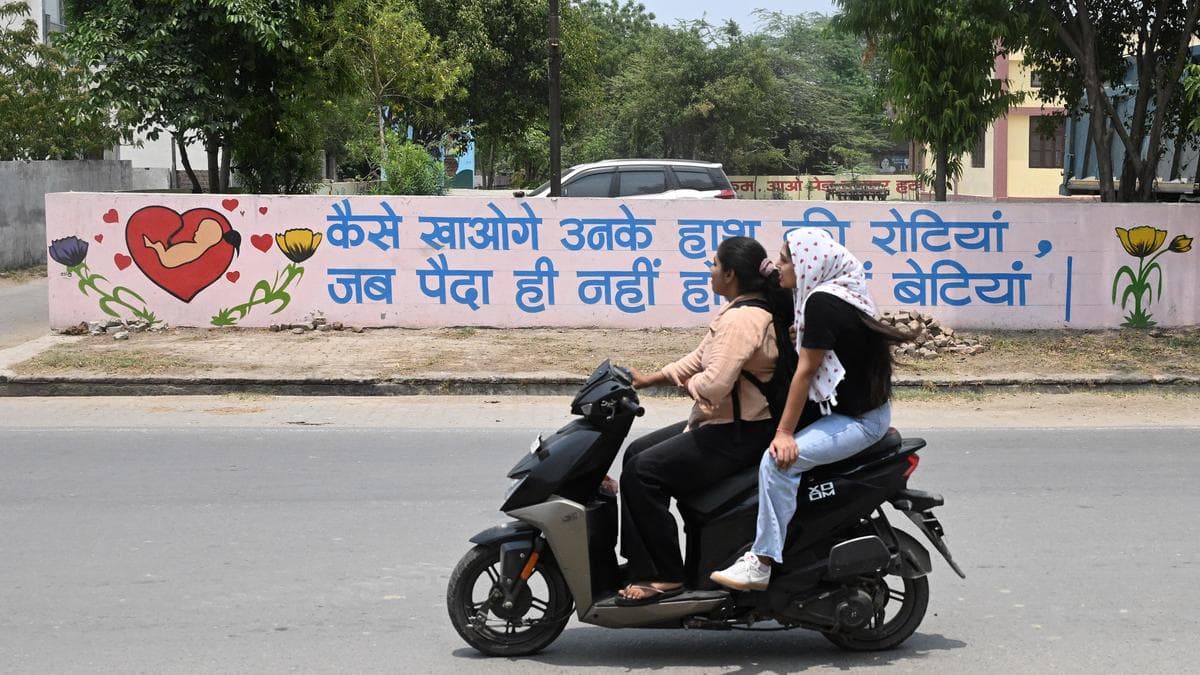
As the state’s sex ratio at birth dips below the 900 mark, systemic failures and deep-seated social pressures expose the fragility of a decade-long government campaign.
At the Katlupur health sub-centre in Sonipat, 31-year-old Bijli Devi waits for a routine vaccination. She is currently seven months pregnant—her seventh pregnancy in twelve years. Weighing a frail 44 kg, her medical file carries the sobering tag of a “high-risk” case. Surrounded by her six daughters, aged between two and twelve, Bijli speaks with the resignation of someone caught in a cycle she cannot control. Her husband and in-laws remain desperate for a son, creating an environment where another daughter is viewed as an impossibility. For families like hers, the state-led “Beti Bachao Beti Padhao” (BBBP) movement feels like a distant slogan, eclipsed by the harsh economic reality of poverty and the persistent demand for a male heir.
The desperation of mothers like Bijli Devi is often exacerbated by the lack of resources, but for those with means, the illegal market for gender-based intervention remains disturbingly vibrant. In May, authorities dismantled a sophisticated sex-determination racket operating out of the Aayu Hospital in Gurugram, just streets away from a busy police station. The arrest of a consultant radiologist, who allegedly charged ₹40,000 for illegal prenatal testing, underscored a growing cynicism toward the law. Despite thousands of raids and arrests since the inception of the BBBP campaign, the ease with which such syndicates operate suggests that the fear of state enforcement is rapidly eroding.
A Statistical Setback
The data released for the first four months of 2026 offers a sobering reality check for Haryana. The state’s Sex Ratio at Birth (SRB) has plummeted to 898 girls per 1,000 boys, a reversal after years of incremental progress that saw the ratio reach 923 in both 2019 and 2025. Regional disparities are stark: while pockets like Nuh and Panchkula maintain a ratio above 900, others like Charkhi Dadri have fallen to a distressing 768. This decline suggests that the structural gains made under the national campaign may be losing their momentum, leaving the most vulnerable populations behind.
The Gap Between Policy and Practice
For many, the irony is not lost. The BBBP campaign, which famously launched in Panipat to combat skewed demographics, was designed to change the social fabric of Haryana. Yet, on the ground, the lack of educational and economic agency for women remains a hurdle. Bijli’s two oldest daughters have already dropped out of school to work as farm labourers, mirroring the path taken by their father. Without addressing the underlying patriarchal pressure that forces a woman to undergo her seventh pregnancy in hopes of a son, the state’s demographic targets risk becoming mere paper figures.
The recent bust in Gurugram serves as a reminder that the demand for illegal sex-determination continues to thrive in plain sight. While the government has focused on surgical raids—with over 4,000 individuals incarcerated over the last decade—the persistence of these networks indicates that enforcement alone is insufficient. When the systemic value of a girl child remains tethered to economic hardship and social stigma, the progress recorded by the state remains fragile and susceptible to sudden, sharp reversals.
The PoliticalPedia Editorial Desk brings verified, sourced political news and analysis from across India.