The Citizenship Paradox: Why Your Passport Isn't The Final Word On Being Indian
When An Indian Passport Isn't Enough, How Does An Indian Prove They Are Indian?
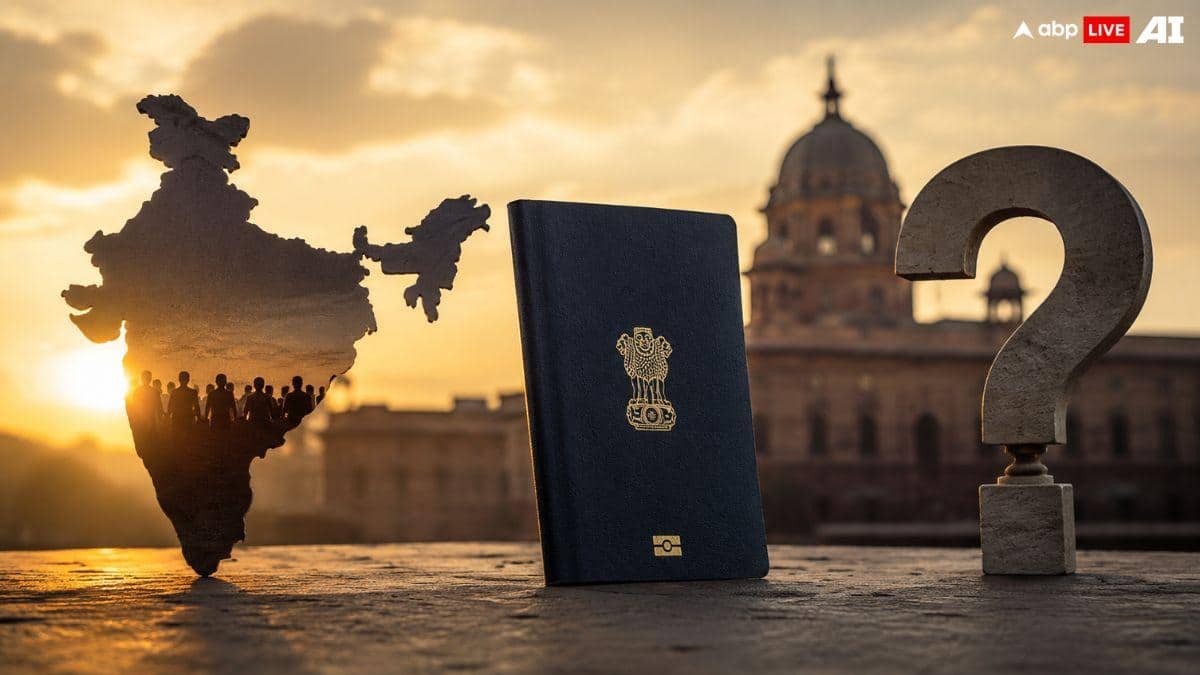
Millions rely on travel documents and Aadhaar for daily verification, but legal clarity reveals a startling gap between holding a government ID and proving nationality.
For decades, the navy-blue booklet featuring the Ashoka Pillar has been the ultimate shorthand for Indian nationality. When a traveller flashes their Indian passport at a foreign immigration desk, the document performs a simple, powerful function: it declares them Indian. Yet, back home, the legal reality is surprisingly brittle. Recent clarifications from the Ministry of External Affairs (MEA) have underscored a disquieting fact: when an Indian passport isn’t enough, the question of how does an Indian prove they are Indian becomes a bureaucratic maze with no single, definitive answer.
The confusion stems from the state’s own compartmentalisation of documentation. While the public views the passport as the gold standard of identity, the MEA maintains it is primarily a travel document. It is issued based on verified evidence, but it does not serve as a standalone, irrefutable certificate of citizenship in every legal contingency. This distinction creates a friction point for citizens who assume that state-issued papers are interchangeable proofs of their belonging.
The Limits of Identity
This ambiguity is further complicated by the status of the Aadhaar card. The Supreme Court has been consistent in its messaging: Aadhaar is a tool for identity and service delivery, not a proof of citizenship or domicile. Similarly, voter IDs and PAN cards—documents that millions use to navigate their daily lives—fall short when the legal threshold shifts to proving one is an Indian citizen. The Bombay High Court recently echoed this, noting that such documents are insufficient to establish citizenship, particularly in cases involving claims of illegal entry.
This leaves the average person in an uncomfortable limbo. If the most recognisable forms of state identification are stripped of their power to confirm nationality, what remains? The Citizenship Act of 1955 provides the bedrock for how one becomes a citizen, yet the practical application of this law relies on a patchwork of legacy documents that vary wildly from family to family.
Why it matters: The bigger picture
The anxiety surrounding these documents is not just a legal headache; it reflects a deeper, systemic friction. We are moving toward a digital-first administrative state where "identity" (who you are for the purpose of a transaction) and "citizenship" (your legal bond to the nation) are being decoupled. For the citizen, this means the burden of proof is shifting. As state agencies adopt more rigorous, siloed verification standards, the lack of a single, omnibus document creates a vulnerability, especially for those whose documentation history is fragmented or lost to time.
The pattern is clear: the state is increasingly treating documents as task-specific tools rather than universal certificates. While this allows for more precise administrative control, it forces the individual to carry the weight of proving their status repeatedly. Until there is a harmonised approach to how these records interact, the gap between holding an ID and being legally recognised as a citizen will continue to be a source of significant public concern.
Rohan Gupta covers the economy, markets and companies for PoliticalPedia.