Supreme Court: Courts Must Not Facilitate Litigation to Prolong Decayed Marriages
Courts must not allow litigation to prolong decayed marriages: SC
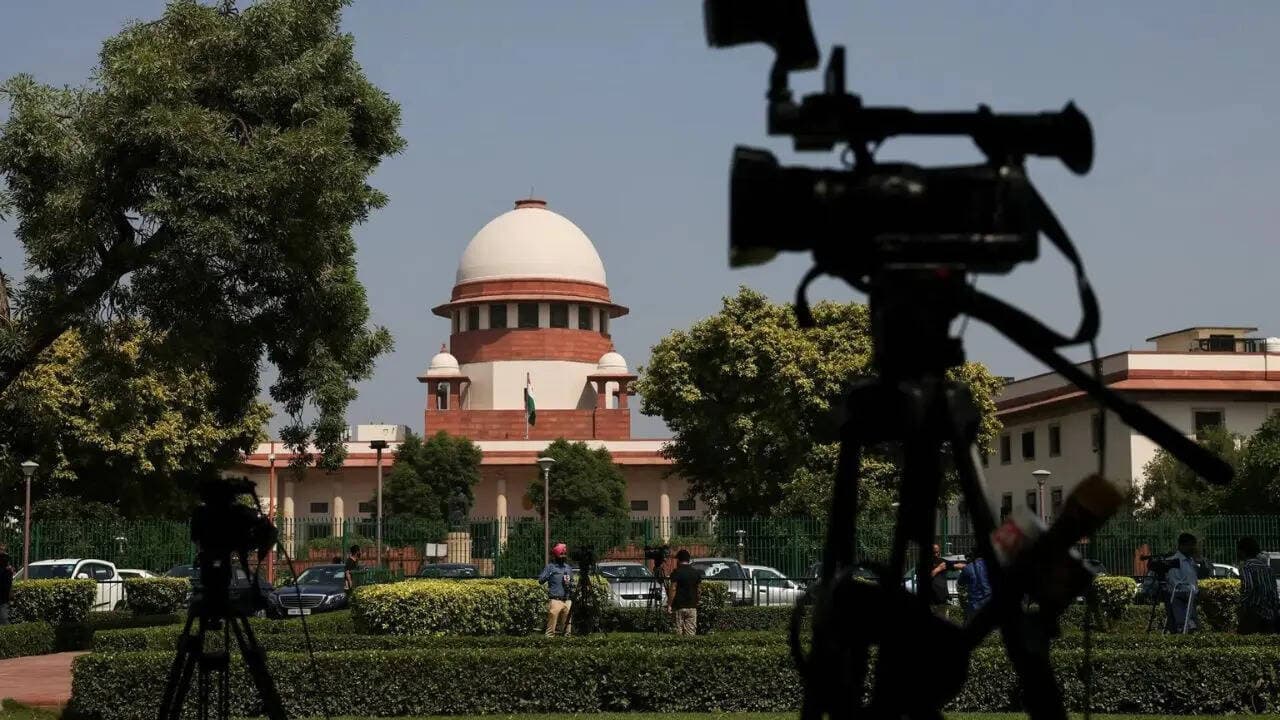
The top court has underscored that legal systems should not force individuals to remain in broken unions that have suffered a total breakdown of mutual respect.
The Supreme Court has issued a significant observation regarding the nature of matrimonial disputes, cautioning that the justice system must avoid allowing prolonged litigation to sustain marriages that have already decayed. A bench comprising Justices Sanjay Karol and A.G. Masih emphasized that continuing legal battles in instances where a partnership has collapsed only fosters a sense of psychological and social emptiness.
Redefining the Marital Covenant
In a recent ruling involving two government doctors who had lived apart for over 15 years, the court exercised its extraordinary powers under Article 142 of the Constitution to dissolve the union. The bench clarified that marriage should not be viewed through the narrow prism of a petition for conjugal rights or as a mere contract of individual entitlements. Instead, the court maintained that matrimony is a shared commitment rooted in fidelity, care, and mutual responsibility.
Justice Masih, writing for the bench, noted that conjugal rights do not exist in a vacuum; they are intrinsically tied to the duties spouses owe one another. The judges observed that when a couple has lived in separate domiciles for over a decade and a half, with all attempts at reconciliation failing, the relationship has essentially suffered a de facto abandonment of the marital covenant.
Beyond the "Foul" Hollowness of Discord
The court’s stance is that forcing a couple to remain legally bound when the foundational elements of dignity and companionship have been lost serves no beneficial purpose. Such forced associations, the court said, create a "foul sociological, psychological and mental hollowness" that impacts the lives of those involved. By resolving the case, the judges aimed to prevent the further fueling of animosity that typically accompanies long-running legal disputes.
This judicial approach aligns with the principle that the law should prioritize the reality of a situation over the rigid enforcement of past promises. As evidenced by the court’s decision, when the marital bond has reached an state of irretrievable breakdown—where there is no longer a possibility for a couple to live together peacefully—the court has the authority to intervene to grant a final resolution. This ensures that parties can move forward with their lives rather than remaining trapped in a cycle of futile legal battles.
The PoliticalPedia Editorial Desk brings verified, sourced political news and analysis from across India.