Substack Launches 'Reply Rules' to Give Creators Greater Control Over Community Moderation
Substack rolls out new ‘Reply Rules’ feature to help creators manage responses
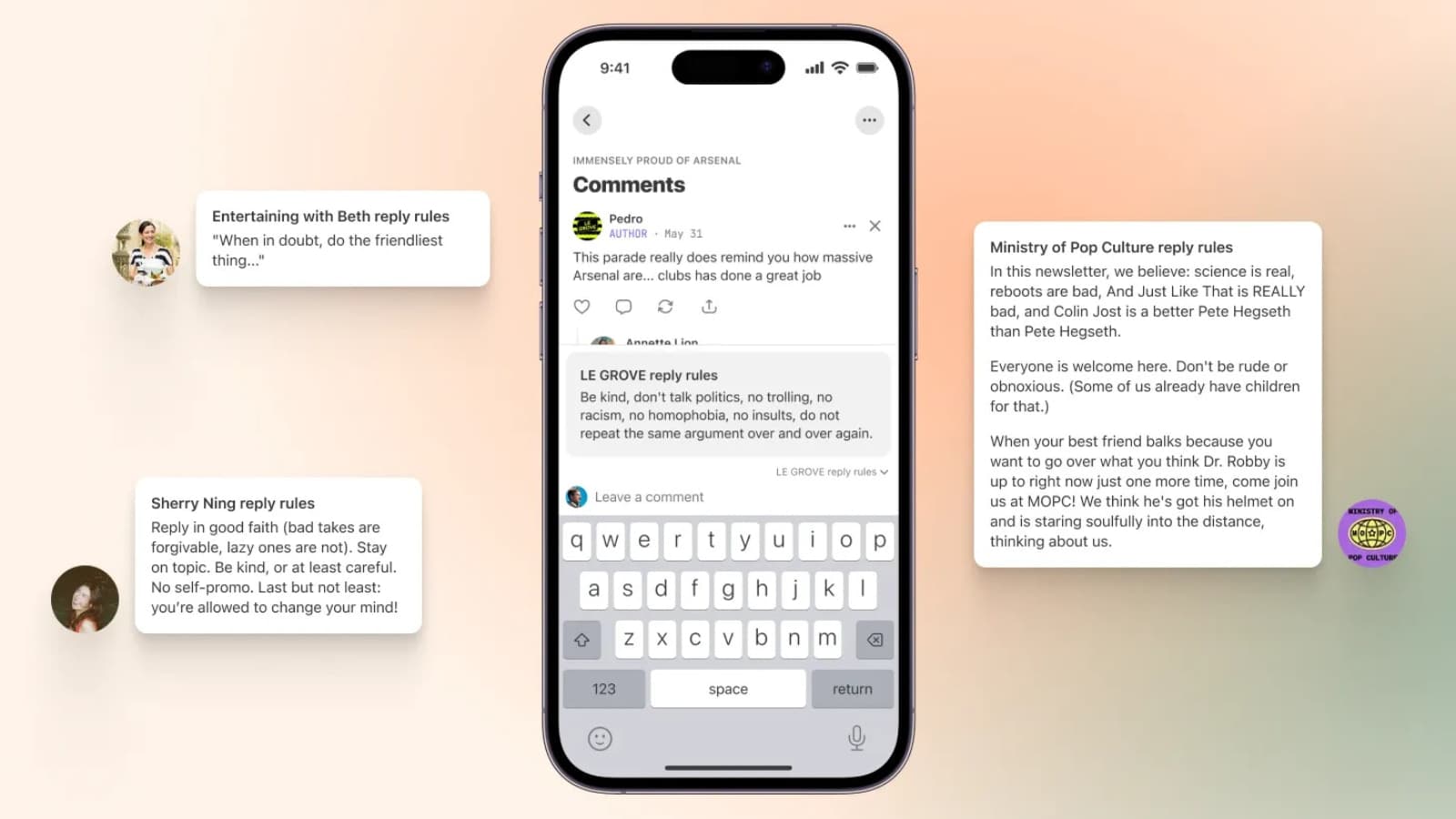
The new feature empowers newsletter writers to set custom guidelines for comments, notes, and chats while automating the filtering process to reduce manual administrative burdens.
Substack has officially rolled out "Reply Rules," a new suite of tools designed to provide creators with granular authority over how their audiences engage with their work. Available now for all English-language publications, the feature allows writers to establish specific conduct guidelines for their comment sections, Notes, and Substack Chat. By formalizing these expectations, the platform aims to help creators maintain the desired tone and culture of their communities without the exhaustive labor of manual moderation.
How the System Operates
Beyond merely stating community standards, the feature integrates a learning mechanism that evolves based on a creator's historical moderation habits. When a writer repeatedly hides specific types of responses, the system begins to recognize these patterns, automatically filtering out similar content in the future. While this automated layer is designed to save time, creators retain full visibility over hidden replies. These comments are not permanently deleted; writers can choose to restore them if they determine the system has been too restrictive.
The flexibility of these rules is significant, ranging from practical requirements—such as banning profanity or curbing spam—to more unconventional community mandates, like requesting that all replies be written in a specific format, such as a haiku. This shift reflects Substack’s long-standing, decentralized philosophy, which places the onus of community management on the individual writer rather than on centralized corporate oversight.
A Balanced Approach to Content Moderation
This update arrives as Substack continues to navigate a complex landscape of public scrutiny. The platform has faced recurring criticism regarding its permissive approach to content, with observers pointing to the visibility of controversial newsletters and far-right discourse as potential blind spots in its moderation model. By introducing Reply Rules, the company is effectively doubling down on its "your house, your rules" policy, attempting to balance the need for safer, more manageable spaces with its commitment to supporting diverse voices.
The rollout is part of a broader expansion of creator-focused utilities on the platform. Throughout the year, Substack has introduced several technical upgrades, including a built-in studio for video production and a dedicated TV app to facilitate long-form viewing. These additions aim to deepen user engagement and provide creators with a more robust ecosystem to grow their publications.
Why This Matters for Creators
For many independent writers, the burden of policing high-volume comment threads has become a significant barrier to productivity. By delegating some of this friction to an automated, rule-based system, Substack hopes to allow creators to focus more on their primary work. However, industry analysts note that this shift presents its own challenges, including the risk of echo chambers or the potential for false positives where legitimate critical feedback might be inadvertently silenced. As the platform matures, the success of these new moderation tools will likely depend on how easily creators can audit these automated decisions and maintain transparency with their readers.
The PoliticalPedia Editorial Desk brings verified, sourced political news and analysis from across India.