NTA Faces Parliamentary Grilling: Defining the ‘Leak’ Amid NEET-UG Crisis
NTA denies NEET paper ‘leak’, labels circulating questions ‘guess papers’; to submit report on June 10
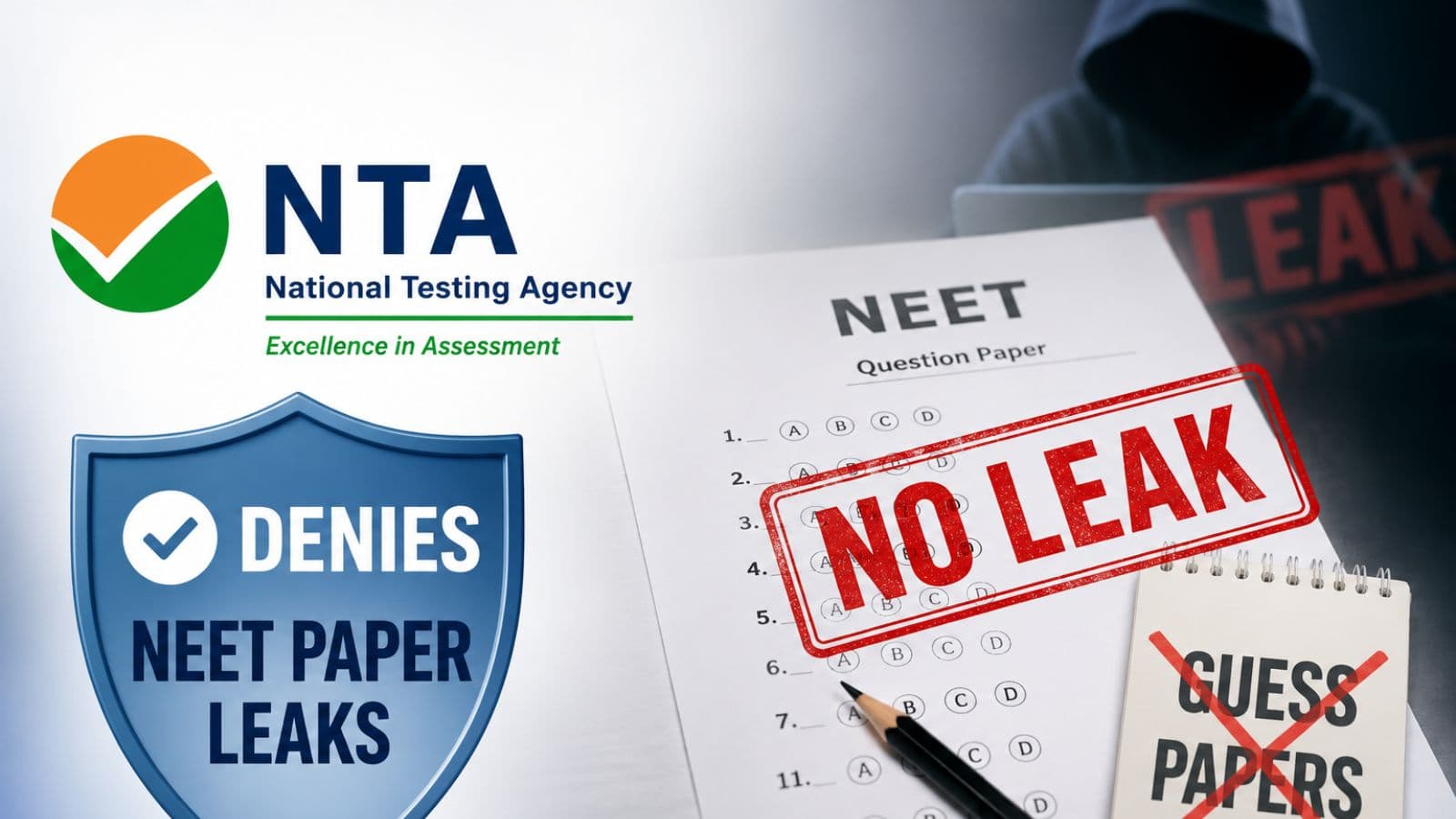
The National Testing Agency must clarify its definition of a ‘paper leak’ and detail systemic reforms to a parliamentary panel by June 10.
The credibility of India’s massive testing architecture is under the microscope. Last week, senior officials from the National Testing Agency (NTA) stood before a parliamentary panel to face pointed questions regarding the integrity of the NEET-UG exam. While the agency maintained that no actual breach occurred within its secure system—dismissing viral question sets as mere "guess papers"—the parliamentary committee, led by Congress member Digvijaya Singh, isn't taking that explanation at face value.
The panel has issued a formal demand for the NTA to provide a precise, objective definition of what constitutes a "paper leak." This request aims to cut through the semantic ambiguity that has plagued public discourse since the controversy erupted. Lawmakers want to know if the NTA has logged any systemic leaks in exams conducted since 2018, stripping away the defensive rhetoric that has thus far defined the agency’s public stance.
A wider net of scrutiny
The investigation isn't limited to the NEET-UG. The committee is simultaneously scrutinizing the Central Board of Secondary Education (CBSE) regarding its on-screen marking (OSM) system. Both bodies have been ordered to file comprehensive written responses: the CBSE by June 8 and the NTA by June 10. The panel’s scope is exhaustive, covering the NTA’s internal staff strength over the last three years, recent recruitment patterns, and the status of the 101 recommendations issued by the high-level Radhakrishnan Committee.
That expert group, chaired by former ISRO chief K. Radhakrishnan, was formed in June to overhaul everything from data security protocols to the structural functioning of the NTA. The parliamentary panel is now demanding a detailed action-taken report on every single recommendation, signaling a move toward deep-seated institutional accountability rather than just superficial administrative tweaks.
Why it matters
The standoff between the legislature and the NTA highlights a recurring vulnerability in India’s exam-centric academic economy: the gap between digital-age testing demands and analog-age security infrastructure. When the NTA labels leaked content as "guess papers," it isn't just defending its reputation; it is trying to protect the sanctity of a system that serves millions of students annually. However, the committee's insistence on a formal, standardized definition of a "leak" suggests that the state is losing patience with opaque internal audits. If the NTA fails to provide a convincing roadmap for reform, the pressure for a complete legislative overhaul of the agency's governance will likely become irresistible.
The stakes are high. With the CBI already conducting a separate probe into the NEET-UG 2024 irregularities, the NTA’s upcoming submission will be the litmus test for whether the agency is capable of self-correction or if it requires a drastic, government-mandated structural reset. For millions of aspirants, the June 10 deadline is not just a bureaucratic milestone; it is the first real step toward restoring faith in the fair play of the system.
Business Desk at PoliticalPedia covers economy & markets for an Indian audience in English and Hindi.