Monsoon Fury: Mumbai Braces for Impact as IMD Issues Orange Alert
Mumbai Rains Live Updates: IMD issues Orange alert as heavy downpour likely in Mumbai, Pune, Nagpur; BMC releases statement
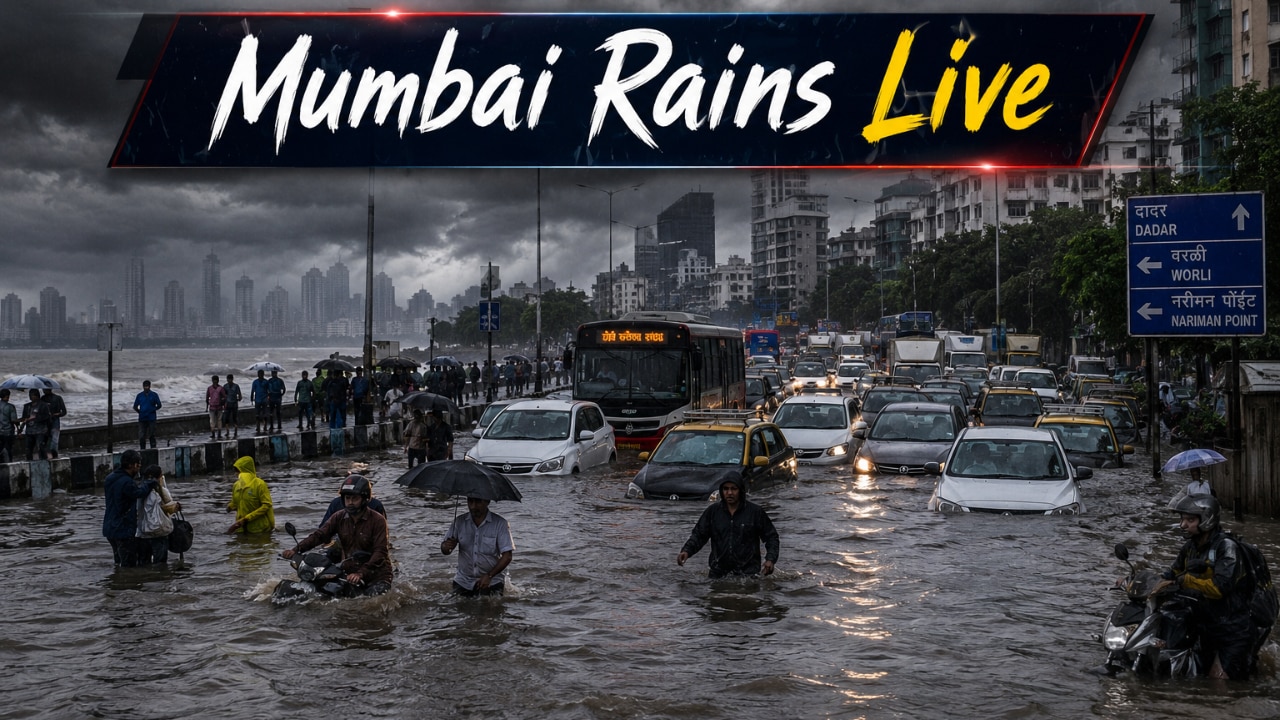
As the city grapples with severe waterlogging and transit disruptions, authorities signal a prolonged spell of heavy rainfall across Maharashtra.
The city’s infrastructure is under duress once again. After a delayed arrival, the southwest monsoon has hit Mumbai with a vengeance, dumping over 200 mm of rain in several parts within just 24 hours. For millions of commuters, the morning commute turned into a logistical nightmare as suburban train services hit major snags and low-lying areas transformed into water-logged bottlenecks. With the India Meteorological Department (IMD) issuing an orange alert, the administration has been forced to shut schools to prevent further chaos.
The scale of the downpour is evident in the civic data: while the island city recorded 195 mm of rainfall, the western suburbs bore the brunt with 208 mm. The intensity of the showers has already begun to impact the city's water security infrastructure, with the Middle Vaitarna dam forced to open its gates. While the catchment areas have received 108 mm of rain so far, the relief remains tempered by the fact that critical reservoirs like Vihar and Tulsi remain worryingly dry.
A Wider Regional Crisis
The impact isn’t confined to the financial capital. The IMD’s current forecast points toward heavy to moderate rainfall extending across Pune, Nagpur, Nashik, and the coastal belts of Raigad and Ratnagiri. With a red alert specifically issued for Raigad and Ratnagiri, the state government is on high alert. The tragic report of 21 deaths across Maharashtra serves as a stark reminder of the monsoon's volatility, prompting the Centre to offer full support to state authorities.
Why it matters
The recurring narrative of urban paralysis during the monsoon highlights a systemic lag between record-breaking climate events and municipal preparedness. As the city approaches the 2,000 mm rainfall mark for the season, the focus shifts from mere weather updates to the long-term viability of Mumbai’s drainage systems. The trend of delayed monsoon onset followed by concentrated, high-intensity bursts of rain is increasingly becoming the new normal. For the economy, this translates into recurring hits to productivity, supply chain delays, and the persistent, costly need for emergency disaster mitigation.
As the BMC continues to monitor high-tide timings—with waves predicted to reach up to 3.75 meters—residents are advised to stay updated on the evolving mumbai rains weather. For now, the city remains in a state of cautious waiting, hoping the drainage networks can handle the next wave of the downpour.
Rohan Gupta covers the economy, markets and companies for PoliticalPedia.