Middle East Tensions Spike: Hezbollah Rejects Truce as US-Iran Peace Talks Stall
Watch: U.S.- Iran war: Peace talks stall after Hezbollah rejects truce
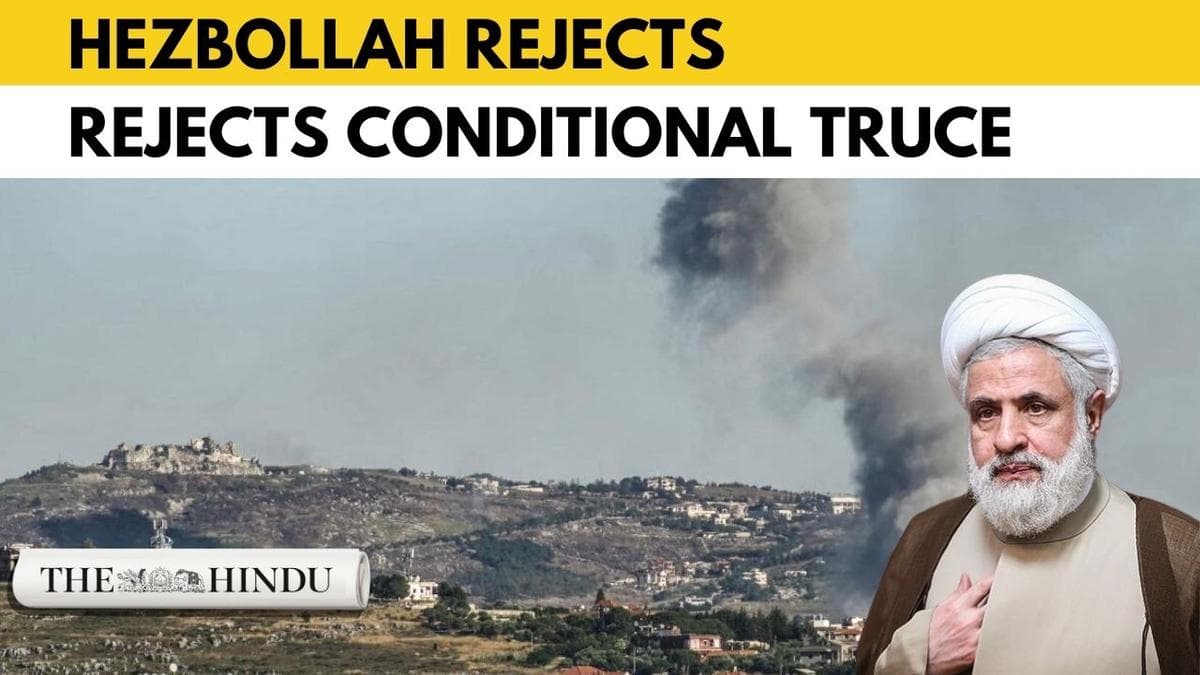
Diplomatic efforts to de-escalate the regional conflict face a precarious future as the rejection of a ceasefire leaves the Israel-Lebanon border in flames.
The fragile hope for a regional cooling-off period evaporated this June, as Hezbollah leader Naim Qassem formally rejected the latest conditional ceasefire proposal. The rejection, announced by Lebanese and Israeli envoys, has effectively stalled ongoing peace efforts, leaving the border region in a state of renewed volatility. Hezbollah has explicitly demanded a comprehensive, unconditional ceasefire coupled with a full Israeli withdrawal, a stance that stands in direct opposition to the terms currently being brokered.
A Diplomatic Deadlock
The collapse of these negotiations follows an intense 21-hour marathon of discussions held in Islamabad, aimed at bridging the gap between Washington and Tehran. While the Pakistani army chief had attempted to keep the lines of dialogue open between the U.S. and Iran, the situation on the ground has rapidly overtaken the diplomatic momentum. In Tehran, officials have signaled a hardening stance, stating there are currently "no plans" for fresh peace talks, casting significant doubt on the viability of future rounds.
The failure to secure a breakthrough is reverberating beyond the immediate war zone. International markets, already sensitive to the ongoing instability, showed signs of strain this June as investors weighed the prospect of a prolonged confrontation. Financial analysts note that the uncertainty surrounding the US-Iran situation is adding a layer of risk to global market momentum, with tech stocks showing particular sensitivity to the deteriorating geopolitical landscape.
Violence on the Ground
While envoys struggle behind closed doors, the reality of the conflict remains grim. Recent Israeli strikes in Lebanon have resulted in at least eight fatalities, further hardening positions on both sides. Reports from the border indicate that Israel and Hezbollah are once again accusing one another of violating the terms of the fragile, informal arrangements that preceded the latest proposal.
Hezbollah’s defiance has been marked by renewed rocket fire directed at northern Israel, prompting Prime Minister Benjamin Netanyahu to increase pressure on security agencies, including Mossad, to counter what Israel describes as Iranian-backed regional aggression. The rejection of the truce effectively kills the momentum generated by the previous week's discussions, leaving the international community to grapple with the prospect of an escalating, multi-front conflict.
As diplomatic channels in Islamabad and elsewhere lose their grip on the situation, the region remains caught in a cycle of rhetoric and tactical violence. With Tehran dismissing further engagement and Hezbollah insisting on a full withdrawal, the window for a negotiated settlement appears to be closing rapidly, leaving military calculations to dictate the next phase of the crisis.
The PoliticalPedia Editorial Desk brings verified, sourced political news and analysis from across India.