‘Mamata Has Become Dhritarashtra’: The Growing Rebellion Against the TMC Chief
‘Mamata Has Become Dhritarashtra’: Rebel MP Satabdi Roy’s Explosive Attack On TMC Chief | News18
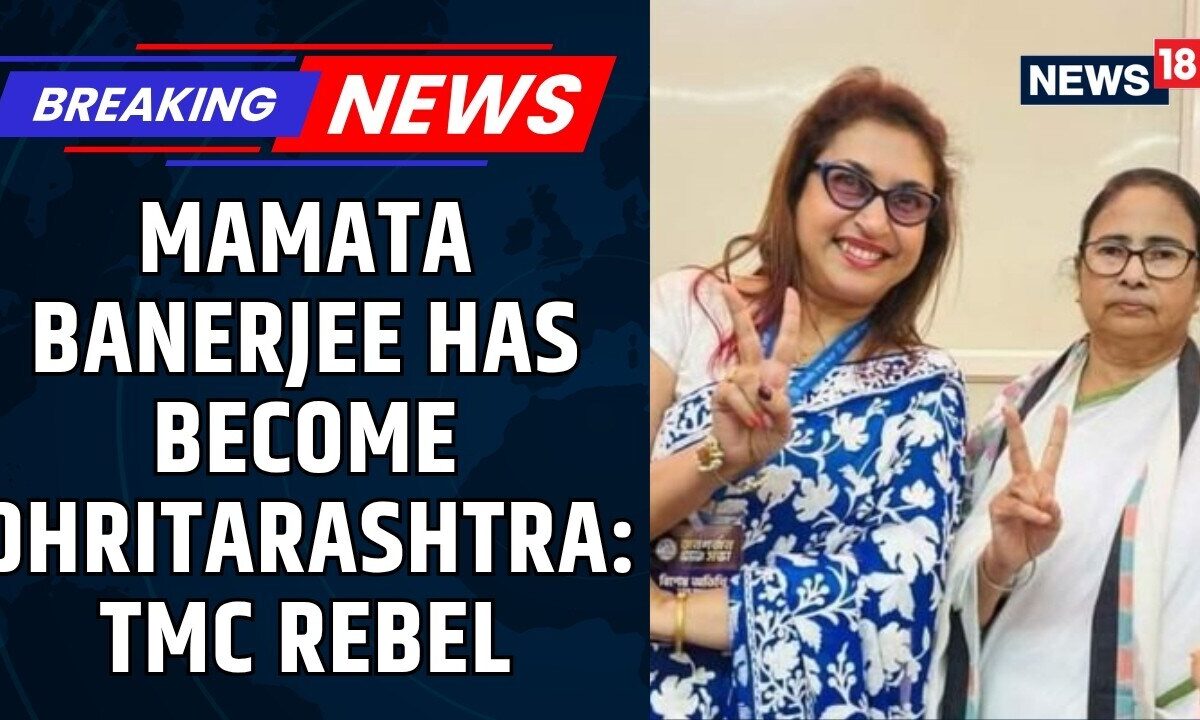
Veteran MP Satabdi Roy has joined a widening circle of dissenters, accusing the leadership of shielding corruption and ignoring the voices of party colleagues.
The crisis engulfing the Trinamool Congress (TMC) has reached a boiling point, with the party’s internal structure showing visible cracks. In an explosive attack on TMC chief Mamata Banerjee, four-time MP Satabdi Roy has compared the veteran leader to the blind king Dhritarashtra from the Mahabharata, alleging that the party leadership has become willfully ignorant of the rot within its ranks. Roy, who has been a loyalist since 2009, did not mince words, claiming that mamata has become dhritarashtra—presiding over a party where concerns regarding systemic corruption were consistently swept under the rug.
The rebellion is no longer a localized issue. With rebel MP Satabdi Roy now acting as deputy leader of a dissident bloc, the unrest has gained significant institutional weight. This group of roughly a dozen MPs has already initiated contact with BJP leaders, signaling a readiness to shift their allegiance to the NDA. As the internal rift deepens, another senior leader, Kakoli Ghosh Dastidar, has been named the chief whip of this rebel faction, which she claims now commands the support of at least 20 MPs.
A Party Divided
The friction point, according to Roy, is the total lack of access to the high command. She describes a "selective" inner circle that monopolized Mamata Banerjee’s time, leaving senior representatives unheard and ignored. This frustration is mirrored in the state assembly, where a massive defection has seen as many as 59 MLAs, including figures like Ritabrata Banerjee, distancing themselves from the party leadership. These legislators have even submitted letters of support to the Speaker, pushing for recognition as the "Real Trinamool Congress."
Roy also pointed to a jarring disconnect between the party's core messaging and its optics on the ground. While she acknowledged the political contributions of Abhishek Banerjee in past victories, she noted that his lifestyle became a rallying point for public anger, standing in stark contrast to the simplicity that the party and Banerjee have historically championed. For many voters, this perceived elite disconnect, coupled with deep-seated corruption, proved to be an insurmountable hurdle.
Why it matters
The scale of this revolt suggests that the TMC’s internal management mechanisms have effectively collapsed. When a loyalist of 15 years publicly laments that "Didi has changed," it signals more than just a difference of opinion; it indicates a failure of the party to adapt to the changing political realities of West Bengal. The Trinamool leadership is now facing a dual challenge: addressing the specific allegations of corruption that have alienated their base and preventing a complete exodus of its elected representatives. If this momentum continues, the political map of the state could face a fundamental realignment, shifting the power balance significantly before the next major electoral cycle.
Ananya Iyer covers global affairs with an Indian lens for PoliticalPedia.