Mamata Banerjee’s grip slips as Sushmita Dev quits Rajya Sabha amid mass rebellion
Another big blow to Mamata, TMC MP Sushmita Dev resigns from Rajya Sabha
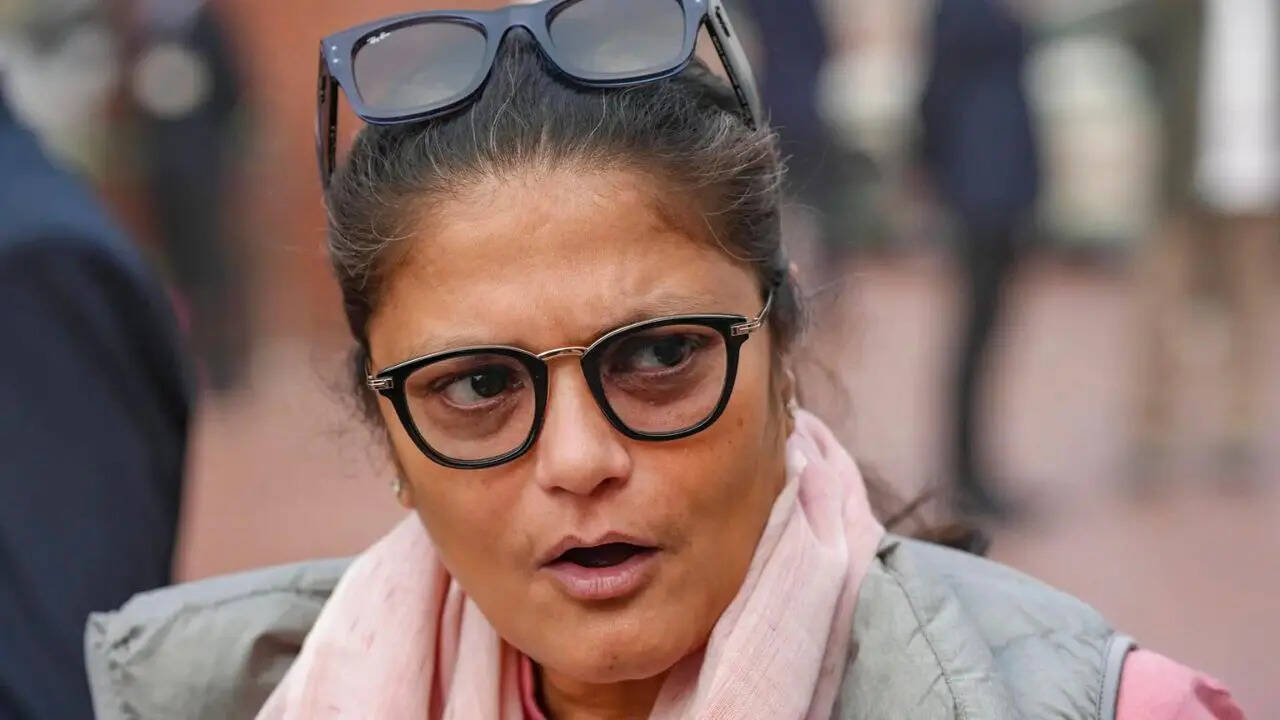
The Trinamool Congress faces an existential threat as a second high-profile exit in a week signals a deepening revolt that now spans both houses of Parliament.
The political ground in West Bengal is shifting rapidly under Mamata Banerjee’s feet. On Wednesday, the Trinamool Congress (TMC) suffered a fresh jolt as Sushmita Dev tendered her resignation from the Rajya Sabha. Her exit, confirmed by a formal letter to the Chairman, arrives just days after veteran leader Sukhendu Sekhar Ray walked away from the party, leaving the TMC leadership scrambling to contain a cascading crisis that has moved from the state assembly directly into the heart of the national capital.
For TMC MP Sushmita Dev, the move appears to be the culmination of a period of deep internal friction. Shortly after her departure, she was spotted at the residence of Assam Chief Minister Himanta Biswa Sarma, fueling intense speculation that she is set to swap her TMC affiliation for the BJP. Sources suggest she may be eyeing a return to the Upper House as a candidate for the saffron party, a move that would underscore the shifting loyalties of former Congress figures who had migrated to the TMC fold in search of a national platform.
A rebellion goes national
The timing of this departure is particularly damaging. It follows the dramatic resignation of Sukhendu Sekhar Ray, who did not mince words on his way out, labeling the party a den of "thieves and rapists" while highlighting the intense fallout from the RG Kar hospital controversy. These are not merely isolated exits; they are symptoms of a structural rot. Reports from the ground indicate that about 20 Lok Sabha MPs have now petitioned the Speaker for separate seating, effectively signaling their intent to function as an independent bloc or align themselves with the NDA.
This legislative rebellion is mirrored by a similar upheaval in the West Bengal assembly, where as many as 61 MLAs have reportedly bypassed the party’s official mandates to back a rebel leader. The message is clear: the central command of the TMC is no longer viewed as the sole arbiter of political fortune by its own ranks.
Why it matters
This is more than a simple case of switching sides; it represents a fundamental breakdown of the TMC’s internal hierarchy. When a party begins losing its national spokespersons and veteran parliamentarians in back-to-back weeks, it indicates a loss of institutional control. The "two boats" dilemma that Dev alluded to—the inability to balance regional aspirations with national political realities—is now a common refrain among the party's disillusioned cadre.
For Mamata Banerjee, the challenge is no longer just about electoral defeat; it is about preventing a complete hemorrhage of her legislative strength. If the trend of parliamentarians seeking alignment with the central government continues, the TMC’s influence in Delhi could vanish long before the next major electoral cycle, turning the party into a hollowed-out version of its former self.
Rohan Gupta covers the economy, markets and companies for PoliticalPedia.