Karnataka Congress faces mounting pressure as Muslim leaders demand five cabinet berths
Muslim leaders warn Congress against ignoring their concerns in Karnataka
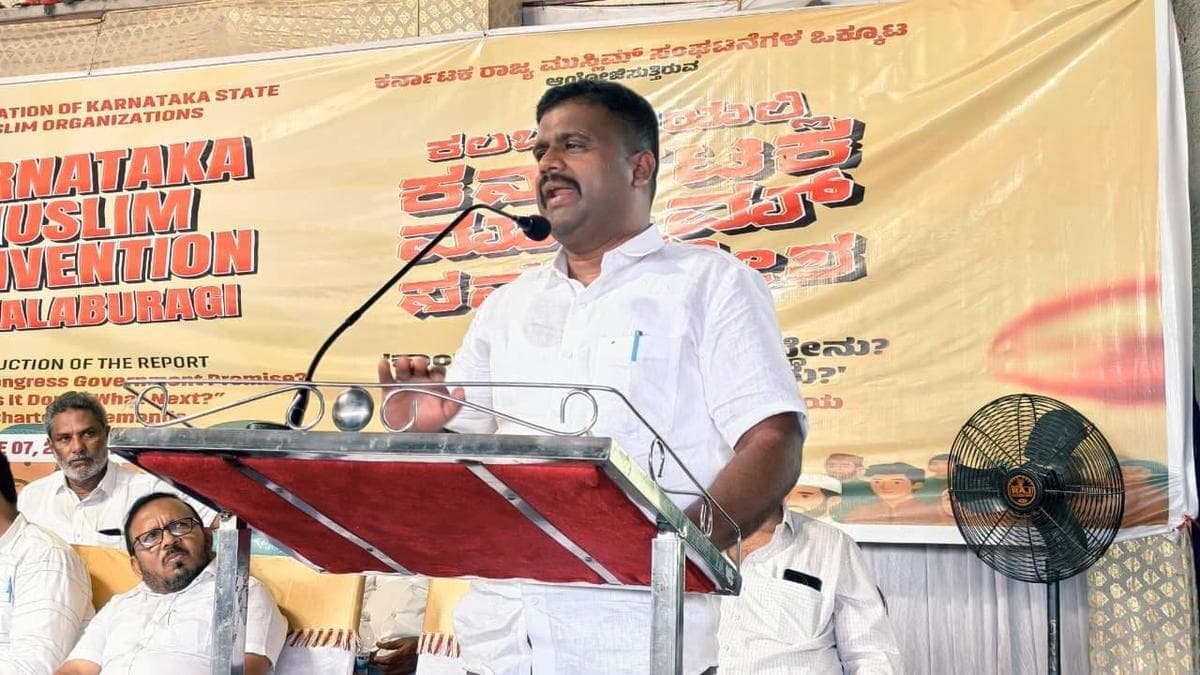
Religious leaders and community groups warn of electoral fallout unless the government addresses grievances over representation, welfare, and policy reversals.
The atmosphere at the Hazrat Syed Fateh Shah Wali Dargah in Bellinagar recently turned stern, as a gathering of Muslim clerics and community leaders issued a direct ultimatum to the Karnataka government. Asserting that the Congress party owes its 2023 electoral mandate largely to the community's support, the assembly demanded the immediate induction of five Muslim representatives into the state cabinet. With senior figures like B.Z. Zameer Ahmad Khan, N.A. Harris, Tanveer Sait, and Saleem Ahmed explicitly named for ministerial roles, the message to the state leadership was clear: the era of being taken for granted is over.
A widening trust deficit
Beyond the demand for cabinet positions, the backlash is rooted in a perceived pattern of neglect. Representatives from the Federation of Karnataka State Muslim Organisations have voiced deep frustration over the government's inertia regarding the community's socio-economic upliftment. Key grievances include the long-pending demand to increase the Category 2(B) reservation from 4% to 8%, a failure to allocate a promised ₹10,000 crore for minority welfare in the state budget, and a glacial pace in reversing the hijab ban implemented by the previous BJP administration.
The resentment has been compounded by recent internal party dynamics. The expulsion of MLC Abdul Jabbar and the removal of Naseer Ahmed as the Chief Minister’s political secretary—allegedly over their conduct during the Davangere South bypolls—have been viewed by the community as a "red line" being crossed. Many leaders see these actions not as isolated administrative measures, but as a deliberate effort to shrink the space for Muslim voices within the Congress hierarchy.
Why it matters
This friction highlights a critical challenge for the Congress in Karnataka: balancing its broader political strategy with the rising expectations of its core support base. The threat to "teach the party a lesson" by the 2028 assembly elections suggests a shift from passive support to active, conditional bargaining. For the Congress, the risk is that the current alienation could consolidate a narrative of "soft Hindutva" or indifference, potentially eroding the vote bank that was instrumental in their path to power. The government now faces a delicate choice—either appease these veteran community leaders to mend the fractured alliance or risk a splintering of their traditional coalition.
Looking ahead
As the Federation of Karnataka State Muslim Organisations and various Ulema councils continue to push for a course correction, the burden of proof rests on the state leadership. Whether it is the demand for greater representation in the Legislative Assembly and Council or the call for stricter action against those stoking communal tensions, the community’s list of demands is growing. With a state-level Ulemas’ conference on the horizon, the government’s response in the coming weeks will likely determine whether this standoff de-escalates or evolves into a significant political hurdle for the party’s future in the state.
World Desk at PoliticalPedia covers global affairs for an Indian audience in English and Hindi.