June 1986: A season of blood and shadow in Punjab
40 years ago June 8, 1986: Ten shot dead in Punjab
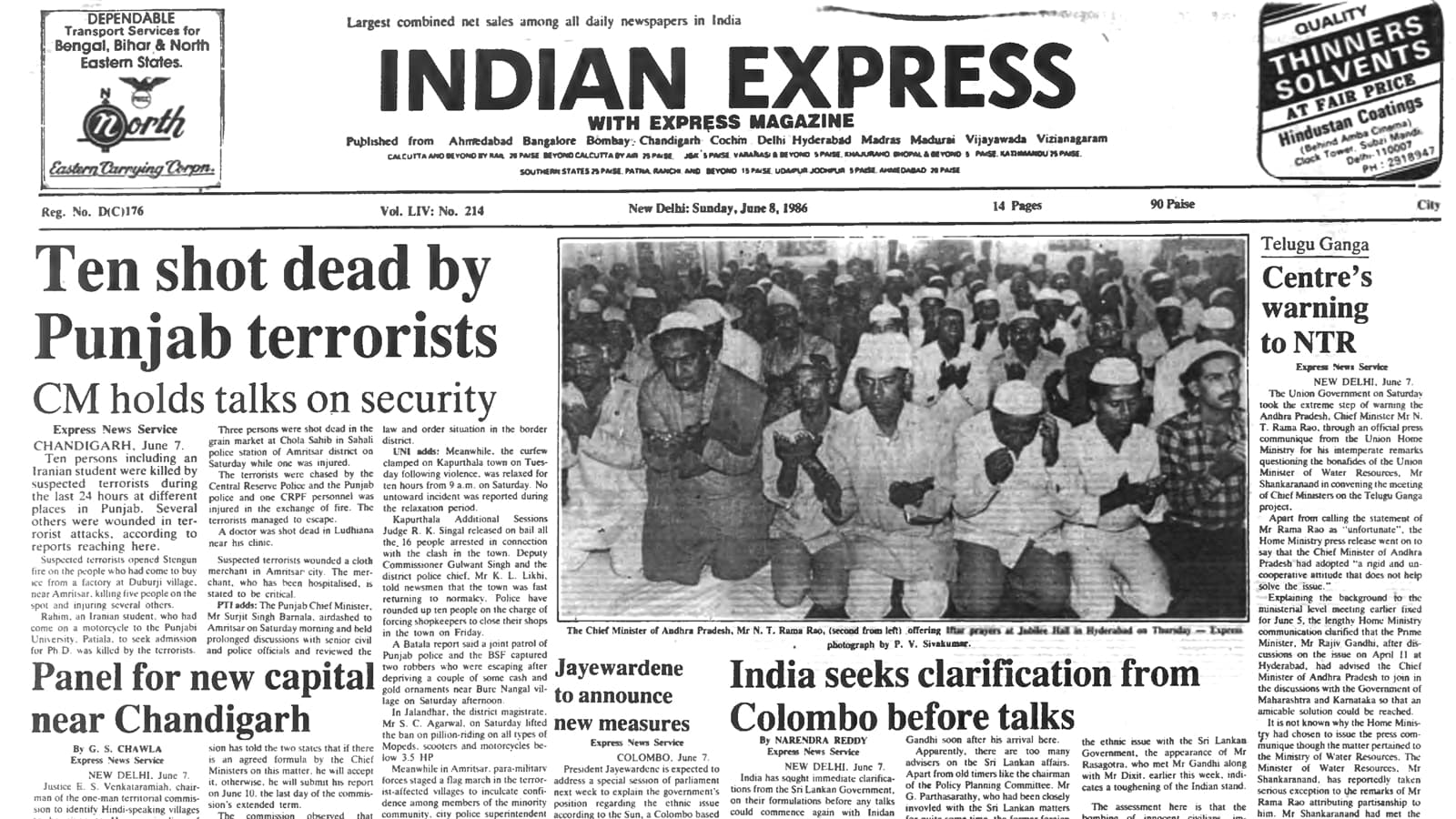
Forty years ago, a wave of militant violence left ten people shot dead in a single day, marking a dark chapter in the state’s long history of insurgency.
The morning of June 8, 1986, brought a familiar, chilling rhythm of violence to Punjab. In a span of just 24 hours, ten individuals were shot dead by suspected terrorists, turning routine life into a target. Among the victims were five people gunned down by Sten fire at an ice factory in Duburji village, near Amritsar. The brutality reached across all walks of life; Rahim, an Iranian student who had traveled to Patiala on his motorcycle to pursue a PhD, found himself in the crosshairs of an insurgency that showed no discrimination.
This violence was not an isolated outburst but the culmination of a week of intense unrest. The atmosphere was thick with tension as groups marked the second anniversary of Operation Blue Star, the 1984 Indian Army assault on the Golden Temple. Militants had designated this period as "Genocide Week," and the subsequent killings underscored the precarious reality on the ground. Reports from the time indicated that police were scrambling to manage the fallout, even as new threats emerged from radical factions promising further cycles of bloodshed if their demands regarding Jodhpur prisoners remained unaddressed.
The bigger picture: A state under siege
The situation in Punjab during this era was defined by a volatile mix of political alienation, the breakdown of law and order, and the rise of separatist militancy. By 1986, the state had become a theater for a larger, more complex struggle. While local news channels and the press tracked the daily body count, the macro-environment was increasingly unstable. With thousands of troops being deployed to quell the unrest, the security apparatus was stretched thin, trying to contain a movement that had roots in the political grievances of the Anandpur Sahib Resolution and the spiraling violence of the early 80s.
Beyond the borders
While the home front faced a deepening crisis, the global stage in June 1986 offered little distraction. As India prepared for a critical $4 billion aid package from a Western consortium, the government was simultaneously urged to overhaul its public-sector efficiency and export performance to narrow the trade gap. Simultaneously, global attention flickered toward South Africa, where Queen Elizabeth II reportedly issued a rare, discreet warning to Margaret Thatcher, urging for economic sanctions against the apartheid regime. Meanwhile, public health concerns were beginning to brew in Tamil Nadu, where medical experts at CMC, Vellore, confirmed a rise in AIDS cases, adding a quiet, systemic shadow to an already tumultuous month.
The patterns of 1986 remain a critical case study for the region. The inability to reconcile political demands with national security created a vacuum that militants exploited, turning Punjab into a focal point of intense state-level volatility. For historians, these events serve as a stark reminder of how internal security threats do not just claim lives—they fundamentally alter the trajectory of a state’s development and its relationship with the federal center.
Politics Desk at PoliticalPedia covers parties & elections for an Indian audience in English and Hindi.