Junagadh’s Monsoon Trap: When Civic Negligence Turns Roads into Death Zones
Video: Couple falls into water-filled road pit in Gujarat’s Junagadh, man suffers severe head injures
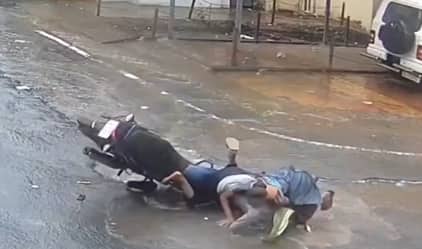
A terrifying CCTV video from Gujarat captures the moment a couple disappears into a water-filled pit, marking a grim start to the monsoon season.
The first spell of monsoon rain is usually welcomed with relief in Gujarat, but in Junagadh, it brought a dangerous reality to the surface. As the city streets turned into flooded channels, a series of CCTV clips emerged, showing an unsettling pattern: residents are literally vanishing into the infrastructure. The most harrowing video shows a couple on a motorcycle cruising through Azad Chowk, only to plunge suddenly into a deep, water-filled excavation. The rider was thrown violently into the pit, suffering serious head injuries, while the passenger—though shaken—managed to scramble out to assist him.
The incident at Azad Chowk is not an isolated case of bad luck. Across the Oghadnagar area, the same treacherous conditions led to at least four other incidents on the very first day of the rain. In one instance, a woman walking with her young daughter stepped blindly into an open drain hidden beneath the water. Only the quick reflexes of local residents, who acted as impromptu first responders, prevented a potential tragedy. Another rider was seen on camera falling headfirst into a similar void, saved only by the intervention of onlookers who pulled him to safety.
A Pattern of Unfinished Business
Why were these roads so lethal? Reports indicate that these pits weren’t just natural potholes; they were the result of civic work left in a state of limbo. Deep excavations meant for repairs were left exposed and unbarricaded. When the rains arrived, the water acted as a shroud, turning the road into a camouflage of danger. For the commuters traversing these stretches, the lack of warning signs meant the difference between a routine trip and a medical emergency.
Deputy Commissioner Jadeja later acknowledged that pre-monsoon work was still in progress when the accidents occurred. While the administration has since scrambled to install barricades and warning banners, the damage—both to public trust and the physical well-being of the victims—was already done. The city’s infrastructure, intended to support public movement, became a hazard that required local citizens to act as the primary safety net.
Why it matters: The bigger picture
This cycle of "pre-monsoon" construction leading to post-monsoon accidents is a recurring crisis in many Indian urban centers. It reflects a systemic failure in project management: the tendency to initiate civil works just as the rains are set to break, coupled with an absence of temporary safety protocols. When the "development" narrative meets the reality of open manholes and unsealed trenches, it exposes a gap between administrative claims and ground-level safety. For the residents of Junagadh, these events serve as a stark reminder that until accountability is baked into the planning process, the arrival of the monsoon will remain a season of unnecessary peril.
Kabir Sharma writes on culture, technology and everyday life for PoliticalPedia.