West Bengal Unlocks Rs 313 Crore Welfare Push for Tea Garden Workers
Suvendu Adhikari announces Rs 313 crore Pradhan Mantri Cha Shramik Protsahan Yojana for West Bengal tea workers
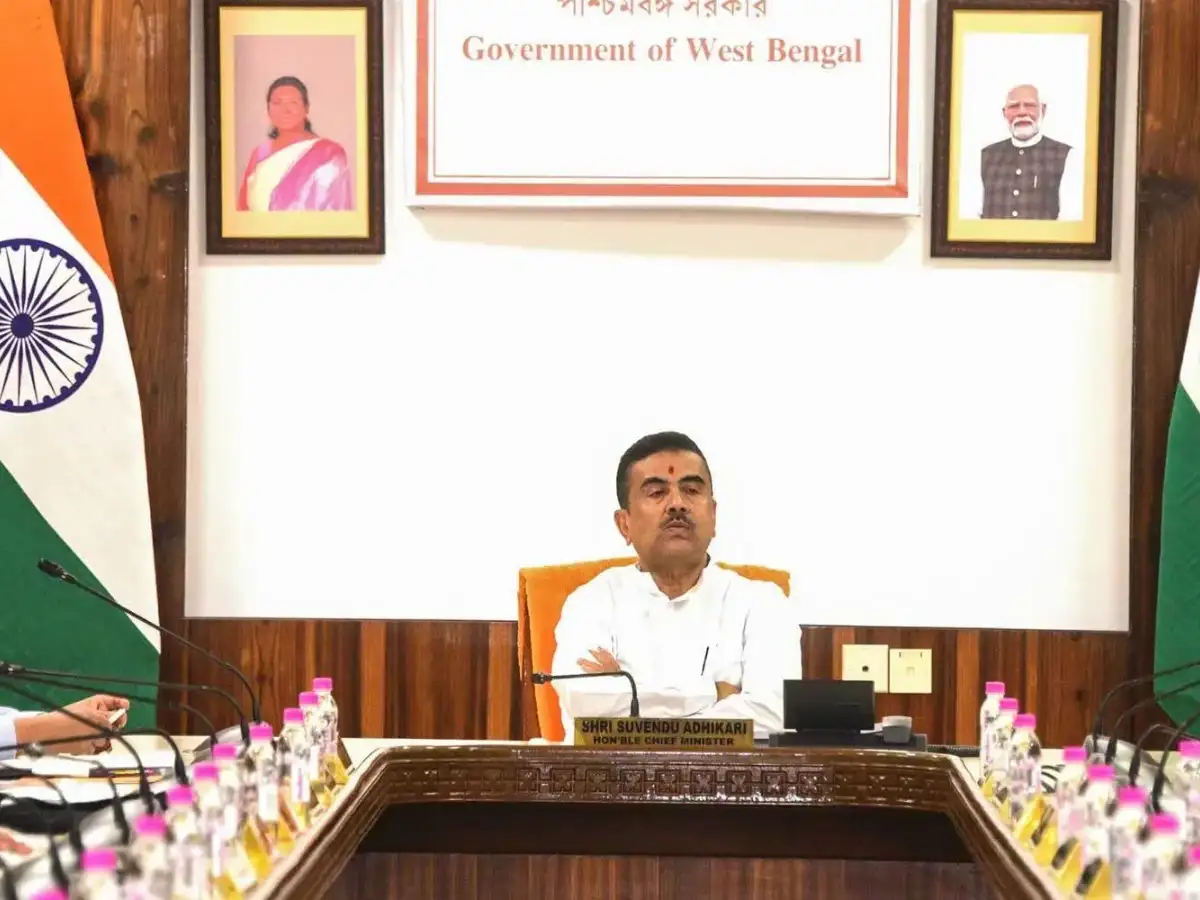
After two years of administrative stalemate, the state has finally set up a committee to roll out the Pradhan Mantri Cha Shramik Protsahan Yojana, aiming to overhaul health and education infrastructure for over 10 lakh workers.
For thousands of workers across North Bengal’s sprawling tea estates, the promise of better living conditions has long been stalled in bureaucratic limbo. This week, that deadlock finally broke. West Bengal Chief Minister Suvendu Adhikari announced the immediate implementation of the Pradhan Mantri Cha Shramik Protsahan Yojana (PMCSPY), a central government initiative with a total financial outlay of Rs 313.30 crore specifically earmarked for the region's tea belt.
The scheme, which had remained dormant in the state for nearly two years due to the lack of a mandatory State Level Committee (SLC), is now back on track. With the committee finally constituted—comprising both state and central government representatives—the path is clear to distribute funds that were previously unreachable. The North Bengal Development Department (NBDD) will lead the execution, coordinating with health and education authorities to ensure the money reaches the ground level.
Where the Money Goes
The financial roadmap for the PMCSPY is split into three primary pillars. The largest slice, Rs 177 crore, is dedicated to the Cha Shramik Shiksha Yojana (CSSY), designed to strengthen educational infrastructure and provide better learning avenues for the families of tea garden workers.
Healthcare, a chronic pain point in the remote tea regions, receives Rs 72 crore under the Cha Shramik Swasthya Suraksha Yojana (CSSSY). This is slated for upgrading medical services and facilities to ensure workers don’t have to travel long distances for basic care. Finally, Rs 63 crore is allocated for the Cha Shramik Aashray Yojana (CSAY), which will fund 321 new resting sheds—88 in the hills and 233 in the plains. These facilities are designed to be modern, featuring off-grid solar power, clean drinking water, and sanitation.
Why it Matters: The Bigger Picture
The activation of this scheme signals a shift in the administrative machinery governing North Bengal’s tea industry. For years, the lack of an SLC—a prerequisite for unlocking central funds—meant that tea workers were left out of a broader Rs 1,000 crore national corpus intended for Assam and West Bengal.
The delay underscored a friction point between state and federal coordination that often leaves the labour force in the lurch. By finally formalizing the committee, the state government is not just tapping into central capital but is also responding to the intensifying demand for infrastructure reform in a sector that employs over 10 lakh people. With only one year left to fully utilize the original three-year fund allocation, the pressure is now on district administrations to submit project proposals quickly to avoid further lapses.
The move comes as part of a wider administrative push in the region, following other recent initiatives like the Annapurna Scheme and the Viksit Bharat-Guarantee for Rozgar and Ajeevika Mission. For a sector that has faced historical neglect and recurring closures, these projects represent a critical, if overdue, attempt to modernize the daily reality of those who power the tea industry.
Rohan Gupta covers the economy, markets and companies for PoliticalPedia.