Indian Army Prepared for Both Short and Intense Conflicts: Gen Dwivedi
Army prepared for both short and intense conflicts: Gen Dwivedi
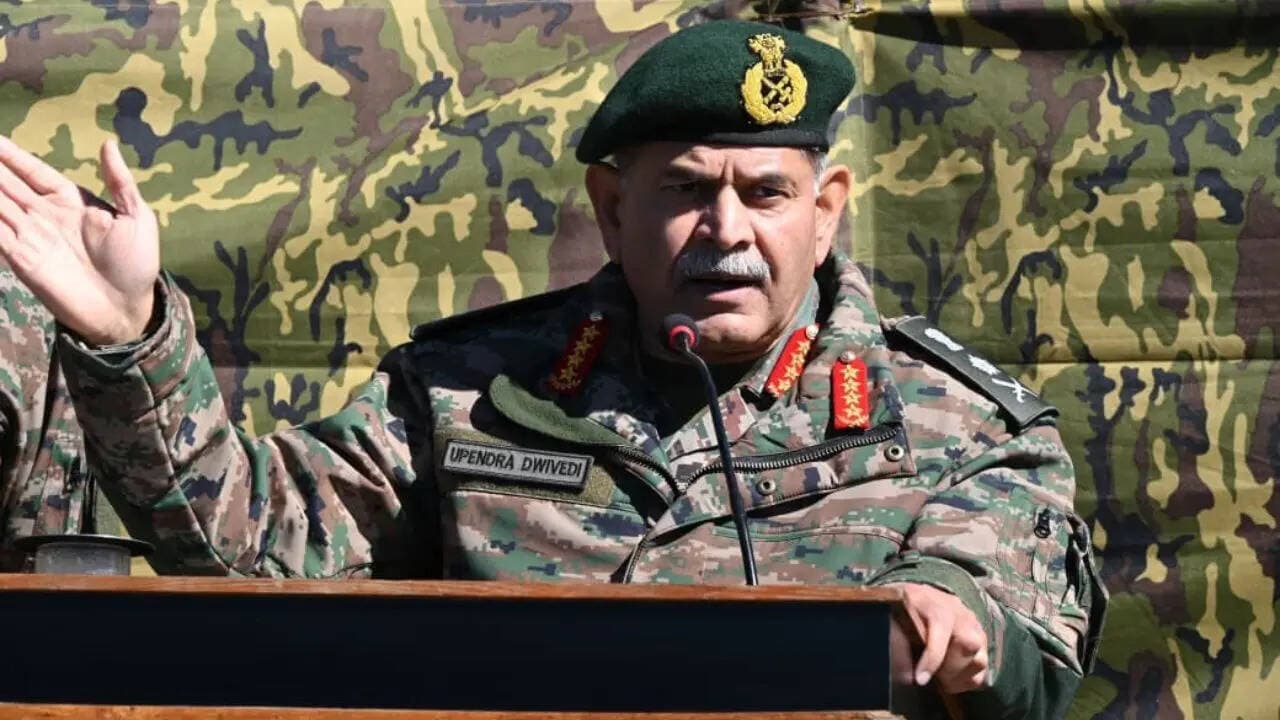
Chief of Army Staff General Upendra Dwivedi emphasizes a shift toward integrated, multi-domain capabilities and technological self-reliance in the wake of the successful Operation Sindoor.
The Indian Army is bracing for the realities of modern combat, where traditional infantry strength must be augmented by cutting-edge technology. Chief of Army Staff General Upendra Dwivedi, who has led the 12.4 lakh-strong force since June 2024, recently highlighted that the military is now fully geared to manage both swift, high-intensity strikes and prolonged tactical engagements. According to the Army chief, the era of warfare is evolving into a state of constant, multi-domain conflict that spans land, cyber, and narrative landscapes.
Lessons from Operation Sindoor
A cornerstone of this strategic shift is the experience gained during Operation Sindoor. General Dwivedi described the 88-hour mission against Pakistan as a defining moment that showcased the ability of the Indian forces to deliver precise, integrated results. By utilizing a "Whole of Nation" approach, the operation proved that intelligence fusion, air power, and electronic warfare could work in total synchrony. Gen Dwivedi noted that the success of this operation has since been woven into the core doctrine of the Indian Army, serving as a blueprint for future contingencies.
Addressing the changing nature of the battlefield, the Chief of Army Staff emphasized that "boots must share space with bots." This vision involves a greater reliance on robotics, artificial intelligence, and indigenous drones. During his recent visit to IIT-Madras, where he inaugurated the ‘Agnishodh’ research cell, Gen Dwivedi reaffirmed that the military is pivoting toward self-reliance, or Atmanirbharta, to ensure that supply chains remain resilient and decision cycles stay compressed during a crisis.
Firm Stance on National Security
The Army chief offered a stern warning regarding state-sponsored terrorism, labeling the previous conflict a "trailer" of what India is capable of should its security be challenged. He maintained that India remains committed to peace but will not tolerate provocations. With the view that talks and terror cannot coexist, he stated that the forces are prepared to hold both terrorists and their sponsors accountable with equal resolve.
A Changing Regional Landscape
Regarding the border situation with China, General Dwivedi observed that the past year has seen significant improvements. Through high-level discussions, both nations have taken positive steps toward better dialogue, signaling a potential thaw in long-standing tensions. Meanwhile, in Jammu and Kashmir, the Chief noted a palpable shift toward stability. He observed that the local population is increasingly eager to participate in national development, with many who previously left the region now expressing a willingness to return and contribute to its future.
The PoliticalPedia Editorial Desk brings verified, sourced political news and analysis from across India.