India Emerges as Key Pillar in Russia’s Realigned Foreign Trade Strategy
India among Russia's top foreign trade partners: PM Mishustin
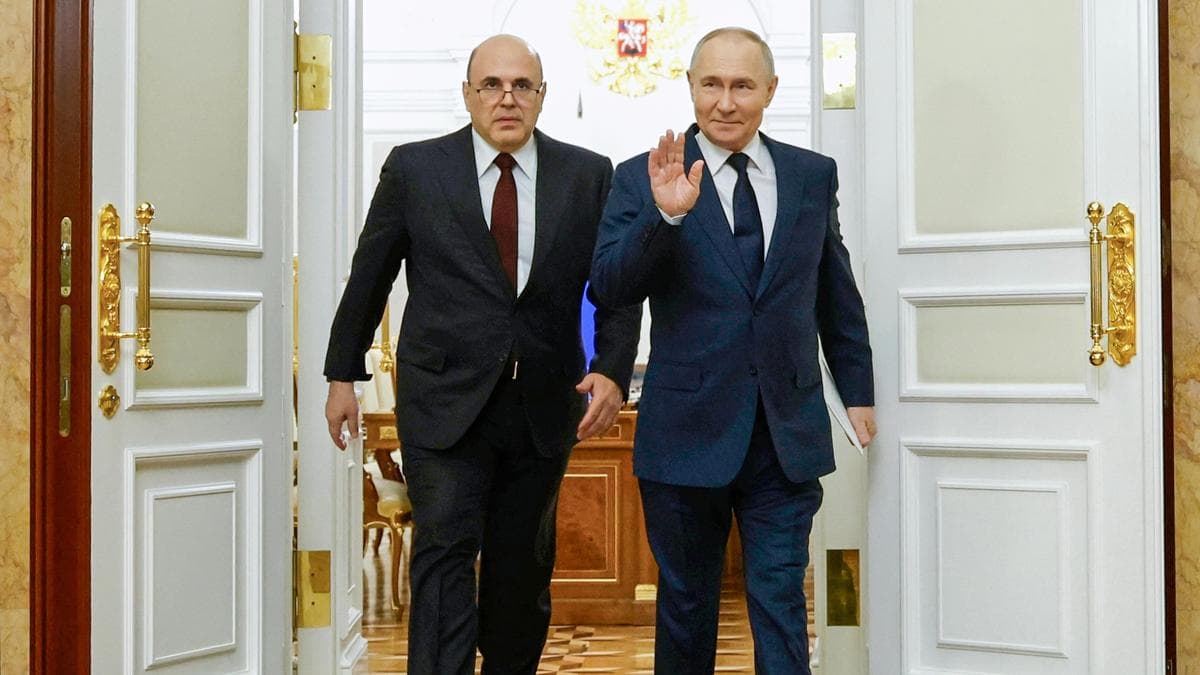
Russian Prime Minister Mikhail Mishustin has highlighted a record-breaking surge in economic cooperation with India, as Moscow pivots its trade and energy flows toward friendly nations.
Russia’s economic landscape has undergone a significant transformation, with Prime Minister Mikhail Mishustin confirming that India now stands as one of the nation’s most vital foreign trade partners. During a high-level strategic session on Tuesday, Mr. Mishustin noted that the share of trade with "friendly countries"—a group that includes India, China, Belarus, and Kazakhstan—has climbed to a historic peak of 86 percent of Russia’s total turnover.
A Massive Leap in Bilateral Commerce
The economic relationship between New Delhi and Moscow has seen a meteoric rise over the past four years. Data from the 2024–25 financial year shows that bilateral trade between the two nations hit a record $68.7 billion. This represents a staggering five- to six-fold increase compared to the roughly $13 billion recorded in 2021. Looking ahead, both capitals have set their sights on a $100 billion trade target by 2030, aiming to diversify their engagement beyond traditional energy exports into high-growth sectors such as pharmaceuticals, advanced technology, and defence.
Energy Flows and Sanctions Adaptation
Addressing the ongoing global economic shifts, Mr. Mishustin emphasized that Russia has successfully navigated unprecedented external pressure and Western sanctions. By redirecting a sizable portion of its energy resources, the country has managed to secure stable markets. The Russian leader noted that the "backbone" countries involved in these energy flows saw their share double over the last three years, reaching 80 percent by the first half of 2025. While he acknowledged that some infrastructure segments lack flexibility and require costly, long-term investments to redirect, the overall strategy has proved highly efficient.
The Shift Toward National Currencies
A cornerstone of this deepening partnership is the move away from traditional reserve currencies. Mr. Mishustin reported that the transition to settlements in national currencies has accelerated significantly. Between January and October, the share of such payments in trade turnover with all partners reached 85 percent, comfortably surpassing the previously established target of 70 percent.
Commenting on the broader global economic climate, the Prime Minister observed that the economic influence of the G7 continues to wane. In its place, the collective weight of the Global South and East—led primarily by BRICS nations—is rising, positioning countries like India at the heart of a new, multilateral economic architecture.
The PoliticalPedia Editorial Desk brings verified, sourced political news and analysis from across India.