How AAP Rebounds in Urban Punjab: Decoding the 2026 Civic Election Results
How AAP regains ground in urban Punjab in 2026 civic polls after 2024 LS setback
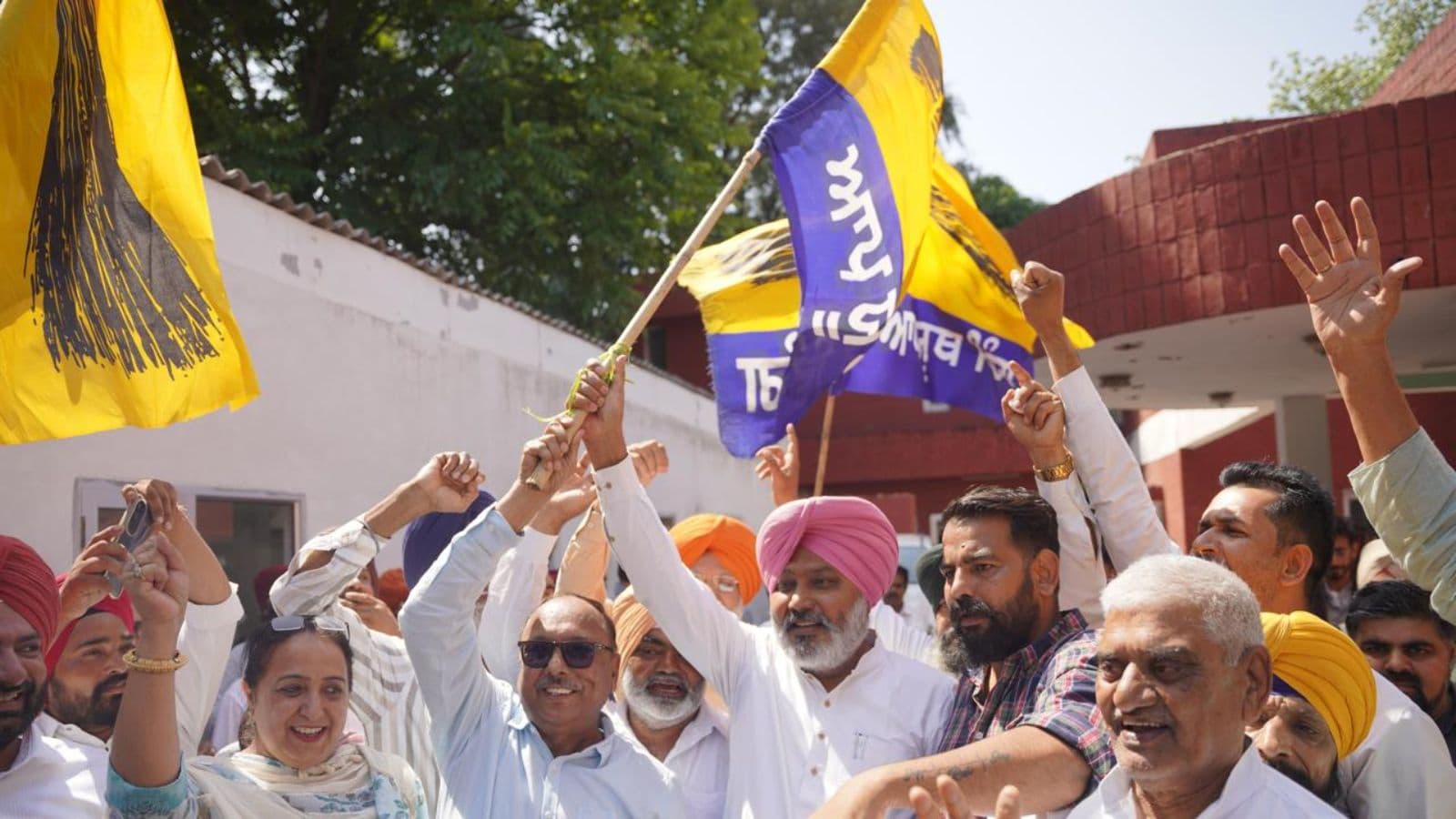
The ruling Aam Aadmi Party has secured a decisive victory in the latest municipal polls, marking a significant political recovery following its 2024 parliamentary setback.
The recent verdict from Punjab’s local government elections, announced on May 29, paints a picture of a revitalized Aam Aadmi Party (AAP). By securing majorities in five of the eight contested municipal corporations, as well as dominating 39 of 75 municipal councils and nine of 20 nagar panchayats, the party has effectively reasserted its influence over the state’s urban centers. For Chief Minister Bhagwant Mann, these results serve as a direct mandate, with the party capturing nearly 48 percent of the total wards across the state, far outpacing the Congress, which managed to secure about 20 percent.
A Shift in the Urban Political Landscape
The significance of these elections lies in the stark contrast they offer to the 2024 Lok Sabha cycle. During the national polls, the AAP faced a difficult period, leading in only one of the Assembly segments associated with these specific municipal corporations. In contrast, the current municipal outcomes show the party sweeping the 50-member houses in Barnala, Batala, Bathinda, Moga, and Mohali. This turnaround is particularly notable given that the party had previously struggled in these exact areas just two years ago, where the Congress and other opposition forces had gained significant ground.
However, the path to total dominance remains incomplete. The AAP faced resistance in three corporations: Abohar, where the BJP secured a majority; Pathankot, where the BJP emerged as the single-largest party; and Kapurthala, which was claimed by the Congress. These results highlight that while the AAP has regained its footing, the Opposition—comprising the Congress, BJP, and Shiromani Akali Dal—continues to maintain hold over specific urban pockets.
Analyzing the 2027 Projections
Political observers are keenly watching these figures as a barometer for the 2027 Assembly elections. With these civic bodies influencing nearly 90 of the 117 Assembly constituencies and representing over 3.6 million voters, the stakes are exceptionally high. Chief Minister Mann has framed this victory as a public endorsement of his government’s focus on development and secularism, positioning it against the backdrop of sectarian politics.
Despite the celebratory mood within the AAP camp, experts suggest caution. Analyst Harjeshwar Pal Singh notes that Punjab has a long-standing historical trend where the party in power at the state level often enjoys a structural advantage in local elections. Factors such as administrative influence, fragmented opposition strategies, and the voter’s pragmatic desire for closer access to those in power often tilt the scales toward the ruling party. As such, while these elections provide a crucial confidence boost for an embattled AAP, they remain a separate contest from the broader state-level battle due in early 2027.
The PoliticalPedia Editorial Desk brings verified, sourced political news and analysis from across India.