Haryana’s Gains in Jeopardy as Sex Ratio at Birth Dips to Eight-Year Low
A movement losing momentum and daughters as Haryana’s sex ratio declines
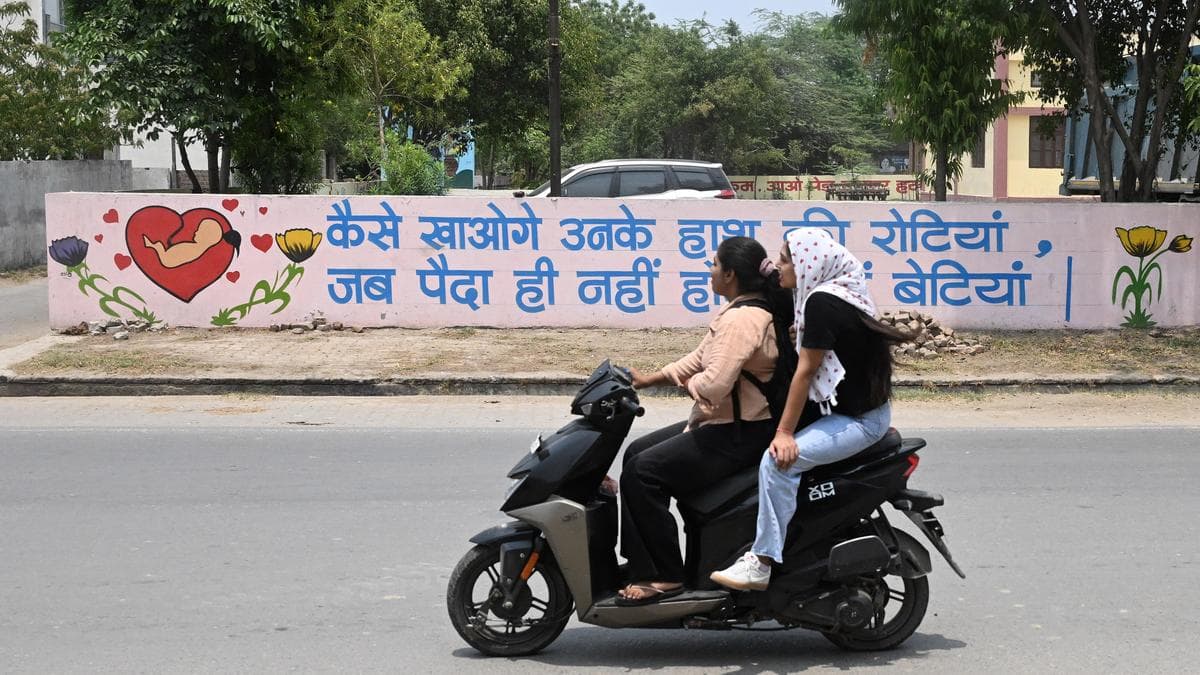
A resurgence of illicit prenatal gender determination and waning administrative vigilance threatens the progress of the state’s landmark campaign for daughters.
The narrative of Haryana’s fight for gender parity is facing a jarring correction. More than a decade after the clarion call of the "Beti Bachao, Beti Padhao" (BBBP) campaign echoed from Panipat, the state has recorded a troubling decline in its sex ratio at birth (SRB). Data for the first four months of 2026 shows a slide to 898 girls per 1,000 boys, a stark contrast to the steady improvements that saw the ratio climb to a peak of 923 in 2019 and 2025. This downward trajectory, which began with a dip to 910 in 2024, suggests that the deeply entrenched social preference for sons is resurfacing as the fear of law among offenders begins to fade.
The Collapse of Monitoring
The recent dismantling of a sophisticated sex-determination racket in the heart of Gurugram—where a radiologist allegedly charged ₹40,000 for illegal tests—has exposed a systemic failure in oversight. Despite thousands of raids and arrests since the inception of the BBBP initiative, the brazenness of these syndicates suggests that monitoring mechanisms have grown lax. For families like that of 31-year-old Bijli Devi in Sonipat, who is pregnant with her seventh child amidst pressure to produce a son, the black market for gender testing remains a grim reality. While she herself lacks the means to access these illegal services, the persistent demand for them across the state continues to skew demographic numbers.
The scale of the decline is geographically broad. While districts like Nuh, Rewari, and Sonipat have managed to keep their SRB above the 900 mark, others have suffered precipitous drops. Charkhi Dadri, which recorded 913 in 2025, plummeted to 768 in the first four months of 2026. Other regions, including Ambala, Mahendragarh, and Fatehabad, have seen similarly sharp regressions. The state health department’s data confirms that out of 1,61,258 births registered between January and April 2026, the imbalance between boys and girls remains a critical barrier to achieving true gender equality.
A Shift in Strategy
In response to the alarming statistics, the Nayab Singh Saini-led government has shifted its focus toward more granular enforcement and social outreach. Chief Medical Officers have been directed to intensify surveillance, with mandates for at least two raids per week targeting violations of the Pre-Conception and Pre-Natal Diagnostic Techniques (PC-PNDT) Act. Recognizing that administrative measures alone have hit a plateau, the state is now enlisting the support of religious leaders—including pandits, maulvis, and granthis—to counsel newlyweds against the practice of sex selection, marking a pivot toward traditional institutions to combat modern misogyny.
The volatility in these figures serves as a reminder that demographic change is not a linear process. Between 2014 and 2019, rigorous enforcement and aggressive awareness campaigns managed to improve the SRB from an abysmal 871. However, the current figures indicate that without the consistent, "surgical" precision of past monitoring, the progress made for the girl child is fragile. As 481 villages across 13 districts report an SRB below 700, the state government finds itself at a critical juncture: either it re-invigorates the commitment to the law, or it risks losing the decade-long battle to change the social status of daughters in Haryana.
The PoliticalPedia Editorial Desk brings verified, sourced political news and analysis from across India.