From Zorawar to Tejastra: PM Modi Reviews India’s Next-Gen Defence Arsenal
Zorawar To TEJASTRA: PM Modi gets a look at India's next-gen arsenal
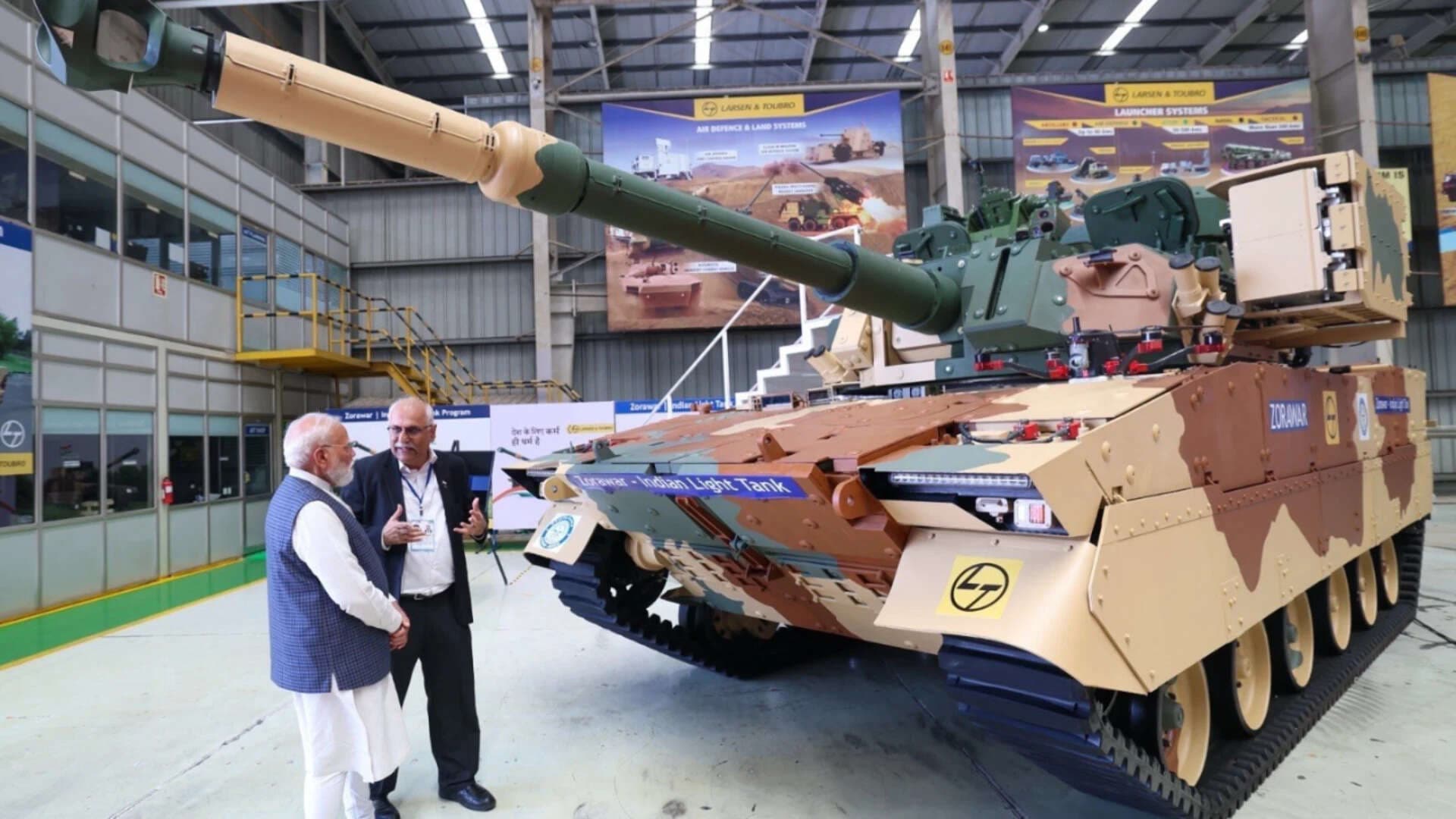
Prime Minister Narendra Modi’s visit to L&T’s Hazira facility showcased a robust line-up of indigenous military platforms, signaling a shift toward self-reliance in cutting-edge warfare technologies.
The landscape of India’s military modernisation was on full display at the Larsen & Toubro (L&T) facility in Hazira, where Prime Minister Narendra Modi reviewed an expansive array of hardware ranging from high-altitude combat vehicles to futuristic laser weaponry. This showcase offered a clear window into the Atmanirbhar Bharat vision, highlighting how the private sector is increasingly driving the development of advanced indigenous military technologies. Among the headline-grabbing systems was the Zorawar light tank, a project spearheaded alongside the Combat Vehicles Research and Development Establishment (CVRDE) to meet the country's specific operational challenges.
Bridging the Gap in High-Altitude Combat
The Zorawar light tank stands out as a strategic necessity for the Indian Army. Weighing in at 25 tonnes and equipped with a 105 mm gun, the platform is designed for versatility, capable of maneuvering across diverse terrains including deserts, plains, and the high-altitude bottlenecks of the Himalayas. By incorporating a modular architecture, the system is future-proofed, allowing for seamless integration of emerging tech as battlefield requirements evolve. This emphasis on modularity suggests a shift away from static hardware toward platforms that can be updated over their operational lifespan.
Alongside the tank, the event highlighted the K9 Vajra-T, a self-propelled artillery system that has already proven its worth in the rugged theatre of eastern Ladakh. Developed by L&T in partnership with South Korea’s Hanwha Defence, the 155 mm tracked gun is prized for its "shoot-and-scoot" capability, which allows it to strike and relocate rapidly to evade counter-battery fire. This synergy between global expertise and local manufacturing has become a hallmark of the current defence ecosystem, further exemplified by the Trajan 155 mm towed gun system, developed in collaboration with French firm KNDS to bolster India’s long-range fire support.
Future-Ready Defence Systems
The technological showcase went well beyond traditional heavy metal. The Tejastra High Energy Laser System signals India’s intent to lead in the domain of directed-energy weapons, primarily designed to neutralise the growing threat posed by swarms of drones. This is complemented by advancements in automotive and defensive components, such as a 1,500-horsepower engine and transmission specifically built for tanks, and a 30 mm unmanned turret tailored for the Future Infantry Combat Vehicle (FICV).
Even legacy platforms are seeing a new lease of life through modernisation. L&T showcased an upgraded version of the L-70 air defence gun, a platform that gained historical significance during Operation Sindoor for its effectiveness against aerial drones. By integrating advanced sensors and digital fire-control systems into existing platforms, the system ensures that the armed forces can maintain combat readiness while optimising existing assets. As PM Modi assessed these developments, the focus remained clear: creating a resilient, domestic industrial base capable of sustaining long-term security needs without total reliance on foreign supply chains.
The PoliticalPedia Editorial Desk brings verified, sourced political news and analysis from across India.