From Texas to Times Square: How Yoga Became America’s Wellness Language
Pics: Texas To Times Square, Yoga Day Sees Huge Participation Across US
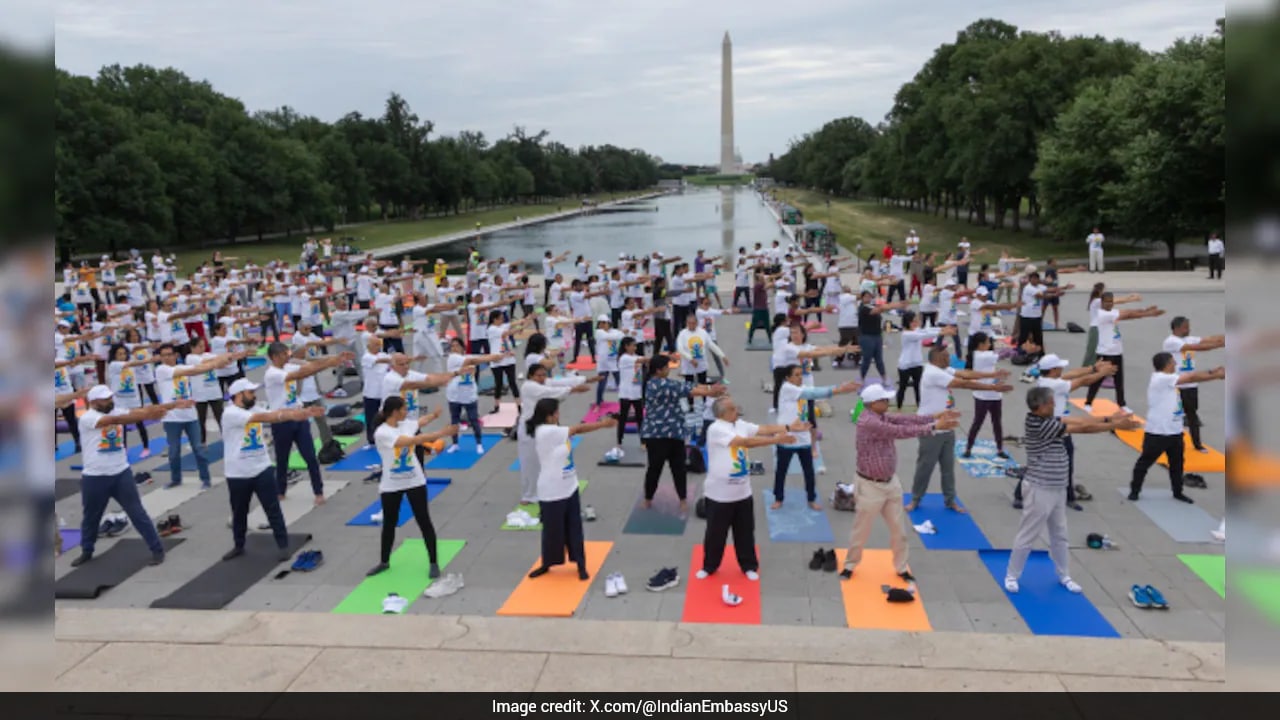
As the International Day of Yoga sees huge participation across the US, a focus on healthy ageing signals a shift from trend to essential preventive care.
The sight of hundreds of people unfurling mats at Brazos River Park in Sugar Land, Texas, under the watchful eye of local officials, wasn't just a weekend fitness gathering. It was a snapshot of a cultural shift. From the lush lawns of Texas to the concrete bustle of New York’s Times Square, the International Day of Yoga has evolved from a niche global observance into a nationwide American movement. This June, the celebrations felt more rooted, moving beyond the novelty of the pose to address the practicalities of a population looking for longevity.
A New Focus: Yoga for Healthy Ageing
While the practice has long been synonymous with flexibility, the 2026 theme—“Yoga for Healthy Ageing”—marked a deliberate pivot. The events across the United States were structured around preventive healthcare and mental well-being, acknowledging that for tens of millions of Americans, yoga is now a primary tool for managing the stresses of modern life. Whether in community centres, university campuses, or state legislatures, the messaging was consistent: yoga is no longer just a workout; it is a clinical and spiritual preventive measure.
The celebrations were extensive. In Texas, Consul General D.C. Manjunath and Sugar Land Mayor Carol McCutcheon highlighted the role of the practice in fostering "holistic health" during a high-energy session organised by Hindu Swayamsevak Sangh and Hindu Yuva. Meanwhile, in New York, the Consulate General of India set the tone with a vibrant session in Central Park, serving as a prelude to the official observance at the United Nations Headquarters.
The Bigger Picture: Why It Matters
This growing mainstream acceptance is arguably one of the most visible markers of India’s soft power in the West. When a practice born in the East is institutionalised by US state legislatures and public squares, it reflects a bridge built on shared health outcomes. We are seeing a move away from the "exotic" perception of yoga toward a functional, daily integration. For the health-conscious American, the practice is increasingly viewed as a necessary buffer against the challenges of ageing, making it a permanent fixture in the American wellness economy.
Beyond the formal events, the sheer scale of participation across the United States suggests that yoga has successfully moved from the boutique studio to the public domain. It is becoming part of the social fabric, uniting diverse communities through a shared vocabulary of breath and movement. As the world marked another June 21, the message from across the Atlantic was clear: the practice has found a permanent home.
Kabir Sharma writes on culture, technology and everyday life for PoliticalPedia.