From Strait of Hormuz Standoffs to Trade Ties: Modi and Trump Seek a New Equilibrium
India, US 'very close' to inking a trade deal, says Trump after meet with Modi
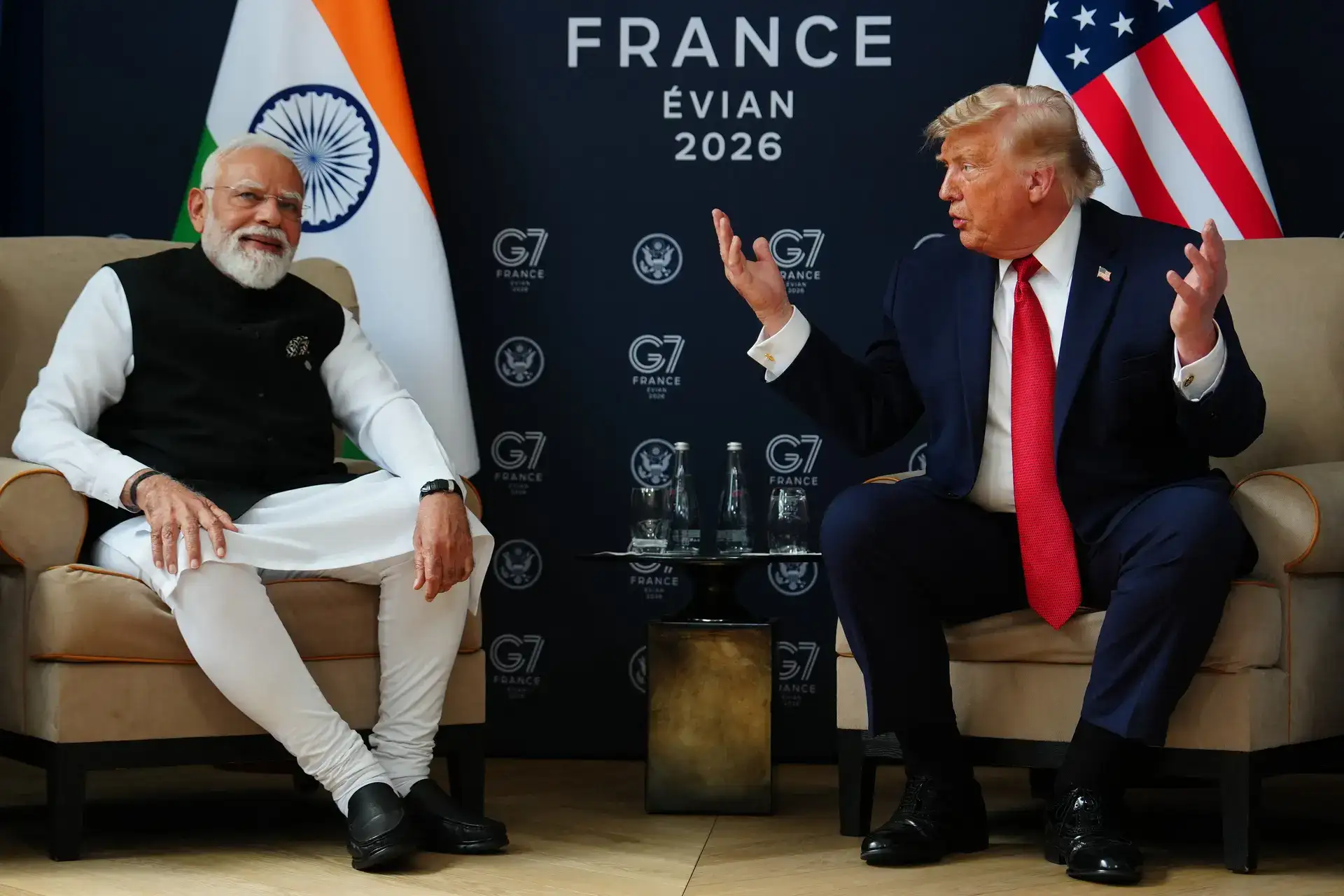
As New Delhi and Washington navigate a tense period of maritime friction and tariff disputes, a long-awaited trade deal appears to be finally within reach.
The air in the room was thick with the weight of recent diplomatic friction, yet the optics told a different story. As Prime Minister Narendra Modi sat down with US President Donald Trump, the "calm, cool, killer" persona that Trump so famously praised seemed to serve as the perfect counterpoint to the volatile energy of the current geopolitical climate. Their bilateral meeting, long anticipated after months of tariff rows and diplomatic protests, signals a potential thaw in a relationship that has, by all accounts, hit a difficult patch.
The stakes for India go far beyond mere handshakes. With lakhs of Indian seafarers navigating the high seas, the security of the Strait of Hormuz has become a non-negotiable priority for New Delhi. Modi was firm in his opening remarks, stressing that the unrestricted movement of maritime trade is vital for the global economy. This message carries extra weight given that India recently summoned the US charge d'affaires twice to protest American attacks on ships in the Gulf—incidents that the US State Department insisted were necessary to enforce a blockade against illicit Iranian oil transport.
The Trade-Offs Ahead
Behind the scenes, the mechanics of a trade deal are finally grinding into gear after more than a year of stalled negotiations. Trump’s proclamation that both nations are "very close" to an accord provides a glimmer of optimism, though the path to the finish line remains littered with hurdles. India has been carefully balancing its interests, engaging in a flurry of international diplomacy—from critical mineral deals with Brazil to deepening ties with the European Union—to ensure it isn't reliant on any single partner.
This multi-pronged strategy is not incidental. The government in New Delhi has made it clear through diplomatic channels, including firm messaging from National Security Advisor Ajit Doval to US Secretary of State Marco Rubio, that it will not be bullied. Even as the US looks toward a crucial deal with Iran in Geneva, India is positioning itself as an autonomous player, willing to wait out the volatility of Washington’s internal politics while securing its own energy and economic corridors.
Why It Matters
The bigger picture here is one of strategic patience. India is moving away from a reactive foreign policy, choosing instead to hedge its bets by diversifying its economic alliances. While a trade deal with the US would certainly provide a much-needed boost to bilateral ties, New Delhi’s recent forays into agreements with Germany and other global powers suggest it is no longer looking for a "special relationship" that comes at the cost of its sovereignty. The real test will be whether the US can respect India’s security concerns regarding its seafarers and its independent stance on regional conflicts while finalizing the trade framework. If they can, it marks the end of a cooling-off period; if not, India’s pivot toward a broader global footprint will only accelerate.
Ananya Iyer covers global affairs with an Indian lens for PoliticalPedia.