From Reels to Reality: The Growing Political Friction in Tamil Nadu
'People are searching for governance': Udhayanidhi, MK Stalin step up attack on Tamil Nadu CM Vijay
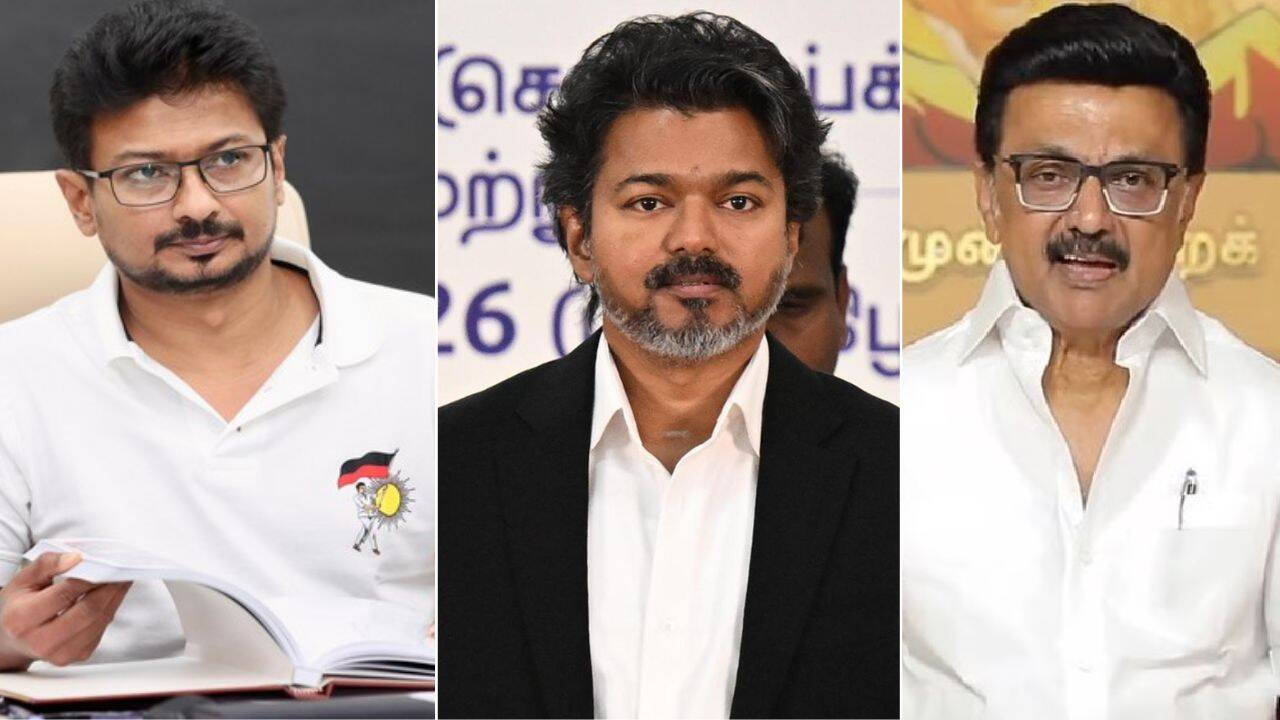
As the DMK mounts a scathing critique of the new administration, the lines between governance and grandstanding in the state assembly are blurring.
The Tamil Nadu Assembly has become the stage for a high-decibel political theatre. Days after Chief Minister Vijay’s maiden speech—a masterclass in populist positioning that saw him taking a direct jab at Udhayanidhi’s absence—the opposition has hit back with sharpened knives. The DMK, led by M K Stalin and Udhayanidhi, is now framing the current administration’s performance not as a legislative mandate, but as a cinematic production, accusing the state’s leadership of prioritizing camera angles over the basic needs of the people.
During a recent appearance in Pudukkottai, Udhayanidhi didn’t mince his words. While the Chief Minister had mocked him for "searching for his father" following the DMK’s electoral defeat, Udhayanidhi flipped the narrative. "People are searching for governance," he declared, pivoting to the ground-level issues that have begun to bubble over within a month of the new government taking office. From his perspective, the state’s citizens aren’t preoccupied with the witty retorts flying across the floor of the House; they are grappling with tangible crises like power cuts, water shortages, and a noticeable dip in public safety.
The Assembly as a Film Set
The critique from the DMK goes beyond mere policy disagreement. Udhayanidhi explicitly compared the state Assembly to a "film shooting spot," suggesting that the Chief Minister is treating his role as an extension of his previous career. This sentiment—that the administration is staging a performance for the cameras rather than managing the state—is central to the DMK’s current strategy. By juxtaposing the flashy delivery of the CM’s assembly speeches against the daily struggles of the common man, the opposition is attempting to paint the government as disconnected from the reality of Tamil Nadu.
The tension is exacerbated by the government’s approach to political alliances. Recent reports of the Chief Minister meeting with AIADMK rebel factions have signaled a fluid, often volatile, political landscape. Meanwhile, the DMK is leaning into its legacy, defending flagship welfare programmes like 'Kalaignar Magalir Urimai Thogai' and 'Puthumai Penn.' The party claims the new administration is struggling specifically because it cannot afford to dismantle these popular schemes, leaving the government in a state of policy paralysis.
Why it matters
The current friction suggests that Tamil Nadu is entering a phase of intense political polarization where the battle for public perception is as important as administrative output. For the observer, this isn't just a clash of personalities; it is a test of how a celebrity-turned-politician reconciles the expectations of high-octane populist appeal with the mundane, often unglamorous, demands of governance. If the DMK continues to successfully frame the CM as an "actor" rather than an "administrator," the government will face increasing pressure to move beyond punchlines and deliver on basic utility services. The bigger picture here is the shifting nature of Dravidian politics, where the boundaries between digital-age engagement—often visible on platforms like Instagram—and traditional legislative accountability are being tested in real-time.
Kabir Sharma writes on culture, technology and everyday life for PoliticalPedia.