From Paper Tigers to Real Protections: NCW Push for Mandatory POSH Audits
Workplace harassment law may get stricter checks as NCW calls for annual POSH audits
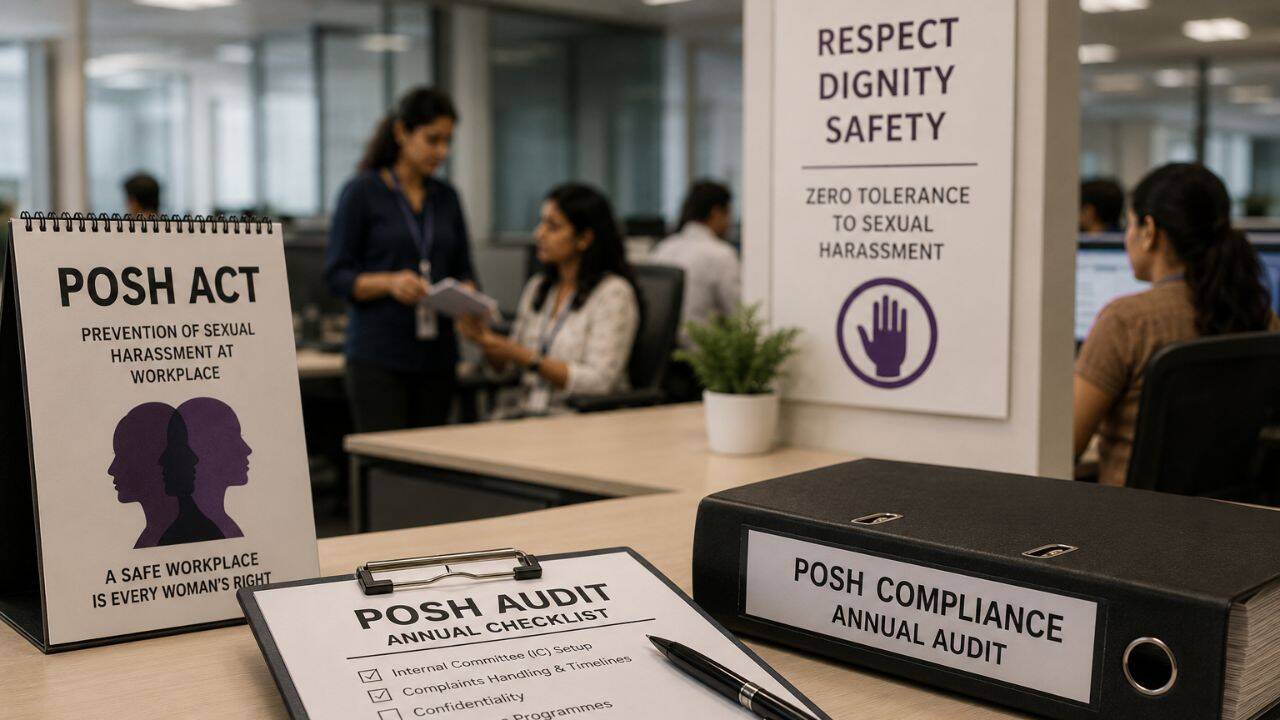
The National Commission for Women is cracking down on corporate complacency, ordering states to move beyond box-ticking exercises to ensure actual safety for women at work.
For too long, the Sexual Harassment of Women at Workplace (Prevention, Prohibition and Redressal) Act, 2013—commonly known as POSH—has existed more in spirit than in practice. Many firms treat the law as a mere administrative chore: post a policy on the notice board, nominate a committee, and forget about it. That culture of complacency is now under fire. Following a startling inspection at a TCS unit in Nashik, where officials discovered an Internal Committee (IC) that had never once visited the site it was meant to oversee, the National Commission for Women (NCW) has decided that the era of "tick-box compliance" must end.
The NCW’s June 2026 advisory marks a sharp pivot in national policy. By instructing states and Union Territories to mandate annual POSH audits, the Commission is shifting the focus from paper compliance to ground-level accountability. This directive is wide-reaching, targeting every district, police commissioner, and magistrate. The mandate is clear: any workplace with 10 or more employees—be it a corporate office, a school, or a hospital—must now subject their safety mechanisms to rigorous, annual scrutiny.
Closing the Loophole for Small Firms
Crucially, the advisory does not ignore the informal sector. For establishments with fewer than 10 employees, where the risk of isolation is often higher, the NCW is pushing states to ensure that Local Committees (LCs) are not just on paper, but are actually functional and accessible to domestic and informal workers. The message to states is that if a committee doesn’t exist or isn’t reachable, the employer is failing, and the state must step in to enforce the law.
Maharashtra has emerged as the first major mover, signaling how this national push will play out on the ground. State WCD minister Aditi Tatkare recently confirmed that compliance will now be a prerequisite for private firm audits. By linking the constitution of an Internal Complaints Committee to the renewal of business registrations and empowering 12 dedicated inspection officers across the state, Maharashtra is setting a template that other states are likely to follow.
Why it Matters: The Bigger Picture
The shift toward mandatory audits represents a fundamental change in how India manages workplace safety. For years, the burden of reporting harassment fell almost entirely on the victim, often within systems that were opaque or compromised. By institutionalizing annual audits, the state is effectively forcing employers to prove they are safe, rather than waiting for a crisis to expose the gaps.
This creates a new layer of corporate risk: non-compliance is no longer just a legal oversight—it is now a potential trigger for regulatory action that could jeopardize business renewals. The success of this policy will depend on whether these audits remain objective and whether the designated inspection officers can navigate the complexities of corporate structures without being swayed by administrative influence. If implemented with rigour, it could finally bridge the gap between a law on the statute books and the actual lived experience of women in the Indian workforce.
Arjun Mehta reports on government, policy and Parliament for PoliticalPedia, in English and Hindi.