From NEET to TET: CJP’s Jantar Mantar stir intensifies as new paper leak allegations surface
'Farmers' leaders under house arrest': CJP's Abhijeet Dipke levels fresh charge amid Jantar Mantar stir
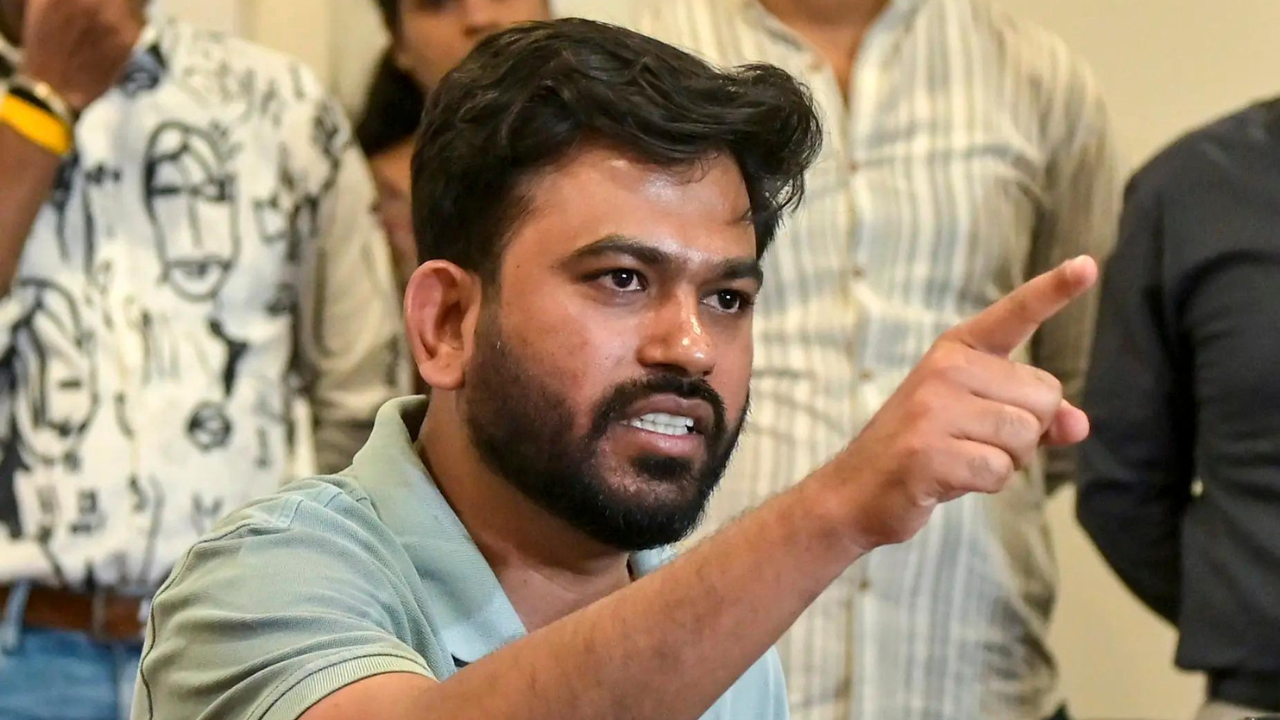
As the Cockroach Janta Party keeps up its pressure at Jantar Mantar, fresh claims of preventive detentions among farmers' leaders have added a new layer of tension to the ongoing protests.
The sidewalk at Jantar Mantar has become a familiar site for agitation, but the latest protest led by the Cockroach Janta Party (CJP) is taking a sharper turn. CJP founder Abhijeet Dipke took to social media on Sunday to allege that the administration has placed several farmers' leaders from Uttar Pradesh, Haryana, and Punjab under house arrest. The goal, according to Dipke, is to stifle the momentum of the party’s ongoing protest, which has been calling for the resignation of Union Education Minister Dharmendra Pradhan.
A widening net of exam failures
The agitation, which has been active since June 20, is no longer limited to the NEET-UG controversy. Dipke is now weaponising the recent cancellation of the Maharashtra Teachers Eligibility Test (TET) to frame a broader narrative of systemic incompetence. The Maharashtra government’s decision to postpone the 2026 TET exam just 24 hours before it was scheduled—following reports of a question paper leak and subsequent arrests in Bhiwandi—has provided the CJP with fresh ammunition.
For the party, these incidents are not isolated technical glitches but evidence of a crumbling examination infrastructure. Dipke argues that students have been raising alarms about TET irregularities as far back as 2017. By linking the national-level NEET crisis with the state-level TET leak, the party is attempting to shift the discourse from a single minister’s performance to a wider critique of the government’s administrative capabilities.
The politics of the protest
Dipke’s rhetoric has become increasingly combative. Beyond the demands for ministerial accountability, he has pivoted to questioning the financial underpinnings of the ruling party’s political operations, specifically challenging the source of funds used in political poaching. By framing the government as a machine that can "break political parties" but cannot conduct a fair examination, the CJP is attempting to resonate with a youth demographic frustrated by the "dead end" of a compromised recruitment system.
Whether the alleged house arrests of farmers' leaders will suppress or galvanise the Jantar Mantar crowd remains to be seen. Historically, such attempts to contain protest movements often draw more attention to the cause, provided the organizers can maintain the logistical flow of their supporters into the capital.
The bigger picture: Why it matters
This protest highlights a growing vulnerability for the government: the intersection of student anxiety and agrarian discontent. When examination integrity fails, it impacts the social mobility of the middle class and rural youth, the very segments that form the backbone of electoral discourse. The CJP’s strategy of synthesising disparate regional leaks into a singular national narrative creates a persistent, high-visibility nuisance for the Centre. While the party itself began as a digital satirical platform, its ability to translate online influence into physical presence at Jantar Mantar suggests that the "paper leak" issue has reached a boiling point where it can no longer be dismissed as mere opposition noise.
Arjun Mehta reports on government, policy and Parliament for PoliticalPedia, in English and Hindi.