From Instagram to Parliament Street: The Rise of the Cockroach Janta Party
‘Inquilab Zindabad… Satta ke galiyaron mein’: At CJP’s first protest, protesters gather outside Parliament Street station
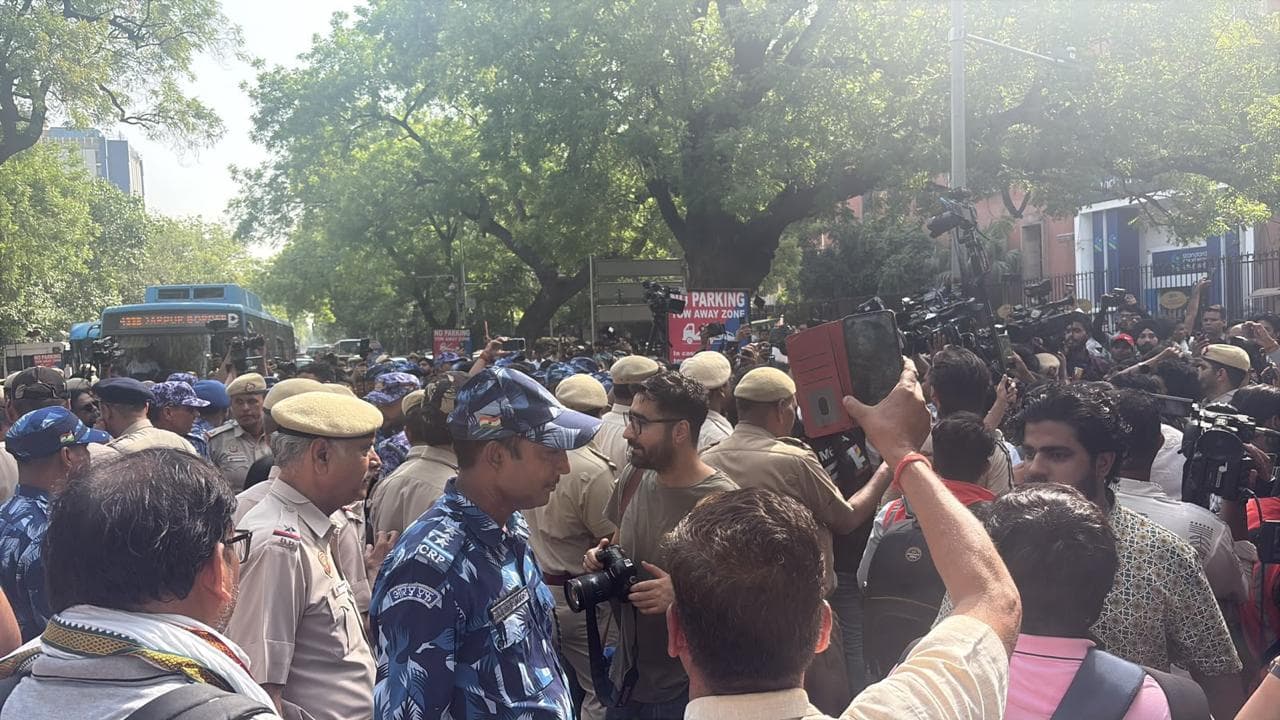
A nascent political movement born from social media discourse takes to the streets of Delhi, demanding accountability for the recent examination controversies.
The quiet stretch of road outside the Parliament Street police station usually sees little more than the bustle of city commuters. However, this Saturday, the atmosphere was thick with the weight of expectation as the fledgling Cockroach Janta Party (CJP) held its first physical demonstration. What began as a digital ripple on Instagram has, in a matter of weeks, transformed into a tangible presence on the ground, drawing a diverse crowd of anxious students and disillusioned professionals to the heart of the national capital.
A Movement Born of Digital Discontent
The CJP’s emergence traces back to a viral spark—a remark by Chief Justice Suryakant that inadvertently provided the group with its provocative name. While the organization remains a newcomer to the political landscape, the cjp protest has managed to capture the attention of those frustrated by the status quo. The party’s founder, Abhishek Dipke, who traveled from Boston to spearhead the march, aimed to secure formal permission to demonstrate at Jantar Mantar. Their primary agenda is clear: they are calling for the immediate resignation of Union Education Minister Dharmendra Pradhan, citing systemic failures in the administration of national-level entrance exams.
The Faces Behind the Slogans
The gathering, though modest in numbers, highlighted the deep-seated anxiety gripping the youth. Aarav, a 17-year-old student from Noida, stood under the June sun, his focus fixed on the uncertainties surrounding the upcoming NEET examination. For him, the protest is not a political hobby but a visceral reaction to the fear of a compromised future. Beside him stood Sarthak, a public relations professional holding a copy of Shashi Tharoor’s Ambedkar: A Life, who described his presence as a moral obligation to support a cause he deems correct, regardless of the party’s nascent status.
Security and Satta
The heavy deployment of police and CRPF personnel at the station stood in stark contrast to the small group of roughly 20 protesters. The scene, marked by the rhythmic chanting of “Inquilab Zindabad,” signaled a desire to challenge the satta—the corridors of power—that many feel have become detached from the struggles of common citizens. As television crews scrambled to broadcast the unfolding events, it became clear that the protest was as much about the optics of dissent as it was about the specific demands of the organizers.
Moving Through the Mainstream
Whether this digital-first outfit can maintain its momentum beyond the initial buzz remains to be seen. The cjp movement relies heavily on the engagement of a generation that is increasingly turning to social media to voice grievances that traditional channels have failed to address. As the group waits to hear if they will be permitted to move their demonstration to Jantar Mantar, they remain here, standing through the intense heat and the scrutiny of the authorities. For a party that did not exist a month ago, the march to Parliament Street serves as their first real test of endurance in a landscape dominated by entrenched political giants.
The PoliticalPedia Editorial Desk brings verified, sourced political news and analysis from across India.