From Concrete Jungles to Green Canopies: Why Trees are Our Best Defence Against Rising Heat
Large-scale tree plantation most effective way to tackle rising temperature: Professor S.L. Madivalar
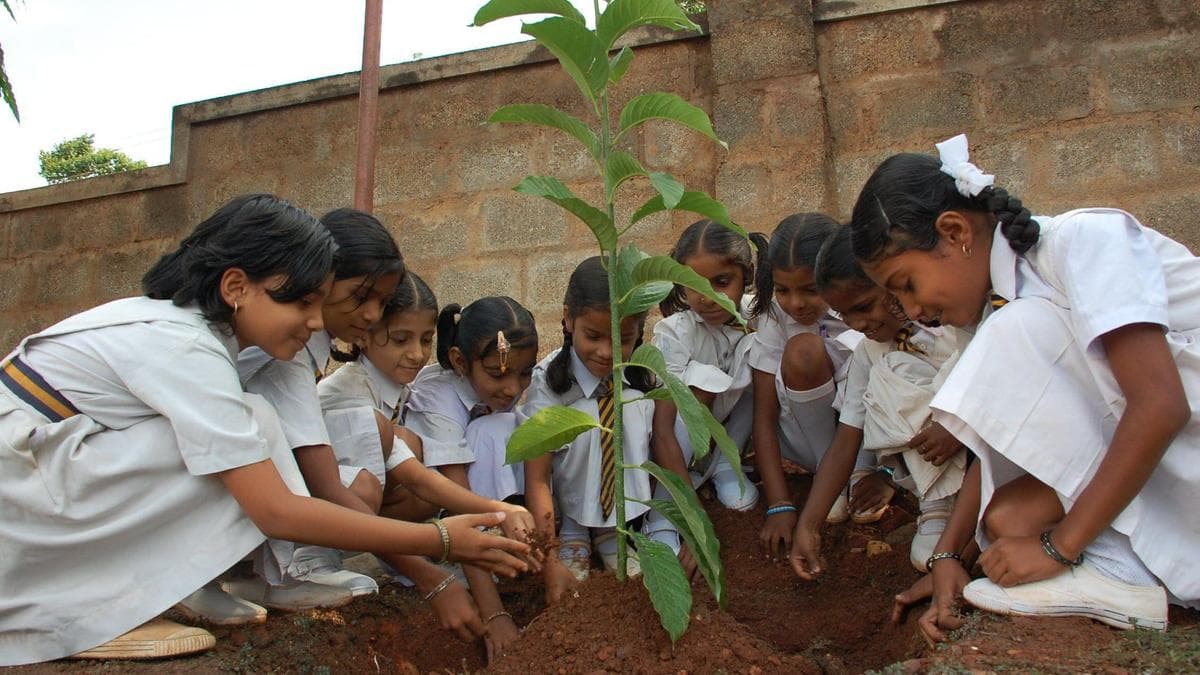
As Hubballi-Dharwad grapples with mounting waste and shifting weather patterns, experts urge a return to nature to mitigate the urban heat island effect.
Dharwad is feeling the heat, and it isn’t just the summer sun. With irregular weather patterns already disrupting local agriculture and the daily grind of city life, the spotlight has shifted back to the most fundamental climate solution: trees. Speaking at the Gandhi Shanti Pratishthana on June 7, Professor S.L. Madivalar laid out a stark reality for the twin cities, noting that large-scale plantation drives are no longer just aesthetic projects—they are a survival necessity.
The logic, as the professor explained, is basic physics. Rising carbon levels in our atmosphere act like a thermal blanket, trapping solar radiation that should otherwise escape into space. While oceans and forests have historically served as our primary carbon sinks, their shrinking footprints have left urban centers vulnerable. For the city’s most economically disadvantaged residents living in cramped settlements, these extreme temperatures aren't just an inconvenience; they are a daily health crisis.
The Waste Management Challenge
Beyond the trees, the urban landscape of Hubballi-Dharwad is struggling with a massive waste burden. Senior Environmental Officer I.H. Jagadish flagged a daunting statistic: the twin cities generate roughly 450 tonnes of waste every single day. The sheer volume of this refuse makes scientific disposal a monumental task, one that requires more than just goodwill—it requires strict adherence to new protocols.
Following Supreme Court directives, fresh solid waste management rules kicked in on April 1, 2026, changing how households must approach their daily trash. It is no longer enough to simply toss everything into one bin. Residents are now mandated to segregate dry waste into specific recyclable streams like paper, plastic, and metal. Furthermore, the authorities have tightened the definition of hazardous and biomedical waste, insisting that items like paint cans, bulbs, and chemical containers be handled separately, while sanitary napkins and bandages are now classified under the biomedical category.
Why it Matters: The Urban Heat Equation
The link between waste management and climate resilience is closer than it appears. As cities grow, the "heat island" effect—where concrete and tarmac absorb and re-radiate heat—compounds the global warming trend. By integrating large-scale green cover with smarter waste disposal, cities can create a buffer against these rising temperatures.
When we lose wetlands and forests to unplanned expansion, we lose our natural air conditioning. While administrative efforts like the recent sapling plantation programme, supported by Deputy Commissioner Snehal R., are vital, the long-term solution lies in how we manage our footprint. If we continue to treat waste mismanagement as a separate issue from climate change, the cooling effect of new trees will struggle to keep pace with the heat generated by an urban sprawl that hasn't yet learned to dispose of its own mess sustainably.
World Desk at PoliticalPedia covers global affairs for an Indian audience in English and Hindi.