Beyond the Hive: Why Bumblebees Are Smarter Than We Ever Imagined
Bumblebees can solve problems without training, latest study finds
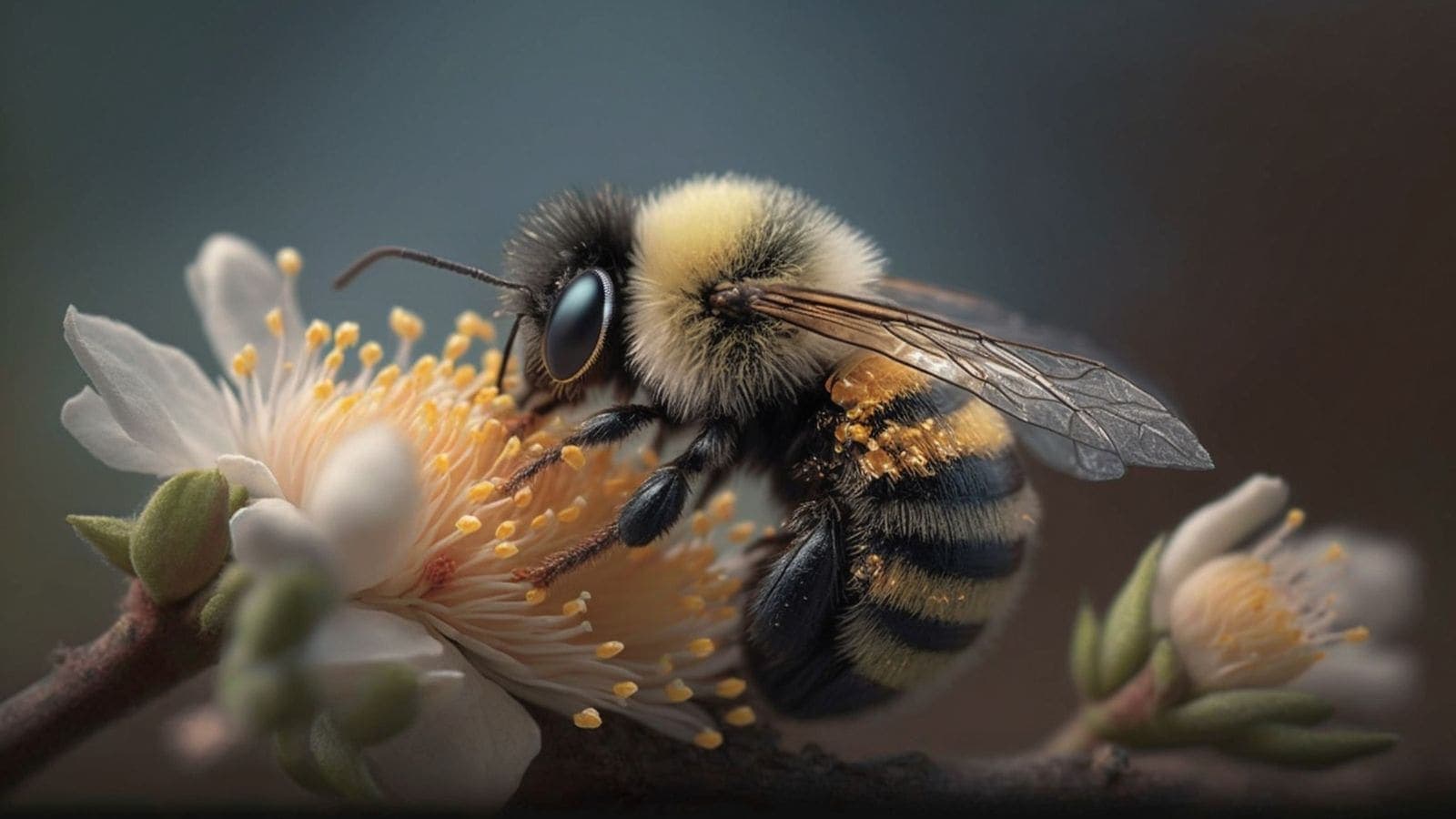
A ground-breaking study reveals that bumblebees possess the spontaneous cognitive ability to solve complex problems without any prior training.
In a corner of a laboratory in Finland, a buff-tailed bumblebee is presented with a puzzle that would frustrate most children. A sugary treat sits on the ceiling, completely out of reach. Below it, a ball rests on a platform. Without a single human cue or practice run, the bee maneuvers the ball toward the target, using it as a tool to access the reward. This is no longer just about instinct; it is a display of raw, spontaneous intelligence that is forcing scientists to rethink what a tiny brain is capable of.
The end of the ‘instinct only’ myth
For decades, we have viewed insects as biological automatons—creatures driven solely by rigid, pre-programmed survival tactics. However, this recent study, published on June 4, shatters that perception. Researchers observed these bees in a controlled plexiglass arena, forcing them to navigate obstacles to find a food source. Remarkably, 70% of the subjects correctly identified the mechanism needed to reach their prize.
"Spontaneous problem-solving is something that has never been shown in any invertebrate before," notes Olli Loukola, a behavioural ecologist at the University of Oulu. Unlike chimpanzees or parrots, which often require extensive training or observation to master such tasks, these bees arrived at the solution entirely on their own. They did not have the luxury of trial and error; they simply assessed the goal and devised a strategy to meet it.
Why it matters: The bigger picture
Why should we care about the cognitive capacity of a bee? The implications go far beyond the lab. For years, we have linked high-level cognitive function to large, complex brains like those of primates or dolphins. If a creature with a brain the size of a pinhead can demonstrate high-level problem-solving, it suggests that intelligence is not just a product of brain volume, but of evolutionary efficiency.
As we face a global biodiversity crisis, this research serves as a humbling reminder of the complex lives led by the pollinators that sustain our food systems. We are not just dealing with simple workers in a hive; we are looking at sentient, adaptive beings capable of learning and purposeful action. Understanding their cognitive range could eventually change how we view insect welfare and environmental conservation in agricultural landscapes.
A new frontier in insect intelligence
The experiment, which saw bees identifying blue rings as markers for food and moving balls to reach them, highlights that these insects have a clear mental representation of their environment. While the study faced limitations—namely the confined nature of the plexiglass arena—the results were definitive. The bees were not just playing; they were navigating a set of rules to achieve an objective. As our understanding of their emotional experiences and social behaviors grows, the gap between "human-like" intellect and "insect-like" instinct continues to narrow.
World Desk at PoliticalPedia covers global affairs for an Indian audience in English and Hindi.