From Boomers to GenZ: CJP Protest at Jantar Mantar is ‘Just a Trailer’ of Growing Discontent
'Just a trailer': From Boomers to GenZ, CJP chief says people turned out in 'huge numbers'; key moments
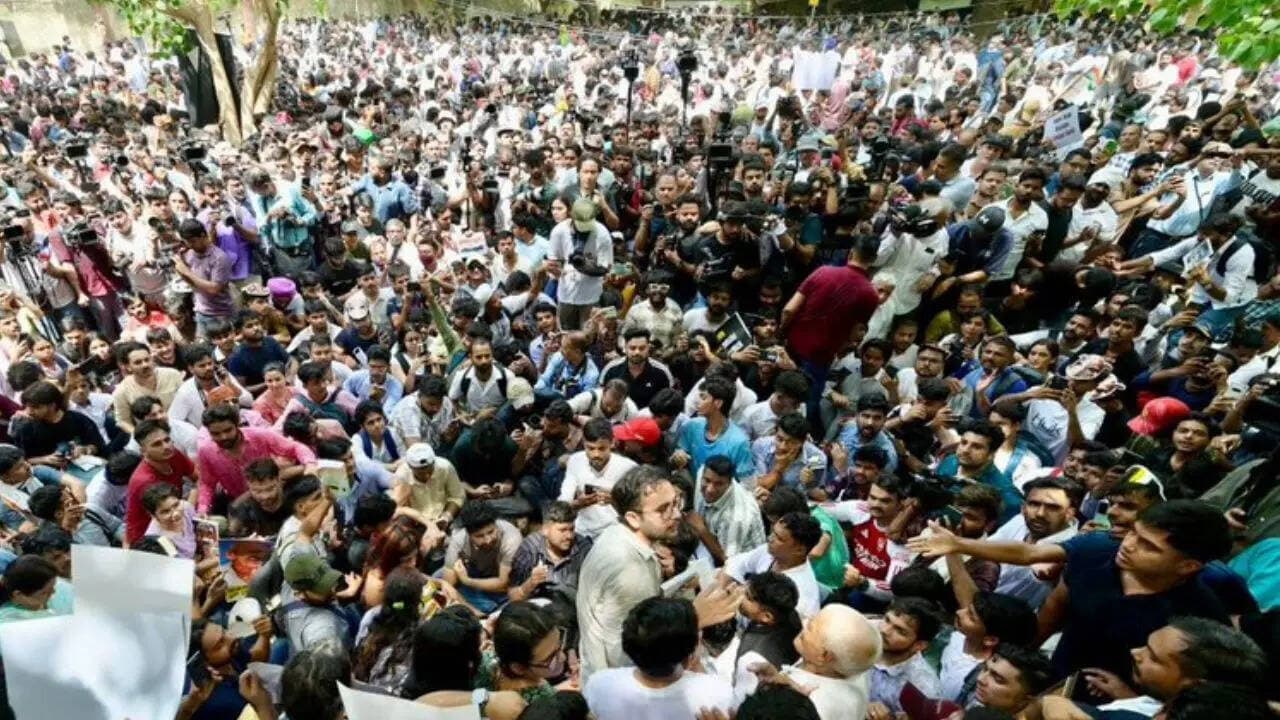
The Cockroach Janata Party’s first physical demonstration in Delhi signals a shift from digital activism to street-level mobilization, drawing diverse age groups to the capital.
The designated protest zone at Jantar Mantar transformed into a sea of symbolic masks and national flags this Saturday as the Cockroach Janata Party (CJP) moved its month-long online campaign into the physical realm. Hundreds of supporters, ranging from GenZ students to Boomers, converged in Delhi to demand the resignation of Education Minister Dharmendra Pradhan. The gathering marked a critical transition for the movement, which has previously operated primarily through social media channels and virtual advocacy.
CJP founder Abhijeet Dipke, who flew in from the United States to lead the protest, framed the event as a foundational moment for a broader movement. Addressing the crowd, he described the gathering as "just a trailer" of what is to come. For Dipke, the day carried a personal weight; he noted that he was returning home to reunite with his parents, who had been forced to vacate their residence following threats received over the last fortnight. He used the platform to highlight the intimidation he believes many young political voices currently face.
A Multi-Generational Movement
The demographic spread at Jantar Mantar was notable, with a mix of young professionals, students, and elderly citizens participating. Videos shared by the CJP official account captured an elderly supporter emphasizing the importance of intergenerational solidarity, arguing that when older citizens stand with the youth, it adds a layer of moral weight to their demands. By blending the tech-savvy energy of the digital age with the traditional support of older cohorts, the CJP is attempting to build a cross-generational coalition against what they term "communal politics."
Discipline remained a core focus for the organizers. Dipke issued explicit instructions for the attendees to maintain decorum, specifically directing the crowd to focus their slogans on figures like Mahatma Gandhi and B.R. Ambedkar. The protest sought to distance itself from divisive rhetoric, with participants chanting "Bharat Mata ki Jai" while explicitly critiquing the current focus on "Hindu-Muslim" narratives in mainstream political discourse.
The Struggle for Visibility
The movement’s shift to the streets comes after a month of mounting friction. Dipke alleged that the administration has responded to their demands for ministerial accountability with "shameless" indifference, opting to focus on distractions—including alleged account hacking—rather than addressing the specific grievances raised by the group. By moving from virtual screens to the physical streets of Delhi, the CJP is forcing a confrontation that can no longer be ignored via digital filtration.
While the protest at Jantar Mantar focused on education reforms and political accountability, the broader political climate in the capital remains fluid. Simultaneously, reports indicate that senior political figures like Captain Amarinder Singh have been engaged in high-level meetings with leadership figures like Amit Shah and J.P. Nadda, underscoring the volatile nature of Delhi's current political landscape. For the CJP, however, the mission remains focused on sustaining the momentum built this weekend as they look toward a long-term struggle.
The PoliticalPedia Editorial Desk brings verified, sourced political news and analysis from across India.