E85 Fuel Rollout: What the Government’s New Ethanol Push Means for Your Vehicle
E85 fuel launched; What happens to your E20-compliant vehicle now? Centre clears the air
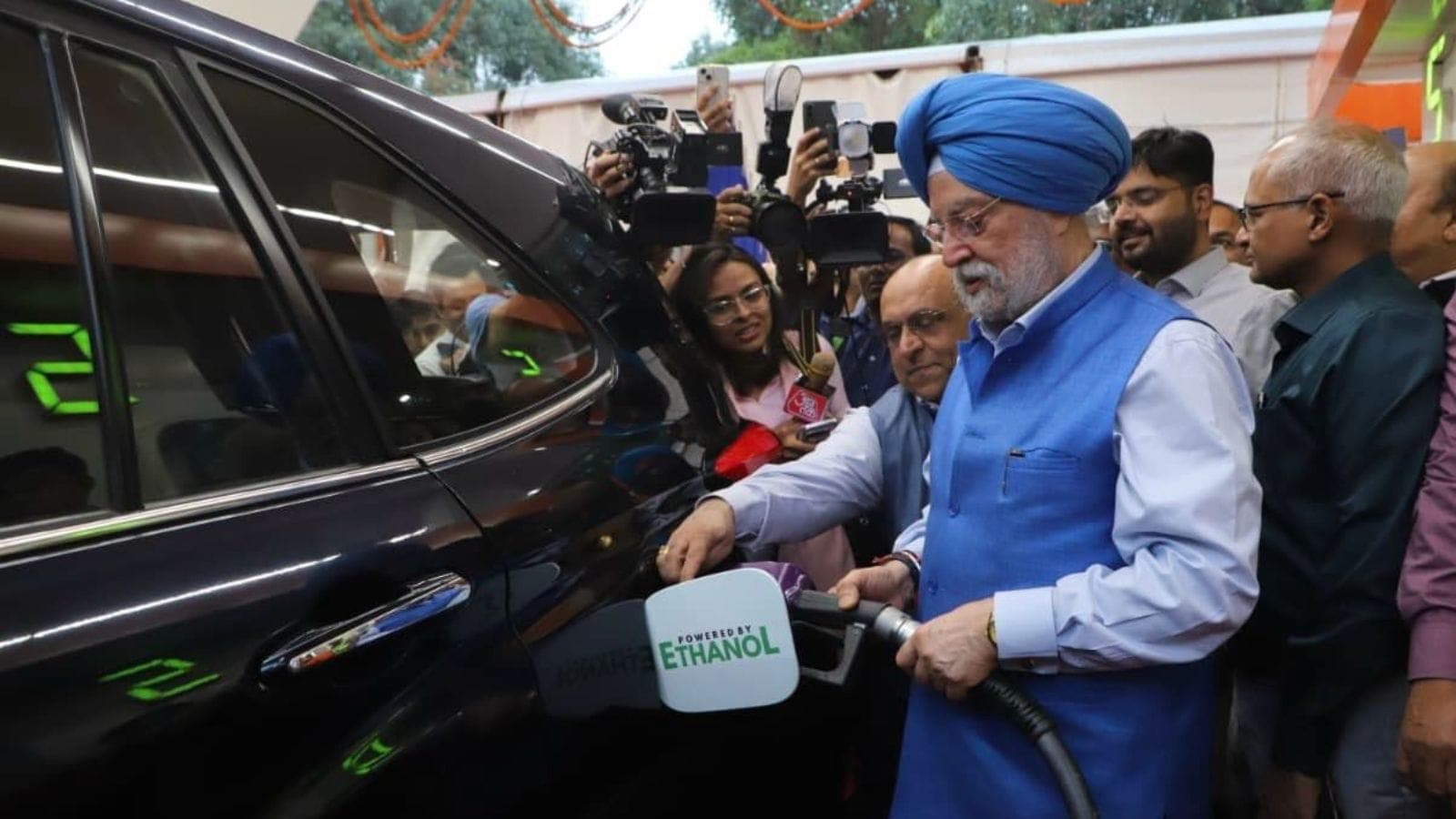
As the Centre launches E85 fuel to drive down emissions, concerns regarding vehicle compatibility and the future of standard petrol continue to swirl among Indian motorists.
The Indian government has officially launched E85 fuel on World Environment Day, a move designed to significantly slash greenhouse gas emissions by an estimated 61% compared to traditional fossil fuels. However, the introduction of this high-ethanol blend has triggered a wave of misinformation across social media. Many vehicle owners have expressed fears that the government is phasing out standard petrol and diesel, or that their existing E20-compliant cars will be rendered obsolete. Union Minister for Petroleum and Natural Gas, Hardeep Singh Puri, has moved to quell these rumors, asserting that the rollout is a targeted initiative, not a blanket mandate for all commuters.
Understanding the Difference: E20 vs. E85
To understand why the panic is largely misplaced, one must look at the chemical composition of these fuels. Standard E20 petrol, which has become the baseline at many pumps, consists of 20% ethanol blended with 80% conventional petrol. In contrast, E85 is a specialized blend containing 80% to 85% ethanol. Because of this high concentration of alcohol, E85 is engineered exclusively for Flex-Fuel Vehicles (FFVs). It is not a universal replacement for the petrol currently sitting in the tanks of millions of Indian cars.
Is Your Vehicle at Risk?
The Centre has been clear: E85 is not intended for the average passenger vehicle on the road today. Regular petrol vehicles and those specifically designed for E20 compatibility cannot use E85. Attempting to do so could result in engine complications, as these vehicles are not built to handle the higher corrosive properties and different combustion requirements of an 85% ethanol blend. To prevent accidental refueling, the government has mandated that E85 dispensers display prominent signage, clearly identifying the fuel as being for compliant cars only.
Why the Push for Ethanol?
The government views the shift toward higher ethanol blending as a critical pillar of its environmental and economic strategy. By making E85 available—priced at approximately Rs 20 per litre cheaper than standard petrol in cities like Delhi—the administration aims to incentivize the adoption of greener, locally produced energy. While the policy has faced legal challenges and criticism from some industry quarters regarding engine wear, the Supreme Court has dismissed petitions questioning the ethanol roadmap, and the Ministry remains committed to its long-term transition goals, even hinting at future norms for E22 to E30 blends.
Dispelling the Myths
Despite the noise, there is no plan to stop the supply of regular petrol or diesel. The introduction of E85 is a parallel development for a niche category of flex-fuel vehicles, similar to the infrastructure already in place in countries like Brazil. For the average motorist, the current fueling experience remains unchanged. The government continues to emphasize that the transition is a voluntary shift toward sustainability, meant to complement existing fuel types rather than force their immediate removal from the market.
The PoliticalPedia Editorial Desk brings verified, sourced political news and analysis from across India.