Digital Census Oversight: Officials Defend ‘Correction’ of Data Discrepancies as Routine Procedure
Field supervision, correcting ‘discrepancies’ are normal practice in statistical exercise, says RG&CCI Director
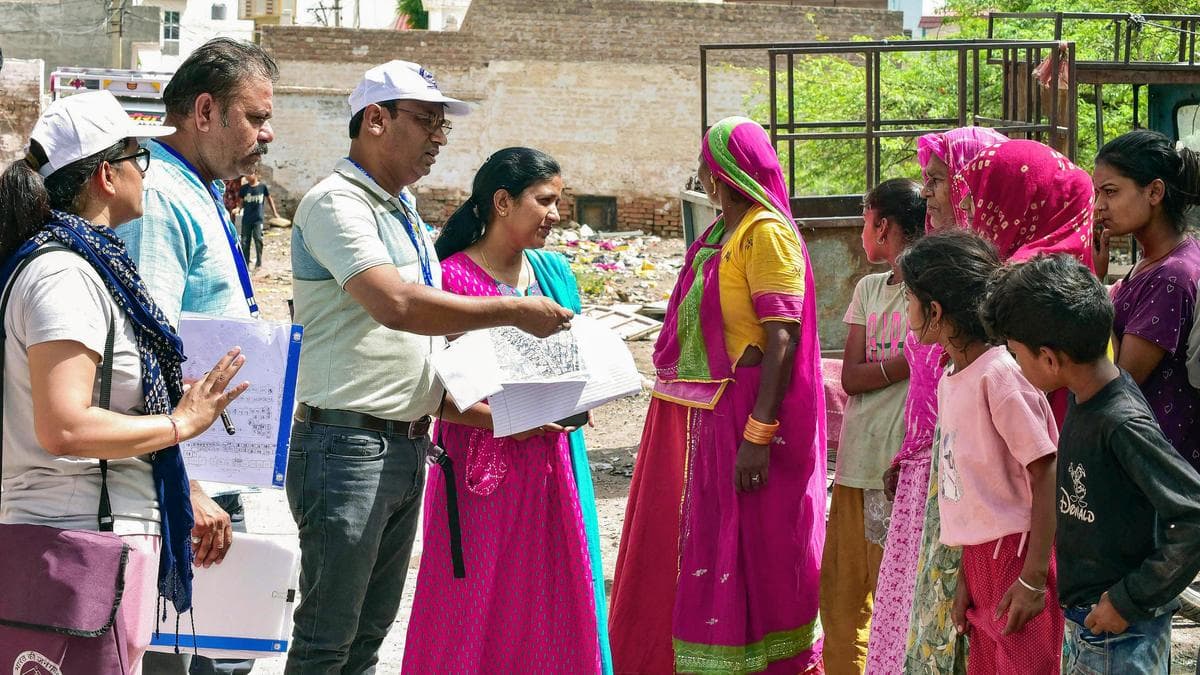
As India’s first digital census faces scrutiny over data integrity, the office of the Registrar General and Census Commissioner of India has clarified that field supervision is a standard administrative practice.
The ongoing House Listing Operation, a critical phase of the broader national census, has become the subject of intense public debate following reports of teachers being directed to revise previously collected data. On June 5, Swadha Dev Singh, Director at the office of the Registrar General and Census Commissioner of India (RG&CCI), dismissed allegations of data manipulation, characterizing the process of identifying and fixing errors as a standard feature of any large-scale statistical exercise.
The controversy centers on the digital transition of the current census, where enumerators—predominantly government school teachers—record survey responses directly into mobile applications on their personal devices. This shift allows superior officers to monitor the progress of data entry in real-time. However, reports from states including Uttar Pradesh, Rajasthan, and Chhattisgarh suggest that many enumerators have been instructed to revisit households or manually edit entries after the initial survey was completed.
Addressing the Allegations
The RG&CCI director stated that field inspections are essential to ensure that enumerators have correctly understood the survey concepts and accurately captured the information provided by respondents. According to Ms. Singh, when a discrepancy is identified during these senior-level reviews, it is brought to the attention of the enumerator for appropriate modification. She stressed that such measures are a "normal practice" in census operations and that labeling these administrative checks as "data tampering" is factually inaccurate.
Despite this official stance, concerns persist on the ground. Reports published as recently as late May by digital media platforms like the Raipur-based CG Box highlighted instances where teachers were asked to alter entries regarding sensitive social indicators, such as open defecation and access to LPG cooking gas connections. Some educators noted that they were being asked to perform these edits themselves, even though such administrative permissions typically rest with supervisors and charge officers.
The Challenges of a Digital Transition
The current census represents a significant departure from traditional paper-based methods. While the use of mobile apps aims to streamline data processing and improve accuracy, it has introduced new complexities regarding accountability. As enumerators continue their house-to-house visits, the balance between maintaining data integrity and ensuring that field workers are not being unfairly pressured to alter findings remains a point of contention.
For the RG&CCI, the priority remains ensuring that the data collected—which forms the backbone of government policy and resource allocation—remains robust. While the office maintains that the process of correcting data is a transparent and necessary part of the census, the pushback from those on the front lines suggests that the transition to a fully digital, real-time monitoring system still faces significant operational hurdles as the count continues across the country.
The PoliticalPedia Editorial Desk brings verified, sourced political news and analysis from across India.