Cross-Border Tensions Spike as Kabul Claims Strikes on Militant Hideouts in Pakistan
Afghanistan claims strikes on militant hideouts inside Pakistan
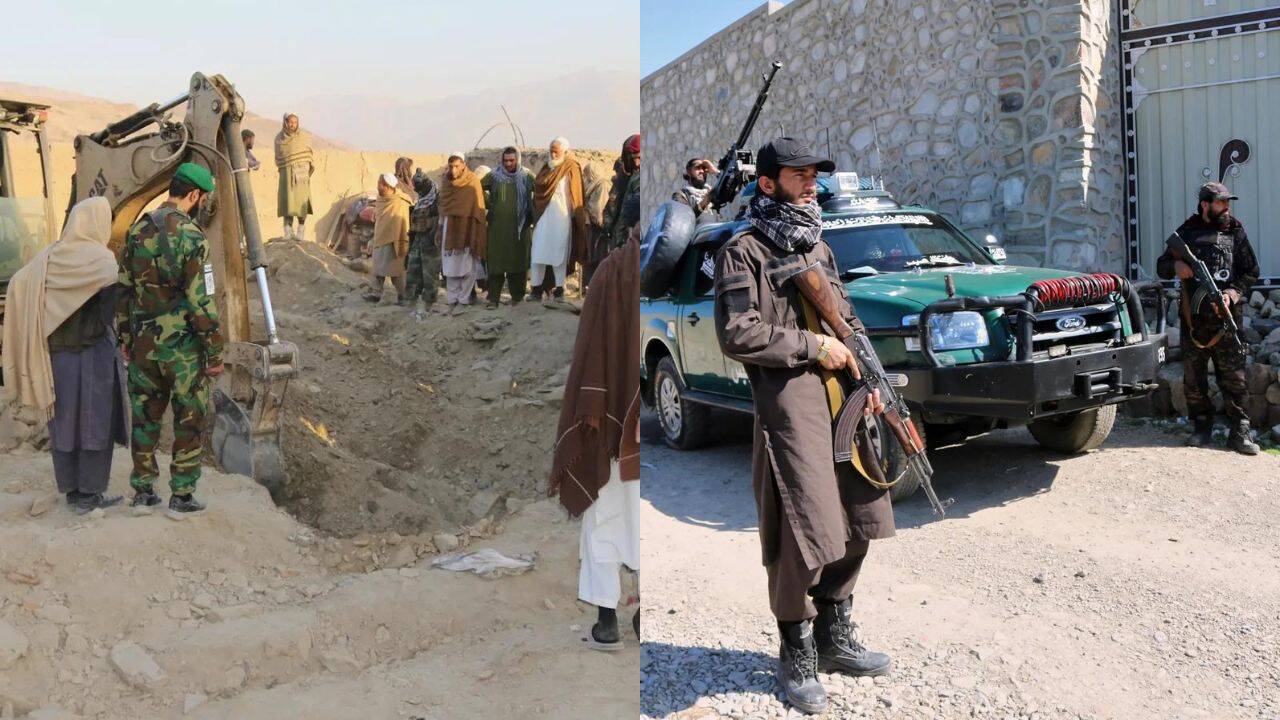
The Afghan Taliban government asserts its forces targeted militant bases across the border, a claim Islamabad has dismissed as entirely fabricated.
The fragile stability along the Durand Line has fractured further this week. On Friday, the Taliban government in Afghanistan issued a bold claim: that its forces had successfully executed strikes on militant hideouts located deep within Pakistan’s Balochistan and Khyber Pakhtunkhwa provinces. According to the Afghan defence ministry, the operation was carried out late Thursday night, targeting what they described as staging grounds used by hostile actors to organize attacks against Afghanistan.
Islamabad was quick to push back. Pakistan’s information ministry termed the Afghan reports false, maintaining that no such strikes occurred on its soil. Instead, Pakistani officials stated that only a single drone from the Afghan side briefly entered their airspace before being intercepted. The rhetoric from Islamabad was biting, with the government firing back that the very "terrorist camps" Kabul claims to be hitting are, in reality, sheltered and patronized by the Taliban regime itself.
A History of Escalating Hostility
This latest exchange is not an isolated incident but the latest chapter in a rapidly deteriorating relationship. Only days prior, Pakistan conducted its own airstrikes inside Afghan territory, which the Taliban government reported resulted in at least 13 civilian deaths, including 11 children. These tit-for-tat military movements underscore the deep-seated mistrust between the two neighbors.
While the Afghan defence ministry provided little detail on how the operation was conducted, the technical capabilities of the Taliban remain a subject of debate. Data from the International Institute for Strategic Studies suggests that while the Taliban does not possess a fleet of traditional fighter jets, they maintain a small number of aircraft, helicopters, and a growing fleet of drones—assets previously deployed in border clashes.
Why it matters
The broader implications here point to a failed regional security architecture. Despite mediation efforts by China to de-escalate tensions, both nations seem caught in a cycle of mutual recrimination. For Pakistan, the primary concern remains cross-border militancy, which it insists is facilitated by the Taliban. For the Taliban, these assertions are a distraction from what they view as Pakistan's own internal security failures.
As border-related violence continues to claim lives, the lack of a diplomatic breakthrough suggests that the frontier will remain a flashpoint. With both sides relying on military posturing rather than dialogue, the risk of a miscalculation that could draw the two nations into a more direct, sustained conflict is at an all-time high.
Rohan Gupta covers the economy, markets and companies for PoliticalPedia.