BJP Chief Targets 'Negative Politics' Amidst Growing Debate Over CJP Protest
'People sitting abroad ... ': BJP chief issues warning in veiled swipe at CJP protest
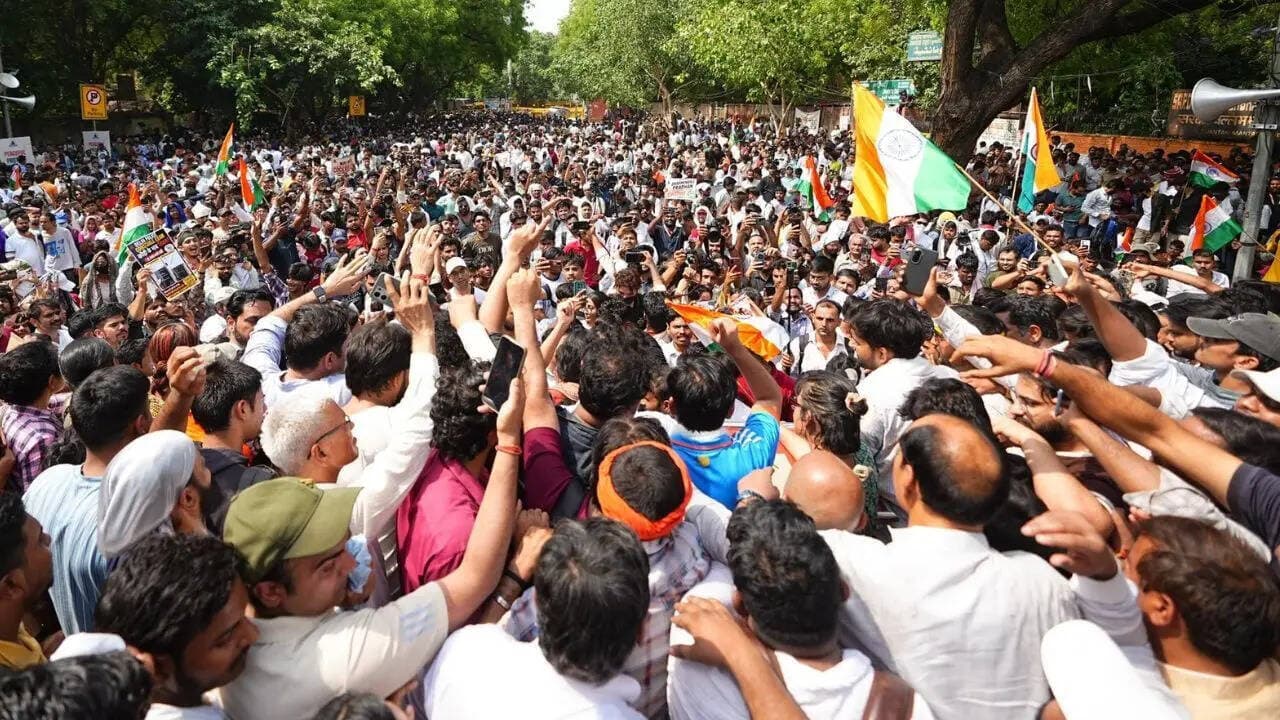
Nitin Nabin slams overseas influence on Indian student discourse as opposition parties remain divided over recent demonstrations at Jantar Mantar.
The political temperature in the capital has risen following a sharp critique from BJP national president Nitin Nabin, who warned against external attempts to steer the trajectory of the nation’s younger generation. Speaking at an Intellectuals Meet in Ranchi, Nabin launched a pointed attack against what he termed "negative politics," specifically referencing the recent Citizens for Justice and Peace (CJP) protest held at Jantar Mantar.
Nabin’s remarks centered on the role of external actors, cautioning that "some people sitting abroad think they can dictate the direction of India's youth." The BJP leader argued that these efforts seek to label the country’s students as anti-establishment, a narrative he contends is fundamentally disconnected from the aspirations of young Indians who are focused on nation-building and securing their own professional futures.
The controversy gains additional weight due to the fractured response from the political establishment regarding the CJP protest. While the Congress party has maintained a notable distance, choosing to remain cold toward the demonstrations, other opposition factions have extended a warmer reception to the movement. This divergence underscores the sensitivity of student-led advocacy in the current national climate, where the intersection of civil society activism and party politics often sparks heated debate.
Defending the Democratic Standard
Addressing the gathering, Nabin emphasized that the BJP would combat these ideological challenges through democratic channels rather than silence. He insisted that while the party remains committed to upholding democratic principles, it will not remain a passive spectator if those standards are undermined. "We will oppose on the basis of democracy, but we will not allow the standards of democracy to be destroyed," he stated, adding that the youth of this country will not be used as pawns by a select few.
The discourse around the protest reflects a broader struggle over the identity of India's student body. Critics of the protest, like Nabin, argue that such movements are designed to push the youth into a cycle of perpetual agitation. Conversely, organizers and supporters of the Jantar Mantar gathering maintain that their platform is a necessary space for dissent and democratic expression.
Beyond the political sparring, Nabin also used the Ranchi platform to pivot toward the economic backbone of the nation, explicitly recognizing the contribution of farmers to India’s ongoing development. By balancing his critique of "negative politics" with an acknowledgment of the agrarian sector, the BJP leadership is attempting to broaden its messaging to appeal to both rural stakeholders and the intellectual urban youth.
As the debate continues to unfold, the tension between domestic political goals and the influence of voices sitting abroad remains a central theme. With the opposition divided on how to engage with these civil society movements, the narrative surrounding the youth and their role in the country's future is set to remain a key point of contention in the coming months.
The PoliticalPedia Editorial Desk brings verified, sourced political news and analysis from across India.