Bill Gates calls Epstein meetings a 'grave error in judgment' in House testimony
Should not have met Epstein, never knew he was engaged in criminal conduct: Gates to lawmakers
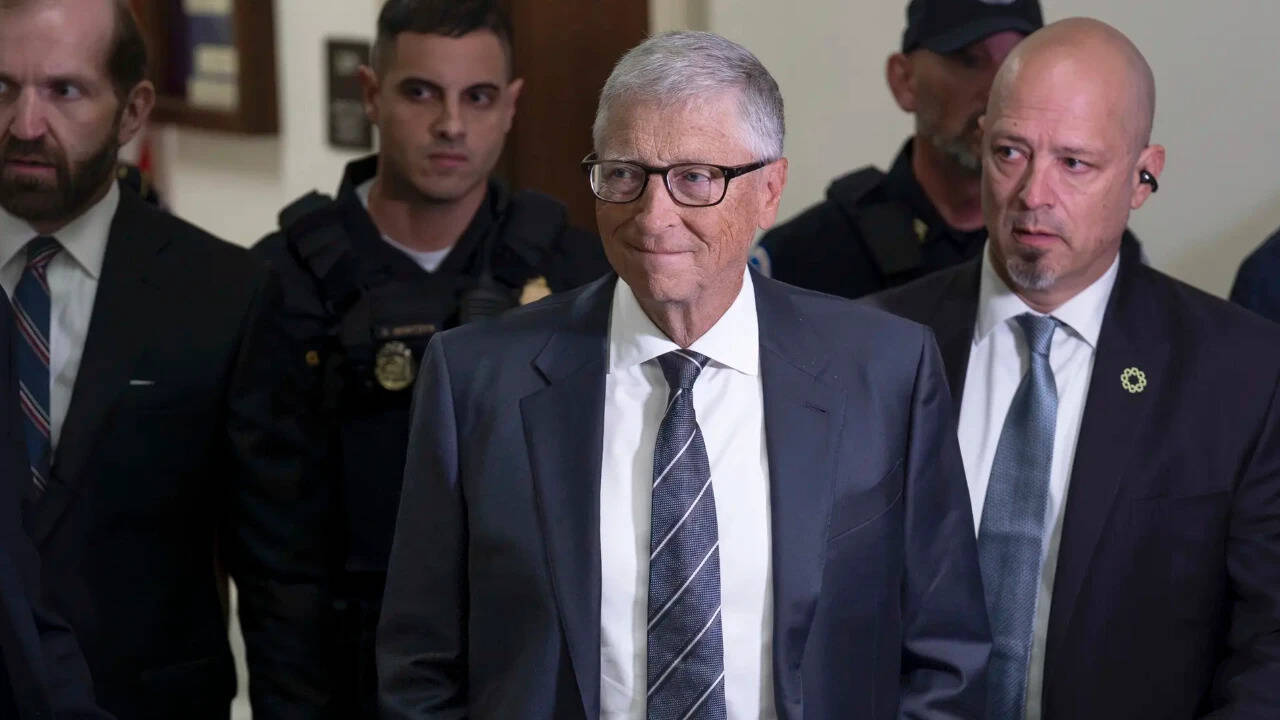
The Microsoft co-founder appeared before a U.S. House panel to address his past ties to the disgraced financier, insisting he was unaware of any criminal behavior.
The halls of the U.S. Capitol were unusually quiet as Bill Gates walked in to face the House Oversight Committee. For the billionaire philanthropist, this was a moment of public reckoning, an attempt to close the book on a chapter that has shadowed his reputation for years. Inside the closed-door hearing, Gates was direct: he said that his decision to engage with Jeffrey Epstein was a grave error in judgment—a mistake he should have avoided entirely.
For years, the association between the tech titan and the late financier has been the subject of intense scrutiny, fueled by a trail of calendar entries, emails, and photos that surfaced in the wake of the federal probe into Epstein’s sex-trafficking network. Bill Gates maintained that their relationship, which began in 2011, was strictly professional. He tells the lawmakers that he was lured by the prospect of tapping into Epstein’s network to raise billions for global health initiatives, though he eventually cut ties in 2014 when those promises failed to materialize.
The shadow of blackmail
Beyond the professional fallout, the testimony took a personal turn. Reports indicate that Gates alleged Epstein attempted to use information regarding his past infidelities as leverage to get closer to him. Despite this, the billionaire was adamant that he never witnessed any criminal conduct, nor did he ever visit Epstein’s private island or his other notorious properties. "I have never victimized anyone," he stated, distancing himself from the predatory behavior that defined the financier’s inner circle.
Committee Chairman James Comer, who led the session, was quick to clarify the scope of the inquiry. He emphasized that the hearing was not an accusation against Gates, but rather a vital part of the committee's broader mission to understand how systemic failures allowed Epstein and Ghislaine Maxwell to operate for so long. For the survivors, the meeting serves as a data point in a larger effort to map the extent of the financier’s reach among the global elite.
The bigger picture
Why does this matter? The spectacle of a tech icon testifying under oath underscores a growing intolerance for the "blind spots" of the ultra-wealthy. For decades, men like Epstein relied on social proximity to powerful figures to lend themselves a veneer of legitimacy. As institutional scrutiny intensifies, the corporate and philanthropic world is being forced to account for how easily such boundaries were blurred.
This testimony represents a definitive attempt by Gates to put the narrative to rest, but it also reflects a shift in accountability. The fact that the House Oversight Committee could summon a figure of his stature to explain his social and business network signals that the era of "don't ask, don't tell" in elite circles is rapidly eroding. The focus now turns to whether this testimony satisfies investigators or if more questions remain about the intersection of high-stakes philanthropy and criminal predation.
Rohan Gupta covers the economy, markets and companies for PoliticalPedia.