Bhu-Aadhaar: The 14-Digit Digital Revolution Coming to Your Land Records
Bhu-Aadhaar for land: How a 14-digit ID can help property buyers to avoid disputes
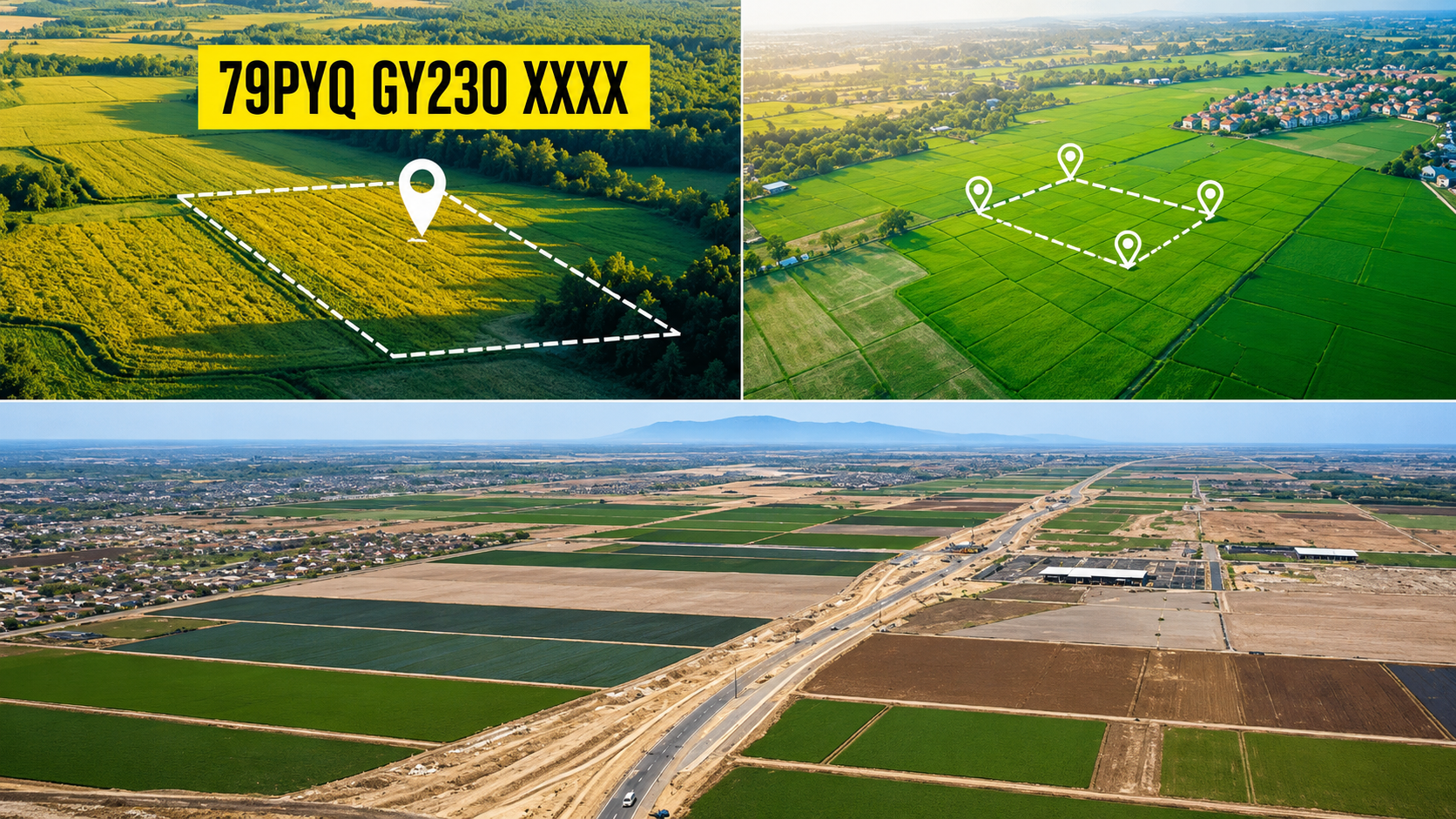
The government is rolling out a unique identification system for land parcels, aiming to replace archaic property documentation with a single, geo-referenced digital ID.
For decades, buying land in India has felt like a high-stakes gamble against bureaucracy. Prospective buyers have long spent months—sometimes years—chasing down paper trails, reconciling survey maps, and verifying revenue records to ensure a property isn't entangled in a legal dispute. The government is now moving to end this opacity with the rollout of "Bhu-Aadhaar," a 14-digit Unique Land Parcel Identification Number (ULPIN) designed to serve as a single, authoritative digital identity for every plot of land in the country.
How the System Works
Unlike random serial numbers, the Bhu-Aadhaar system is built on precision. Each 14-digit identifier is generated using a computational formula derived from the geo-referenced coordinates of a plot’s boundary points. By complying with the Electronic Commerce Code Management Association (ECCMA) and Open Geospatial Consortium (OGC) standards, the system links the digital ID directly to the physical land. In technical terms, the identifier—known as a Property Natural Identifier Unit (PNIU)—is anchored to the latitude and longitude of the specific parcel. Because it is tied to mapped geographic coordinates, the ULPIN remains inextricably linked to the land’s exact location, effectively creating a "digital fingerprint" for every square foot of earth.
Simplifying Transactions
The primary utility of this system lies in its ability to consolidate fragmented records. By linking ownership details, plot size, and geographical boundaries to one unique identifier, the government aims to create an integrated land information management system. For the average buyer, this means a significantly reduced risk of fraud, as the 14-digit code acts as an immutable reference point. Banks and government agencies will also benefit, as they gain access to a singular, verified source of truth, making credit processing and property taxation far more efficient.
The Bigger Picture: Why It Matters
This initiative is a critical piece of a much larger administrative shift. With recent reports confirming that over 95% of rural land records are already digitized, the introduction of Bhu-Aadhaar represents the next phase: standardizing those records into a coherent, cross-referenced national grid. This is about more than just convenience; it is about formalizing the real estate economy. By establishing land banks and strengthening accounting standards, the state is effectively trying to reduce the litigation that clogs Indian courts. If executed effectively, the system could transform land from a chaotic, paper-heavy asset into a streamlined, digital-first commodity, reducing the "dispute-heavy" reputation that has long hampered the sector.
Priya Nair covers parties, elections and the business of power for PoliticalPedia.