Beyond the Stethoscope: PM Modi Hails Doctors as the Backbone of India’s Healthcare
'Backbone Of India's Healthcare': PM Modi's Message On National Doctors' Day
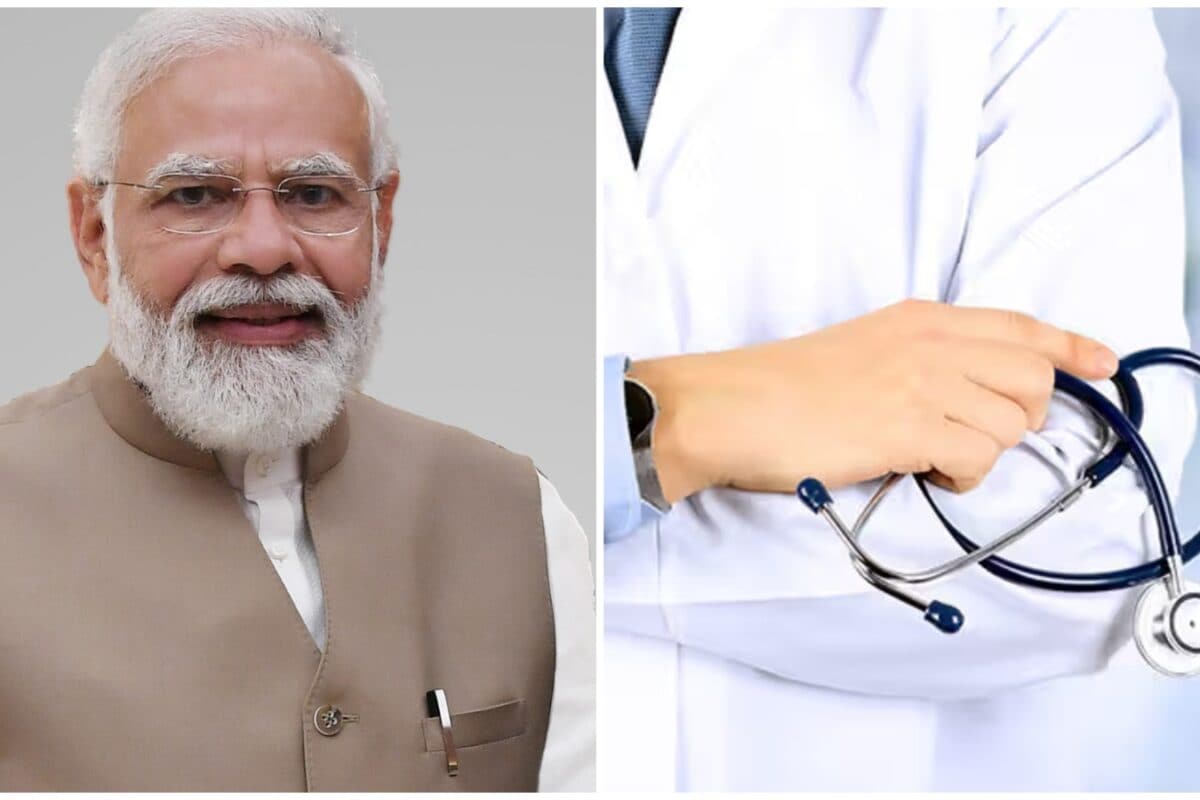
As India marks National Doctors’ Day, the Prime Minister credits the medical fraternity for building a robust system, even as the government pushes to double the nation's capacity for training future practitioners.
The white coat remains one of the most trusted symbols in the country, and today, that trust was formally acknowledged at the highest level of government. On the occasion of National Doctors’ Day, PM Modi took to social media to thank the medical community, describing them as the essential backbone of India’s healthcare system. His message highlighted the dedication and compassion required to serve under often gruelling, high-pressure conditions across the country’s diverse geography.
A Legacy of Service
The date—July 1—is not arbitrary. It serves as a dual tribute to the birth and death anniversary of Dr. Bidhan Chandra Roy, the legendary physician and former Chief Minister of West Bengal. By anchoring the day in the memory of such a towering figure, the nation recognizes not just clinical expertise, but the spirit of public service that Dr. Roy embodied. Today, as social media feeds overflow with heartfelt doctors day wishes, the sentiment on the ground reflects a deeper public appreciation for those navigating the frontlines of patient care.
Scaling the Infrastructure
Beyond the rhetoric of gratitude, the government is framing this day as a milestone for its decade-long policy overhaul. PM Modi noted that the sheer scale of the medical workforce has expanded significantly. With the number of medical colleges more than doubling in the last ten years, the supply of undergraduate and postgraduate medical seats has seen a sharp uptick. This expansion is designed to ensure that quality medical care is not restricted to urban centers but reaches the most remote corners of the country.
Why it Matters
The strategic focus here is clear: the government is betting that physical infrastructure alone cannot sustain a nation of 1.4 billion. By increasing the number of seats, the policy aim is to create a self-sustaining pipeline of doctors capable of tackling the next generation of public health challenges. The bigger picture suggests that "Viksit Bharat" (a developed India) is being viewed through the lens of healthcare accessibility. The emphasis on preventive care and medical innovation indicates that the state is shifting its role from being merely a service provider to a facilitator of a more tech-enabled, research-heavy healthcare ecosystem.
The Path Ahead
While the government claims success in scaling, the challenge for the next decade will be quality control and equitable distribution. As medical research and innovation become central to the policy narrative, the burden on doctors will evolve from traditional bedside care to managing complex public health systems. PM Modi’s message today serves as a signal that the administration views the medical community as a permanent partner in the country’s developmental trajectory, tasking them with a role that extends far beyond the hospital ward.
Arjun Mehta reports on government, policy and Parliament for PoliticalPedia, in English and Hindi.