Beyond the Menu: Shashi Tharoor’s Witty Take on the Viral Chai-Idli Debate
'Keep chai in cup, idli on plate': Tharoor's witty response to viral food debate
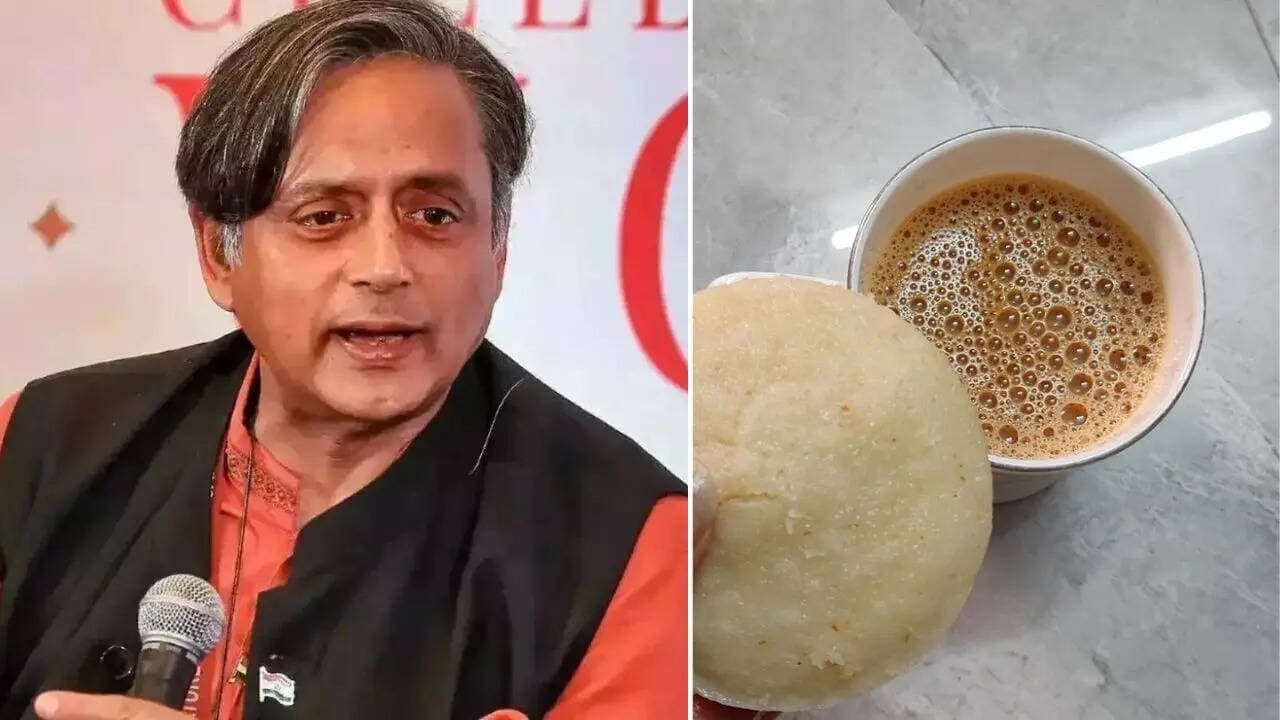
The Thiruvananthapuram MP settles a heated internet food controversy by advocating for the separation of tea and rice cakes.
Social media often becomes a battleground for unconventional culinary experiments, but few pairings have sparked as much ire from food purists as the recent viral suggestion to pair chai with idli. Shashi Tharoor, no stranger to engaging with trending topics online, stepped into the fray this week to offer a characteristically sharp critique of the combination. Responding to a viral post that hailed the duo as the "best combination to ever exist," the veteran parliamentarian made it clear that while both items are staples in their own right, they belong on separate ends of the breakfast table.
A Diplomatic Critique of Texture
The MP’s intervention was as much about the quality of the dish as it was about the pairing itself. After examining the photograph shared in the online post, Tharoor expressed reservations about the "dense" and "discoloured" appearance of the idli on display. He noted that for an idli to be worthy of consumption, it must be "snowy-white" and "fluffy." By his assessment, the version being promoted appeared rubbery—a texture he argued would be entirely unsuited for any culinary context, let alone one involving a hot beverage.
"I’m a massive chai fan myself, but I’ve always been a firm believer in the 'separate but equal' policy," Tharoor said, clarifying his stance. He reasoned that the science of the snack simply does not support the dunking method. A high-quality, soft idli would inevitably dissolve into the tea, ruining the integrity of both, while a firmer, "dunkable" idli would lack the essential qualities that make the dish a South Indian favorite. As he succinctly put it: "Keep the chai in the cup and the idli on the plate."
Defending Liberal Values and Dietary Norms
The online exchange quickly pivoted from a food review to a humorous discussion on parliamentary authority. When one user jokingly appealed to the MP to use his "RS powers" to outlaw such "blasphemous acts" against traditional breakfast items, Tharoor offered a prompt correction. He reminded his audience that he serves in the Lok Sabha, not the Rajya Sabha, and maintained that his political philosophy—a self-described "true liberal" stance—precludes him from seeking to ban preferences, even those he finds unpalatable.
For those curious about his actual preferences, the MP did not shy away from sharing his ideal plate. He championed the classic accompaniments that define the dish for many: molagapodi (gunpowder) mixed with generous amounts of ghee, and a side of Palakkadan ulli-sammandhi (shallot chutney). By engaging with these specific regional condiments, the discussion shifted from a divisive internet trend back to the appreciation of traditional, authentic flavors.
This incident marks yet another time the MP has utilized his platform to weigh in on cultural discourse, proving that even in an era of rapid-fire social media trends, there is still space for a measured, if witty, defense of culinary standards. Whether the internet will heed his advice to keep the tea and the idli separate remains to be seen, but the debate has certainly reinforced the cultural importance of preserving the integrity of traditional Indian breakfasts.
The PoliticalPedia Editorial Desk brings verified, sourced political news and analysis from across India.