Beyond the Stereotype: How Sameera Reddy Redefined Her Bond with Her Mother-in-Law
Sameera Reddy recalls first meeting with her mother-in-law: ‘Not mera beta…’
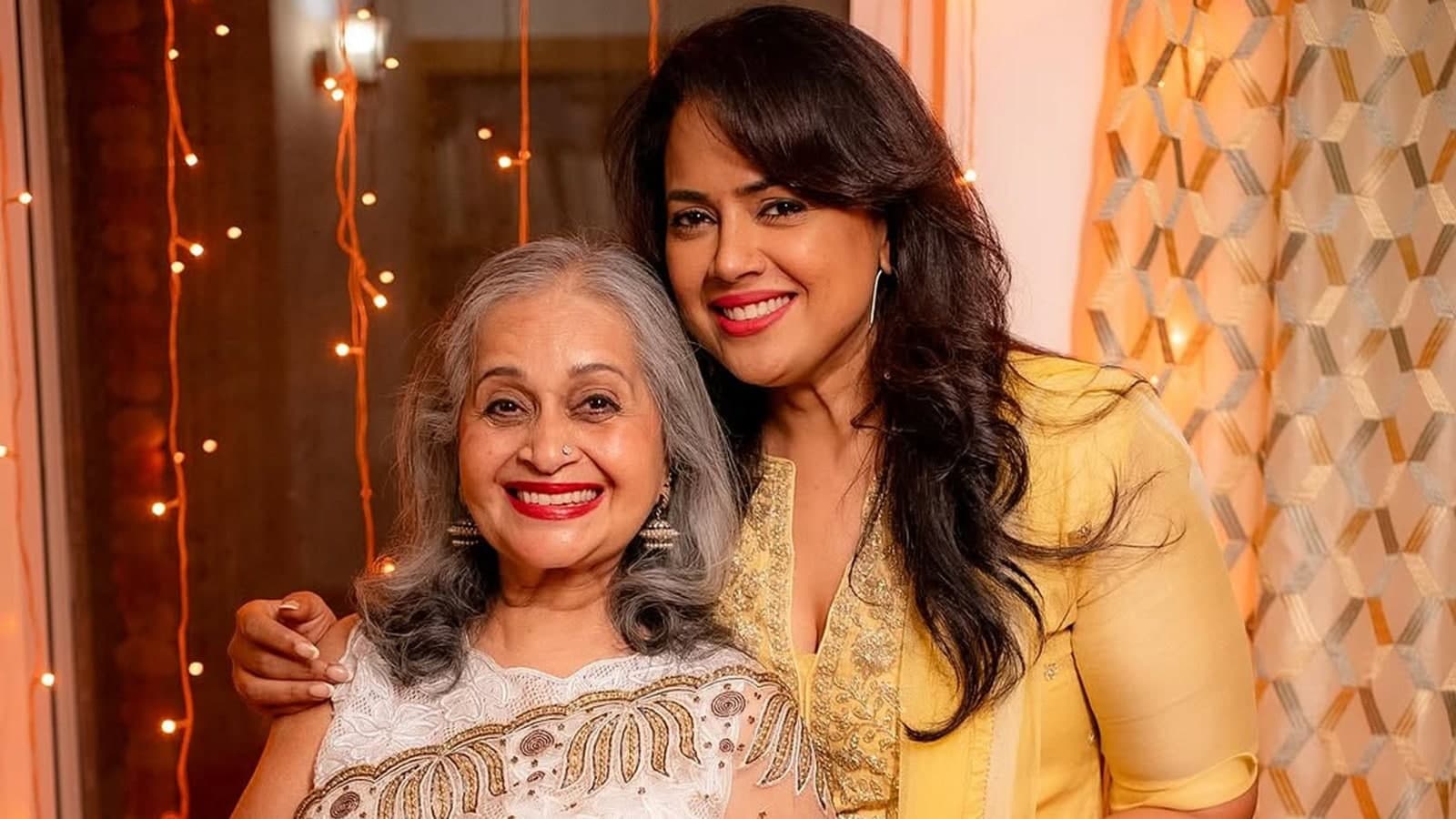
The actor shares how an unconventional first meeting shattered traditional expectations and paved the way for an authentic, supportive relationship.
In a landscape where the daughter-in-law and mother-in-law dynamic is frequently portrayed through a lens of friction or duty, Sameera Reddy’s recent reflection offers a refreshing departure. The actor, who has often been open about her life post-stardom, recently recounted her first conversation with Akshai Varde’s mother. Far from the typical scrutiny one might anticipate, the encounter was marked by candor and a surprising lack of possessiveness.
“Akshai has a habit of dating a lot of girls. You are a lovely girl. Just make sure my son knows what he’s doing,” Reddy recalled, noting that the interaction immediately signaled a relationship built on transparency rather than the traditional “mera beta” (my son) protectiveness. This initial exchange set the tone for a partnership where the elder woman has been a consistent source of support, focusing on Reddy’s well-being—asking, “Are you okay?”—rather than enforcing rigid family scripts.
The Psychology of the 'Hidden' Bond
This shift from a hierarchy-based relationship to a horizontal, peer-like connection is not merely a stroke of luck; it is a psychological phenomenon. Dr. Druhin Grover, a Consultant Psychiatrist at Yashoda Medicity, suggests that authority figures in Indian households are often perceived as distant because their roles demand a level of emotional composure that can be misconstrued as rigidity.
When an individual enters that space with natural warmth and vulnerability, it can trigger a quiet transformation. Dr. Grover explains that this perceived distance is frequently a role-based behavior rather than an absence of affection. By refusing to conform to the performance expected of a traditional daughter-in-law, women like Reddy create emotional safety. This environment allows the mother-in-law to drop her guard, revealing qualities that may have been sidelined by years of navigating social expectations.
Redefining Support Systems
For many, the transition into a new family is fraught with anxiety, yet the success of these relationships often hinges on the ability to treat one another as adults rather than roles. In many Indian homes, communication between parents and children remains tethered to duty. However, when a daughter-in-law approaches her mother-in-law with an open heart, it provides a space where both parties can move beyond the surface.
This dynamic is more than just personal harmony; it is a vital shift in how families operate. When the "mera beta" narrative is replaced by genuine concern for the daughter-in-law’s individual identity, the entire family unit stands to benefit. It fosters a culture of acceptance where closeness is not demanded but grows organically, proving that the most enduring bonds are those that allow both sides to be emotionally real, rather than just playing a part.
The PoliticalPedia Editorial Desk brings verified, sourced political news and analysis from across India.