Beyond the Cycle: Why India Struggles to Translate Mass Movements into Lasting Leadership
OPINION | The Cockroach Janta Party Problem: India Produces Mass Movements. Why Doesn't It Produce Mass Leaders?
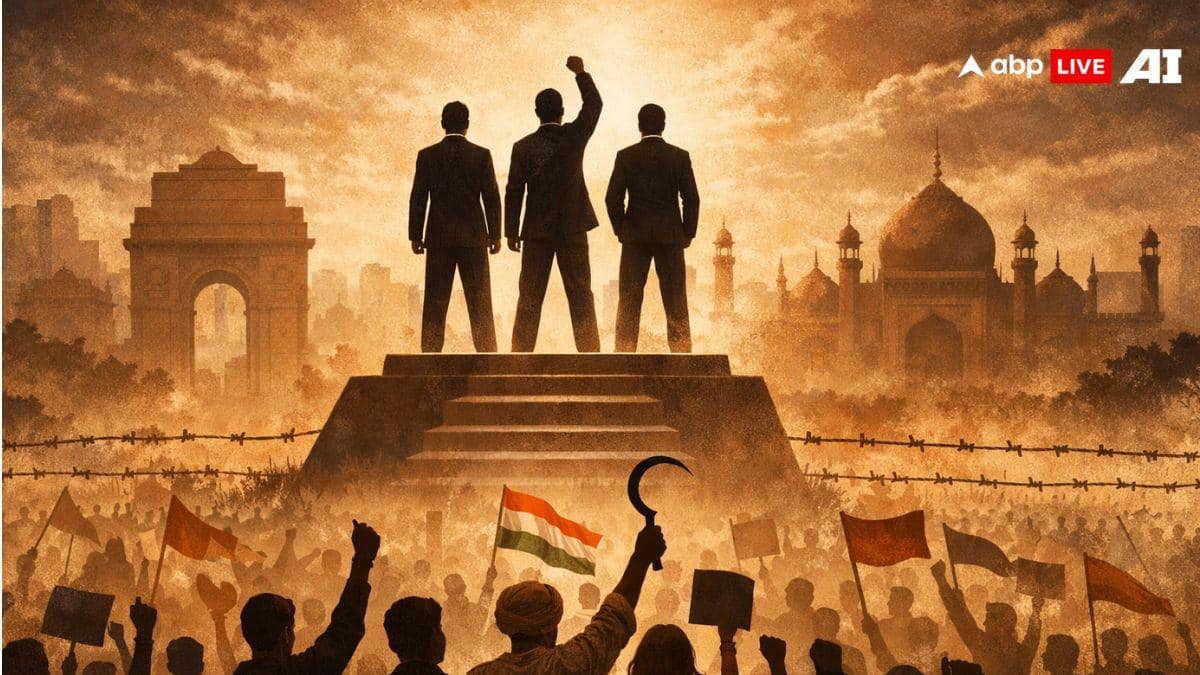
From the freedom struggle to modern uprisings, India excels at mobilizing the streets, yet the corridors of power remain remarkably resistant to genuine systemic change.
India’s political history is a paradox of energy and inertia. While the nation has a storied tradition of vibrant mass movements, the problem remains that these surges of public will seldom result in the rise of new, grassroots-driven leadership. Instead, the cockroach janta party phenomenon—where the faces and party labels shift but the underlying power structures remain—persists. This cycle forces a critical examination of why India produces mass movements yet why doesn’t it produce mass leaders who can dismantle the status quo.
The Elite Capture of Popular Will
History suggests that in many global contexts, revolutions have birthed structural shifts by elevating those from the ranks of the marginalized. In contrast, India’s record shows that many movements begin with immense popular energy only to conclude with power flowing back to elites. This is not a recent trend. Even the Indian freedom struggle, which mobilized millions, was steered by a leadership tier drawn almost exclusively from privileged, highly educated, and affluent backgrounds.
Whether one looks at the Congress stalwarts like Jawaharlal Nehru and Vallabhbhai Patel, or the architects of the Muslim League like Muhammad Ali Jinnah, the leadership was firmly rooted in a socio-economic bracket far removed from the rural poor. While the mass participation was genuine, the strategic direction was set by those whose social positioning insulated them from the daily hardships of the average citizen.
Partition and the Resilience of the System
The consequences of this elite-centric approach were perhaps most tragically illustrated during Partition. While popular narratives often frame the division of the subcontinent as a mass-driven demand, historical evidence suggests that the average peasant or laborer had little to gain—and everything to lose—from the rupture. The movement toward Partition was a top-down negotiation, directed by political elites who possessed the social capital to reshape borders, despite the apathy or opposition of the general public.
This historical precedent reveals why the system remains so resilient. When a movement is led by those who are already integrated into the power structure, the objective often shifts from fundamental transformation to the preservation or transition of authority. Consequently, the often repeated cycle of protest and disappointment continues, as the foundational architecture of governance remains largely untouched by the movements that seek to reform it.
The Challenge of Sustained Transformation
The core of the issue lies in the transition from agitation to governance. In India, movements frequently struggle to create a durable pipeline for leadership that is not already co-opted by existing power structures. Without a mechanism to elevate grassroots voices into sustained political roles, the energy of the streets is eventually absorbed, leaving the institutional hierarchy intact. Until the disconnect between those who march and those who lead is bridged, the promise of systemic change will likely remain an unfulfilled ambition, perpetually deferred by the very structures these movements aim to challenge.
The PoliticalPedia Editorial Desk brings verified, sourced political news and analysis from across India.