Beyond the Buffer: Why Maharashtra’s Onion Farmers are Calling for a Structural Bailout
From export bans to price crashes: Why onion farmers need more than buffer stock purchases
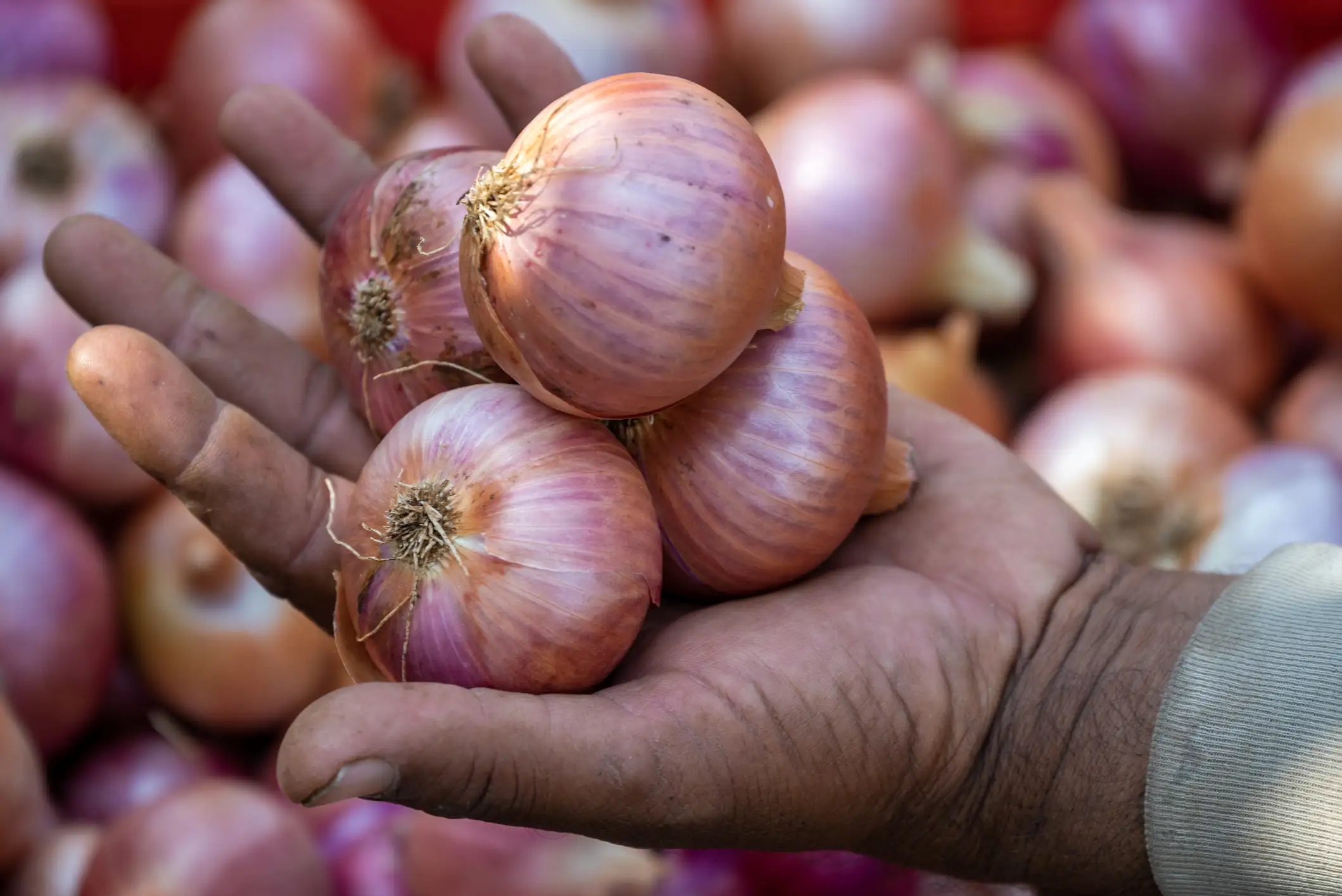
As procurement prices struggle to cover production costs, a deepening crisis in the onion belt reveals the lethal gap between government intervention and ground-level reality.
The dusty, sun-scorched mandis of Nashik tell a story of a cycle that is rapidly breaking. For the farmers of Maharashtra, who shoulder the weight of a third of India’s onion output, the recent government hike in the Minimum Assured Procurement Price (MAPP) to Rs 1,730 per quintal feels less like a lifeline and more like a rounding error. With production costs hovering near Rs 25 per kg—factoring in seeds, irrigation, and the high-risk gamble of storage—the current market reality of Rs 10–12 per kg is pushing families into a corner where they have little room left to maneuver.
The Policy Trap
The core of the issue lies in the dissonance between domestic supply management and the global market. While the government pivots between export bans and duty hikes to keep urban inflation in check, farmers are left holding the bag. Industry data is stark: India’s share of the global onion export market has cratered from nearly 40% to under 5%. When policy shifts are this volatile, long-term supply chain planning becomes impossible. Farmers aren't just fighting the weather; they are fighting an environment where export uncertainty prevents them from offloading the 30-million-tonne surplus that domestic consumption—capped at roughly 15 million tonnes—cannot absorb.
Why it matters
The situation suggests that the traditional "buffer stock" model is becoming obsolete. Buying up onions to manage price spikes is a reactive, short-term fix that fails to address the lack of cold-chain infrastructure or the inability of farmers to pivot to alternative crops. In regions where water is scarce, the onion is often the only viable cash crop. By trapping farmers in a loop of low margins and high spoilage, the state risks a permanent decline in cultivation. If smallholders continue to walk away, the long-term impact on India’s food security and regional economies will be far costlier than any current subsidy package.
The Search for Stability
Farmers are now demanding more than just incremental price hikes; they are calling for a Rs 10,000 crore revival package to sustain the sector. From their perspective, the repeated announcements of buffer stock purchases are a drop in the ocean compared to the losses incurred by market crashes. Unless the Centre moves toward a predictable export policy and invests in massive, decentralized storage facilities, the "onion cycle" will continue to be a tale of seasonal despair. As production expands in states like Uttar Pradesh and Punjab, Maharashtra’s dominance is waning, but the structural vulnerability remains a national challenge that simple procurement math cannot solve.
Priya Nair covers parties, elections and the business of power for PoliticalPedia.