Beyond the Binary: Why the Caste Census is a Blueprint for Governance
A different approach to the caste census | Explained
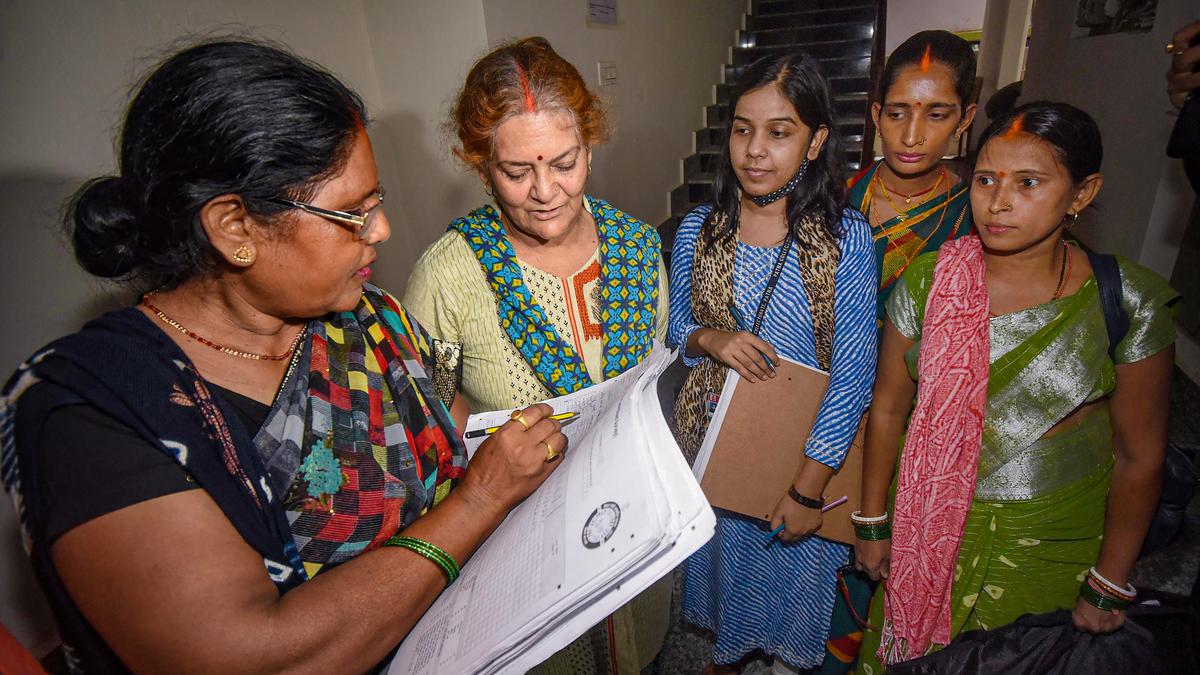
As the Centre moves to enumerate caste in the upcoming national exercise, the move signals a shift from purely political posturing to a potentially transformative data-driven approach.
For nearly a century, India has operated in a data vacuum regarding the granular composition of its citizenry. Since the last comprehensive caste enumeration in 1931, the state has relied on projections and outdated records to design welfare schemes. Now, with the Cabinet Committee on Political Affairs greenlighting the inclusion of caste in the upcoming Census, the conversation is moving past the familiar "for or against" shouting matches. This isn't just about counting heads; it is about establishing a foundational tool for a modern social management approach.
The Reality Check from the States
The recent state-level surveys provide a sobering preview of what the national exercise might reveal. In Bihar, the 2023 survey indicated that OBCs and EBCs account for over 63% of the population, while the general category sits at just 15.52%. Telangana’s 2025 survey echoed this, placing Backward Classes at 56.33%. These figures highlight a persistent mismatch: while these communities form a demographic majority, they remain chronically underrepresented in high-stakes arenas like academia. Data shared in Parliament regarding 45 Central Universities shows that only 4% of professors are from OBC backgrounds, despite the existence of the 2019 Reservation in Teachers’ Cadre Act.
Why it Matters: The Social Management Shift
The central challenge is that India’s top-down welfare models have historically struggled to address the layered inequities of class, gender, and caste. Without precise data, affirmative action remains speculative. A social management approach, as discussed in journals like Frontline Magazine and by institutions like Vajiram & Ravi, treats caste not as a tool for division, but as a developmental variable. If the state knows exactly who needs help and how historical disadvantages shape their current economic reality, it can move away from broad-brush policies toward targeted, need-based interventions.
The Political Tug-of-War
The path to this census is far from smooth. While the Congress has criticized the Centre for past delays, even labeling the current pace as a betrayal, the BJP finds itself balancing its ideological base with shifting political realities. Reporting from ThePrint and The Hindu highlights how the move has triggered internal tremors in states like Karnataka, where specific communities like the Lingayats are navigating their own internal rifts over how this data might affect their political leverage. Meanwhile, the RSS has indicated it supports the census in principle, provided it isn't used to drive social friction.
The Bigger Picture
This is a pivotal moment for Indian governance. For decades, the lack of reliable data—exemplified by the failed 2011 Socio-Economic and Caste Census—has forced policymakers to work in the dark. By formally integrating caste into the census, the government is essentially creating a high-resolution map of India’s social architecture. The ultimate success of this exercise will depend on whether the findings are used to refine governance and bridge the representation gap in education and employment, or if they are reduced to mere ammunition in the electoral battlefield. The shift from "identity politics" to "data-backed social management" is the real test for the next decade of Indian policy.
Arjun Mehta reports on government, policy and Parliament for PoliticalPedia, in English and Hindi.