Beyond 25%: Military Pushes for Higher Agniveer Retention as Reality Sets In
Agnipath scheme review: Armed forces reportedly propose big jump in Agniveer retention
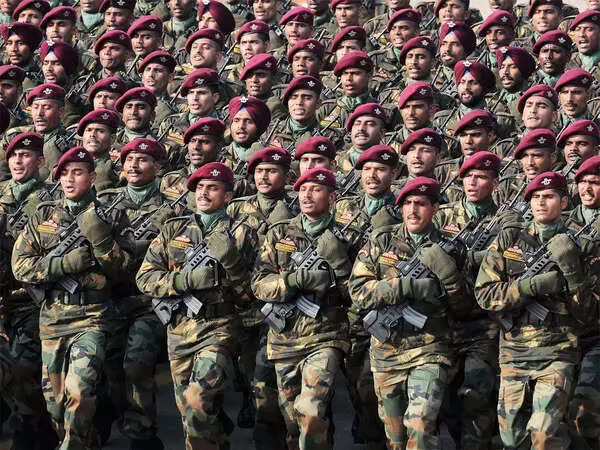
With the first batch of recruits approaching their 2026 exit date, the armed forces are re-evaluating the Agnipath scheme to balance technical expertise with a youthful profile.
The corridors of South Block are buzzing with a quiet, yet significant, reassessment of the Agnipath scheme. Two years after the Indian government launched this radical overhaul of defense recruitment, the military establishment is grappling with the practical fallout of its "short-term service" model. While the original policy aimed to cultivate a leaner, younger fighting force, the feedback loop from the ground—particularly from technical units—suggests that a 25% retention rate may be insufficient to maintain the operational edge required by modern Indian armed forces.
The Technical Reality Check
The push for change is being driven by the three service branches, which have submitted recommendations to the Department of Military Affairs (DMA). The Indian Navy, in particular, has emerged as a vocal advocate for a major shift. Naval commanders are finding that the complexity of modern maritime warfare requires extensive, specialized training. A four-year cap on service often results in a poor return on investment for the government, as sailors leave just as they become fully proficient in handling sophisticated technical systems. Reports suggest the Navy is seeking to retain up to 75% of its Agniveers, while the Indian Army and the Indian Air Force are pushing for a 50% absorption rate.
Why It Matters
This internal recalibration highlights a fundamental tension in defense policy: the trade-off between keeping the service young and preserving institutional memory. When the scheme was introduced in 2022, the goal was to lower the average age of soldiers, but the operational reality of handling high-end weaponry often demands longer tenures. The military is now attempting to recalibrate the balance between a youthful profile and the continuity of expertise. Furthermore, the proposal to provide lifelong disability benefits for those injured in the line of duty signals a pragmatic move to address concerns regarding the welfare of those who do not transition into the permanent cadre.
Looking Toward 2026
The stakes for these proposed changes are high, as the first set of Agniveers, who joined in 2023, are scheduled to complete their four-year tenure in October 2026. For the 75% currently slated for exit, the transition involves the 'Seva Nidhi' package—a tax-free sum of approximately Rs 11.71 lakh—but no pension or gratuity. As these young recruits reach the halfway point of their contracts, the government faces a narrow window to finalize these structural adjustments. While no official confirmation has been issued by the Ministry of Defence, the momentum behind these proposals reflects a serious effort to refine a policy that remains the most significant departure from traditional recruitment in decades.
Arjun Mehta reports on government, policy and Parliament for PoliticalPedia, in English and Hindi.