Bansi Lal Returns as Haryana Chief Minister, Replacing Bhajan Lal in Major Political Shake-up
40 years ago, June 5, 1986: Bansi Lal replaces Bhajan Lal
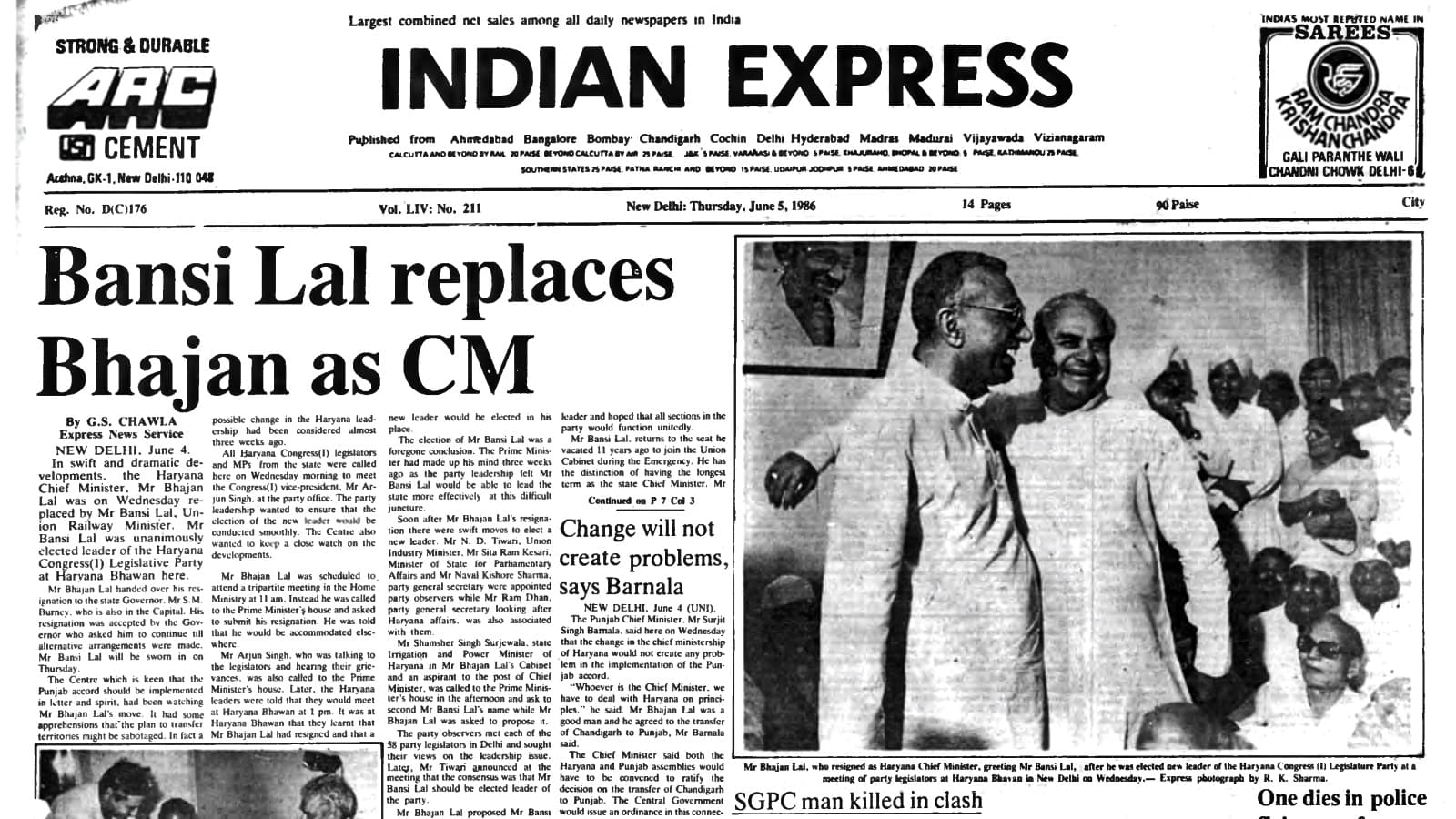
The central leadership of the Congress party has orchestrated a swift change in state leadership, installing Bansi Lal to take the helm from Bhajan Lal amid shifting political priorities.
The political landscape of Haryana underwent a sudden transformation this June, as the state government saw a change in its top leadership. Bansi Lal, who had been serving as the Union Minister for Railways, has been unanimously elected as the new leader of the Congress(I) Legislative Party. This transition follows the formal resignation of Bhajan Lal, who stepped down from his post after meeting with state Governor S.M. Burney in the capital.
A Strategic Transition
Observers note that this move comes at a critical juncture for the ruling party. For years, Bhajan Lal had maintained his grip on the chief minister’s office through a complex network of political maneuvering and coalition management. However, recent developments surrounding the implementation of the Punjab accord appear to have necessitated a change in the state's direction. Prime Minister Rajiv Gandhi’s administration reportedly viewed the transition as a way to resolve ongoing tensions and strengthen the party’s position against the surging opposition.
Internal Party Dynamics
The decision was finalized at the Haryana Bhawan, where the party faithful rallied behind the incoming leader. Bansi Lal, a seasoned politician often credited as the architect of modern Haryana, now faces the challenge of stabilizing the administration while navigating the state's fragmented political climate. The removal of his predecessor, known for his skill in managing political defections, marks a decisive turn for the Congress high command, signaling a preference for alignment with central objectives over the previous style of governance.
Broader Concerns Loom
While the change in leadership dominates the state headlines, authorities are grappling with multiple external pressures. Security forces have been forced to intervene at the Golden Temple complex in Punjab following violent clashes. Reports indicate that militants led by Bimal Kaur Khalsa ransacked sections of the temple, resulting in the death of a member of the Shiromani Gurdwara Parbandhak Committee (SGPC) task force.
Simultaneously, the national discourse has been impacted by reports of a radioactive plume from the Chernobyl nuclear disaster in the USSR, which reached India last month. Data from the Bhabha Atomic Research Centre confirmed elevated levels of radiation at the Tarapur, Rawatbhata, and Kalpakkam power stations, with Tarapur recording levels significantly above the permitted safety thresholds.
On the diplomatic front, the government is also monitoring reports that Pakistan has approached the United States to secure technology for the production and upgrading of Chinese-designed F-7 fighter jets. As Bansi Lal settles into his new office, he must manage these mounting state and national challenges while consolidating his authority within the party ranks.
The PoliticalPedia Editorial Desk brings verified, sourced political news and analysis from across India.